
The bench press is more than just a simple weightlifting exercise; it is a complex movement that engages multiple muscle groups and requires precise technique. Understanding the mechanics of the bench press can
help lifters maximize their performance and reduce the risk of injury. This article explores the key components of the bench press, including muscle engagement and technique.
Muscle Engagement
The bench press primarily targets the pectoralis major, anterior deltoids, and triceps brachii. These muscles work together to press the weight upwards while the lifter lies horizontally on a bench. The pectoralis major is the main muscle responsible for the horizontal adduction of the shoulder, while the triceps extend the elbows during the lift.
In addition to these primary muscles, the bench press also engages several stabilizing muscles. These include the scapular stabilizers, such as the serratus anterior and trapezius, as well as the core muscles like the transverse abdominis and obliques. Proper engagement of these stabilizing muscles is crucial for maintaining balance and control during the lift.
Technique and Form
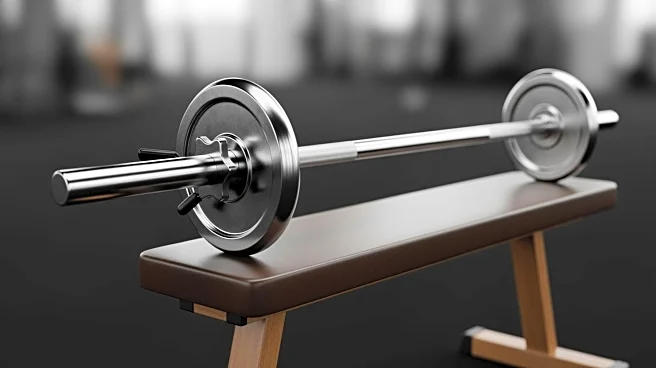
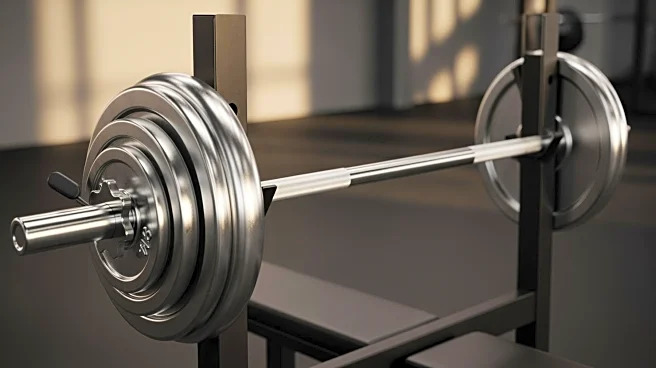
Proper technique is essential for performing the bench press safely and effectively. The lifter begins by lying on their back on a flat bench, with their feet pressed firmly against the floor. The barbell is grasped with both hands and lowered to chest level before being pressed upwards to complete one repetition.
Powerlifters often use specific techniques to enhance their performance. These include arching the back, taking deep breaths, and pressing the feet into the floor. The back arch is particularly important, as it shortens the range of motion and allows for heavier weights to be lifted. While some criticize this technique, it is widely regarded as safe and effective when executed correctly.
Variations and Grip
The bench press can be performed with various grip widths and angles to target different muscle groups. A wider grip emphasizes shoulder flexion and targets the pectorals, while a narrower grip focuses on elbow extension and engages the triceps more.
There are also several variations of the bench press, including the incline and decline bench press. The incline bench press targets the upper portion of the pectoralis major and anterior deltoids, while the decline bench press emphasizes the lower portion of the pectoralis major. These variations allow lifters to tailor their workouts to specific muscle groups and training goals.
Understanding the mechanics of the bench press is essential for anyone looking to improve their upper body strength. By mastering the technique and engaging the right muscles, lifters can achieve better results and reduce the risk of injury.