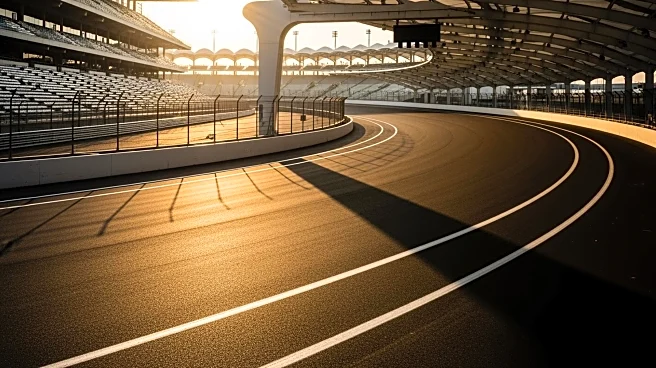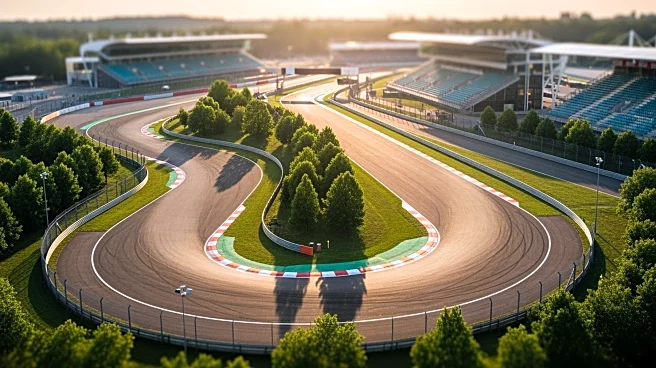


The Monza Circuit, often referred to as the "Temple of Speed," is a legendary race track that has captivated motorsport enthusiasts for decades. Located in Italy, this circuit is renowned for its high-speed straights and challenging corners, making it a favorite among drivers and fans alike. Its reputation as a high-speed haven is well-deserved, and its history is filled with thrilling races and memorable moments.
The Origins of the Temple of Speed
The Monza Circuit was constructed
in 1922, making it one of the oldest purpose-built race tracks in the world. Its design was revolutionary for its time, featuring a combination of a high-speed oval and a road course. This unique layout allowed for incredible speeds, earning Monza its nickname as the "Temple of Speed."
The circuit's long straights and sweeping corners have always been a test of a car's power and a driver's skill. Over the years, Monza has been the site of numerous speed records and has played host to some of the most exciting races in motorsport history. The track's ability to push cars to their limits has made it a favorite among manufacturers and drivers looking to showcase their speed and engineering prowess.
High-Speed Challenges and Iconic Features
Monza's layout is characterized by its long straights and tight chicanes, which require a delicate balance of speed and precision. The circuit's most famous features include the Curva Grande, the Variante Ascari, and the Parabolica, each presenting its own unique challenges to drivers.
The Curva Grande is a high-speed curve that tests a driver's ability to maintain control at high speeds. The Variante Ascari is a complex series of corners that require precise braking and acceleration, while the Parabolica is a long, sweeping corner that demands a perfect line for maximum speed. These features, combined with the circuit's overall high-speed nature, make Monza a true test of a driver's skill and a car's performance.
Monza's Enduring Legacy in Motorsport
Monza's reputation as the "Temple of Speed" is not just about its physical characteristics; it's also about its place in motorsport history. The circuit has been a fixture on the Formula One calendar since the championship's inception in 1950, with the exception of 1980 when it was held at Imola. Monza's high-speed nature has led to some of the most memorable moments in racing history, including close finishes and dramatic overtakes.
The circuit's legacy is also marked by its role in the development of racing technology. The demands of Monza have pushed manufacturers to innovate and improve their cars, leading to advancements in aerodynamics, engine performance, and safety features. Monza's influence extends beyond Formula One, as it has hosted a variety of racing series, including endurance races and motorcycle events.
Monza's status as the "Temple of Speed" is well-earned, and its place in motorsport history is secure. The circuit's unique combination of speed, history, and challenge continues to draw fans and drivers from around the world, ensuring that Monza remains a beloved and iconic venue in the world of racing.