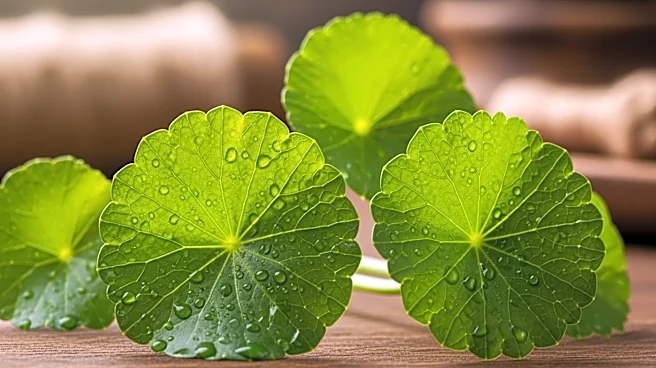



Centella asiatica, commonly known as gotu kola, has been used in traditional medicine for centuries. This perennial herb is believed to offer various health benefits, particularly in treating dermatological conditions and minor wounds. Despite its widespread use, the clinical efficacy and safety of Centella asiatica remain subjects of ongoing research.
Historical Use and Beliefs
Centella asiatica has a long history of use in traditional medicine across Asia. It is often employed
with the intent to treat skin disorders and promote wound healing. The herb is believed to possess properties that aid in skin regeneration and reduce inflammation, making it a popular choice for topical applications.
In addition to its dermatological uses, Centella asiatica is consumed for its potential to improve cognitive function and reduce anxiety. These traditional beliefs have contributed to its reputation as a versatile medicinal plant, although scientific validation is still needed to confirm these effects.
Chemical Compounds and Their Effects
The medicinal properties of Centella asiatica are attributed to its rich chemical composition. The plant contains pentacyclic triterpenoids and their trisaccharide glycosides, such as asiatic acid and brahmic acid, along with their derivatives, asiaticoside and brahmoside. These compounds are thought to contribute to the plant's alleged therapeutic effects.
Approximately 124 chemical compounds have been isolated from Centella asiatica, providing a complex profile that supports its use in traditional medicine. However, while these compounds are believed to offer health benefits, clinical research has yet to establish definitive evidence of their efficacy and safety.
Modern Research and Challenges
Despite its traditional use, Centella asiatica poses certain risks when consumed or applied topically. Contact dermatitis and skin irritation can result from its use, and drowsiness may occur after ingestion. Reviews in 2024 indicated potential adverse effects, including jaundice and liver disease, associated with prolonged use.
The challenges in validating the medicinal claims of Centella asiatica highlight the need for more comprehensive research. As interest in herbal medicine grows, understanding the plant's true capabilities and limitations becomes increasingly important.
Centella asiatica remains a significant part of traditional medicine practices, valued for its potential health benefits. As scientific studies continue to explore its properties, the herb's role in modern medicine may evolve, offering new insights into its therapeutic potential.