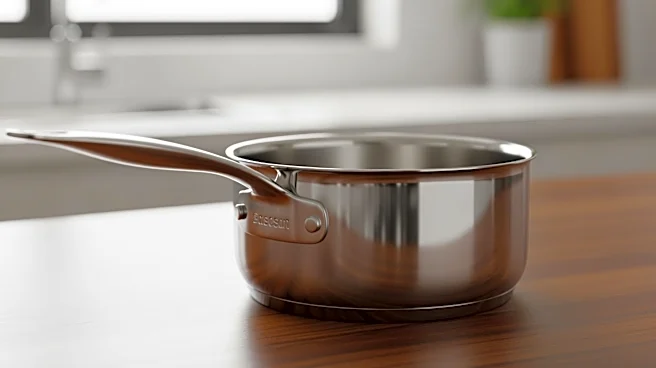




The saucepan is a staple in kitchens around the world, known for its versatility and practicality. This round cooking vessel, typically equipped with a single long handle, is designed for tasks such as simmering and boiling. While it may seem simple, the saucepan's design and functionality make it an indispensable tool for both amateur cooks and professional chefs.
Design and Structure
A saucepan is characterized by its round shape and vertical sides, which are typically
3.5 to 4 inches deep. This design allows it to hold at least 1 US quart of liquid, with larger models accommodating up to 4 quarts. The long handle protruding from the vessel provides ease of use, allowing cooks to maneuver the saucepan with one hand while stirring or adding ingredients with the other.
Unlike many cooking pans, saucepans are usually not non-stick. This feature is intentional, as it allows for deglazing—a cooking technique where food stuck to the pan is recooked with liquid to create a flavorful sauce. The absence of a non-stick surface makes the saucepan ideal for this process, as it encourages the development of fond, the browned bits that form the base of many sauces.
Differentiation from Other Cookware
Saucepans are often confused with saucepots, but there are distinct differences. A saucepan has a single handle, while a saucepot is equipped with two side handles. This distinction is important for tasks that require frequent movement or pouring, as the single handle of a saucepan offers greater control.
In some households, saucepans are referred to as "pots," which can lead to confusion with traditional cooking pots. Historically, a pot is defined as any closed vessel used in cooking, but in modern usage, it is typically contrasted with a frying pan. A pot is a deep vessel with a heavy bottom and a lid, whereas a saucepan is more versatile, often used without a lid for tasks like reducing sauces or boiling pasta.
Cultural and Historical Context
The term "saucepan" can vary across cultures. In French, a saucepan is called a "casserole," which can lead to misunderstandings. In English, a casserole refers to an oven dish, but in France, it is simply a saucepan with high straight sides and a handle. This linguistic difference highlights the cultural variations in cookware terminology.
Historically, the predecessor of the saucepan was the pipkin, an earthenware pot used over direct heat. As metal cookware became more common in the late Middle Ages, the design evolved into the modern saucepan we know today. This evolution reflects the changing needs and technologies in cooking, making the saucepan a timeless piece of kitchen equipment.