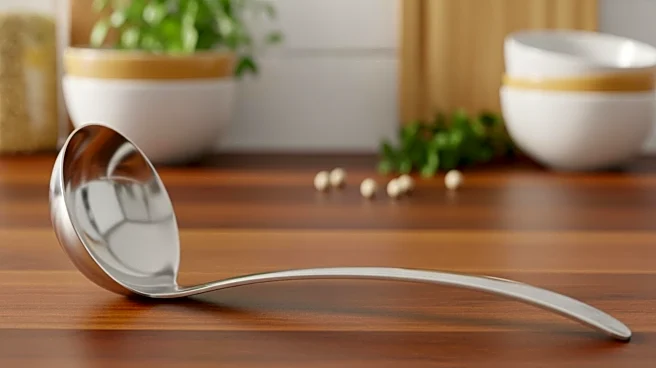








A ladle is a staple in kitchens around the world, known for its practicality and versatility. This large, deep spoon is primarily used for serving soups, stews, and other liquid-based dishes. With its long handle and angled bowl, the ladle is designed to efficiently lift and pour liquids from pots to bowls. While its basic design remains consistent, ladles come in various sizes and materials, each suited to different culinary tasks.
Design and Functionality
The typical ladle
features a long handle that ends in a deep bowl, often angled to facilitate the easy lifting of liquids from a pot. This design is particularly useful for serving soups and stews, allowing the user to scoop and pour with minimal spillage. Some ladles are equipped with a lip on the side of the bowl, which helps in pouring a finer stream of liquid. This feature can be especially beneficial when serving sauces or gravies, although it may pose a challenge for left-handed users. To accommodate this, many ladles have lips on both sides.
Ladles are available in a range of sizes, tailored to specific uses. Smaller ladles, less than 5 inches in length, are ideal for serving sauces or condiments, while larger ladles, exceeding 15 inches, are perfect for soups or punch. This variety ensures that there is a ladle suited for every culinary need, from everyday meals to large gatherings.
Materials and Durability
Modern ladles are typically made from stainless steel alloys, similar to other kitchen utensils. This material is favored for its durability and resistance to corrosion, making it ideal for frequent use in the kitchen. However, ladles can also be crafted from aluminum, silver, plastics, melamine resin, wood, bamboo, and other materials. Each material offers unique benefits; for instance, wooden and bamboo ladles are lightweight and gentle on cookware, while metal ladles provide strength and longevity.
The choice of material often depends on personal preference and the specific requirements of the kitchen. For example, a stainless steel ladle might be preferred for its robustness in a professional kitchen, while a wooden ladle might be chosen for its aesthetic appeal in a home setting.
Cultural Significance
Beyond their practical uses, ladles hold cultural significance in various traditions. In Japan, a wooden ladle known as hishaku is used in the chozu ritual at temples, symbolizing self-purification before entering the sacred space. This ritual highlights the ladle's role not just as a kitchen tool, but as an object of cultural importance.
Ladles, with their simple yet effective design, continue to be an indispensable part of culinary practices worldwide. Whether used for serving a hearty stew or performing a ritual, the ladle's versatility and cultural significance make it a timeless kitchen essential.