



The Great Divide Basin in Wyoming is a fascinating geographical area that defies typical drainage patterns. Unlike most regions, the water in the Great Divide Basin does not flow into any ocean. This unique characteristic makes it an endorheic basin, one of several in North America that adjoin the Continental Divide. The basin is roughly rectangular, bordered by the Green River watershed to the south and west, and the North Platte watershed to the north
and east.
The Geography of the Great Divide Basin
The Great Divide Basin covers an area of approximately 3,959 square miles, with a floor elevation of 6,500 feet. It is part of the larger Red Desert region in Wyoming. The basin's boundaries are defined by natural landmarks such as Oregon Buttes near South Pass and the Sierra Madre Range near Bridger Pass. The Lucite Hills form part of the western boundary, featuring notable geological formations like Black Rock Butte and Emmons Cone.
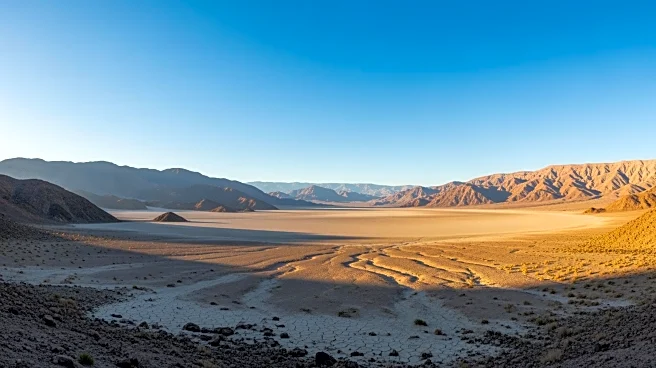
The basin is characterized by a high desert landscape dominated by sand dunes, bluffs, and alkali flats. These features create a unique ecosystem that supports a variety of flora and fauna, including small trees, shrubs, birds, pronghorn, mule deer, feral horses, and a desert elk herd. The basin also contains uranium ore deposits and numerous oil and natural gas wells.
Hydrological Significance
The Great Divide Basin is a significant hydrological feature due to its endorheic nature. Water that falls as rain in the basin does not drain into any ocean, directly or indirectly. Instead, it either evaporates or sinks underground. This characteristic has historically posed challenges for pioneers during the westward expansion of the United States, as the arid and saline conditions made it difficult to traverse.
Despite these challenges, the Union Pacific Railroad was laid directly across the southern part of the basin during the construction of the first transcontinental railroad. This route was later followed by transcontinental highways, including the Lincoln Highway, U.S. 30, and Interstate 80.
Ecological and Cultural Impact
The Great Divide Basin's unique geography and hydrology have influenced both its ecological and cultural significance. The basin's isolation and harsh conditions have led to the development of small, genetically unique populations of plant and animal species. Additionally, the basin has been a subject of debate between those who wish to exploit its natural resources and those who advocate for its designation as a wilderness area.
In popular culture, the Great Divide Basin has been romanticized in literature, such as Arthur Conan Doyle's "A Study in Scarlet," where it is referred to as the Great Alkali Plain. This depiction highlights the basin's mysterious and rugged nature, capturing the imagination of readers and contributing to its cultural legacy.