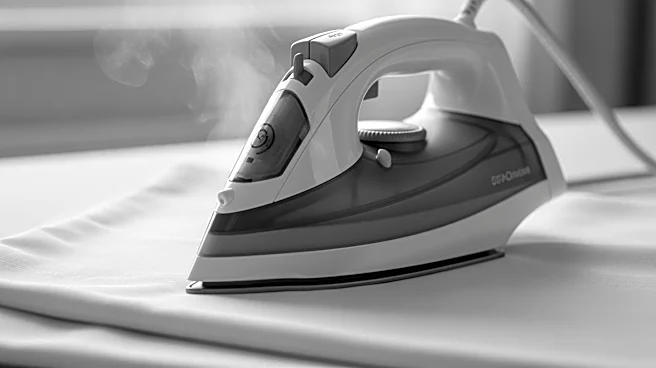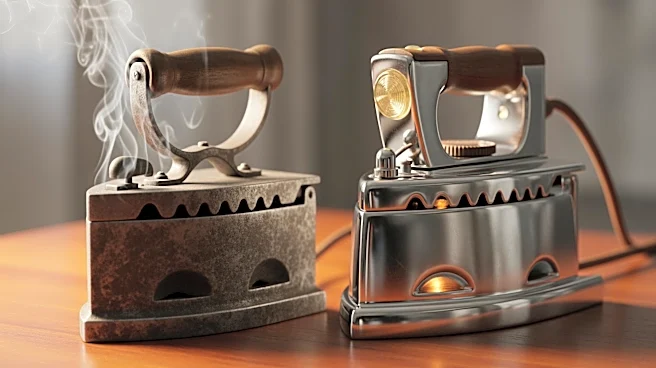





The clothes iron, a staple in households worldwide, has undergone significant transformations since its inception. Initially, irons were simple metal devices heated by fire, but they have evolved into sophisticated electric models that use steam to remove wrinkles. This article delves into the fascinating history of clothes irons, highlighting key developments that have shaped their evolution.
Early Beginnings: Heated Metal Devices
Before the advent of electricity, clothes irons were heated
by combustion, either in a fire or with some internal arrangement. These early irons were solid pieces of metal with a handle, heated on a wood stove, and used to smooth clothes. Known as smoothing irons, they were essential tools in households for maintaining the appearance of garments. The process of ironing worked by loosening the ties between the long chains of molecules in polymer fiber materials, allowing the fabric to maintain its new shape when cool.
In the late nineteenth and early twentieth centuries, various irons were heated by fuels such as kerosene, ethanol, whale oil, natural gas, carbide gas, or even gasoline. Despite the risk of fire, liquid-fuel irons were sold in U.S. rural areas up through World War II. In Kerala, India, burning coconut shells were traditionally used as an alternative to charcoal due to their comparable heating capacity.
The Advent of Electric Irons
The invention of the electric iron marked a significant milestone in the evolution of clothes irons. Henry W. Seely, an American inventor, patented the first electric flatiron on June 6, 1882. This iron weighed almost 15 pounds and took a long time to heat, but it represented a major advancement in ironing technology. Although the UK Electricity Association reported an electric iron with a carbon arc appeared in France in 1880, this claim is considered doubtful.
The early electric irons lacked temperature control, which was introduced in the 1920s with the first thermostatically controlled electric iron. This innovation allowed users to maintain a constant temperature, improving the efficiency and safety of ironing.
Modern Innovations: Steam Irons
The introduction of steam irons further revolutionized the ironing process. The first commercially available electric steam iron was introduced in 1926 by Eldec, a New York drying and cleaning company, although it was not a commercial success. In 1934, Max Skolnik of Chicago patented an electric steam iron and dampener, leading to the widespread use of steam-electric irons during the 1940s and 1950s.
Modern irons for home use now feature advanced technologies, including steam burst functions, anti-drip systems, and energy-saving controls. These innovations have made ironing more efficient and user-friendly, ensuring that clothes irons remain an indispensable tool in households worldwide.