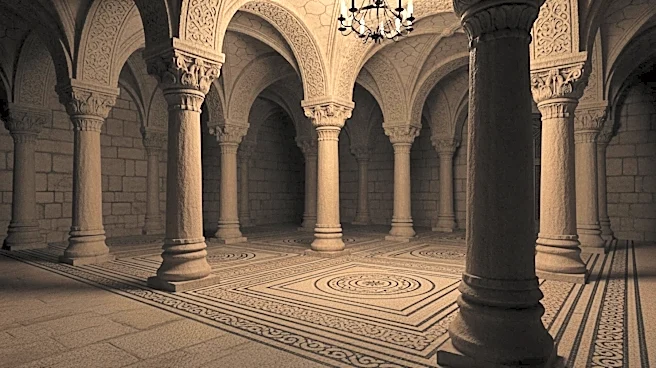

The United States Capitol crypt has a rich history that reflects the broader narrative of the Capitol building itself. Originally conceived as part of the architectural plans for the Capitol, the crypt was
intended to support the rotunda and serve as an entrance to Washington's Tomb. Over the years, the crypt has undergone significant changes, evolving from its initial purpose to become a museum and repository for statues.
Early Plans and Delays
The idea for the crypt was part of William Thornton's original designs for the Capitol, which included a rotunda between the building's wings. Construction of the Capitol began in 1793, but the central section, including the rotunda and crypt, faced delays. The death of George Washington in 1799 led to plans for a tomb beneath the rotunda, approved by Martha Washington.
However, the War of 1812 interrupted construction, with the British setting fire to the Capitol in 1814. This event halted progress and necessitated rebuilding efforts once the war ended in 1815. The crypt's construction resumed under Architect of the Capitol Charles Bulfinch, and the central section was completed in 1827. Despite these efforts, plans to re-inter Washington in the Capitol were abandoned due to restrictions in his will and opposition from Mount Vernon's owner.
Evolution of Usage
Initially intended as an entry to Washington's Tomb, the crypt's purpose shifted over time. By the early 1900s, it was informally used for bicycle parking, reflecting its evolving role within the Capitol complex. Today, the crypt serves as a museum and a key stop on Capitol tours, housing thirteen statues from the National Statuary Hall Collection.
The crypt's transformation into a museum highlights its adaptability and continued relevance. It now serves as a repository for historical artifacts and statues, offering visitors insight into the nation's history. The crypt's role as a museum underscores its importance as a cultural and historical landmark within the Capitol.
Modern Significance
The crypt remains a vital part of the Capitol complex, serving as a thoroughfare on the ground floor and a stop for Capitol tours. It houses the Magna Carta Case, which held a copy of the Magna Carta during the Bicentennial celebration. The crypt's collection of statues represents the original thirteen states, emphasizing its historical significance.
The removal and replacement of statues, such as the Confederate general Robert E. Lee with civil rights activist Barbara Rose Johns, reflect ongoing efforts to ensure the crypt's relevance to contemporary values. These changes highlight the crypt's role in representing the nation's evolving identity and commitment to inclusivity.
The United States Capitol crypt's journey from its original conception to its current role as a museum illustrates the dynamic nature of historical landmarks. Its ability to adapt and remain relevant underscores its importance within the Capitol and the broader narrative of American history.