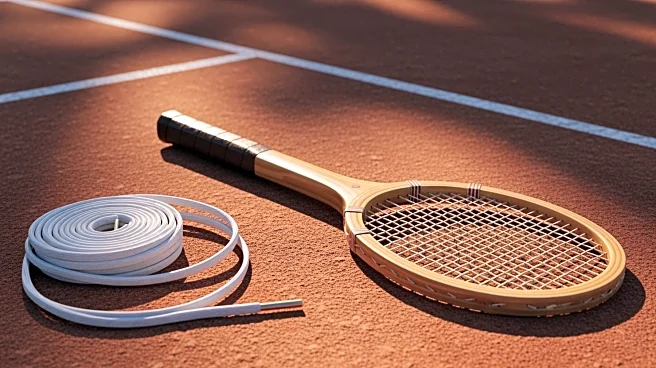



Mary Ewing Outerbridge is often credited with introducing the sport of tennis to the United States. Born in Philadelphia in 1852, she was part of a family with deep roots in Bermuda. Her journey from Bermuda to Staten Island marked a significant turning point in the history of American sports, as she brought with her the equipment and enthusiasm for a game that would soon capture the nation's interest.
Early Life and Family Background
Mary Ewing Outerbridge was born into a family
with Bermudian heritage. Her parents, Alexander Ewing Outerbridge and Laura Catherine Harvey, had moved to the United States before her birth. The Outerbridge family was large, with Mary having several siblings, including Eugenius Harvey Outerbridge, who would later become the first president of the Port Authority of New York and New Jersey. This familial connection to Bermuda played a crucial role in Mary's introduction to tennis.
While visiting Bermuda, Mary encountered the game of lawn tennis, which had been commercialized in England by Major Walter Clopton Wingfield. The sport was shared with her by one of Wingfield's subordinates stationed in Bermuda. This chance encounter at her family's home in Paget Parish sparked Mary's interest in the game, leading her to bring tennis equipment back to the United States.
Introducing Tennis to America
In 1874, Mary returned to the United States aboard the S.S. Canima, carrying tennis equipment that was initially confiscated by customs officials. Her brother August, with connections in the shipping industry, helped secure the release of the supplies. Mary then set up the first tennis court in the United States at the Staten Island Cricket and Baseball Club, near the Staten Island Ferry Terminal. This court was hourglass-shaped, a design that was later abandoned in favor of the rectangular courts we know today.
Mary played the first recorded game of tennis in the U.S. against her sister Laura, marking the beginning of the sport's journey in America. Her efforts laid the groundwork for the establishment of tennis as a popular sport in the country.
Legacy and Recognition
Mary Outerbridge's contribution to tennis was not immediately recognized, as competing claims existed regarding the introduction of the sport to the United States. However, her role in popularizing tennis, especially among women, was significant. Her brother Eugenius supported the formation of the U.S. Tennis Association in 1881 to standardize the sport's regulations.
Mary passed away in 1886 at the age of 34, but her legacy lived on. She was posthumously inducted into the International Tennis Hall of Fame in 1981 and the Staten Island Sports Hall of Fame in 1999. Her story was further highlighted in 2018 by The New York Times as part of their Overlooked project, recognizing her impact on the sport and her pioneering spirit.