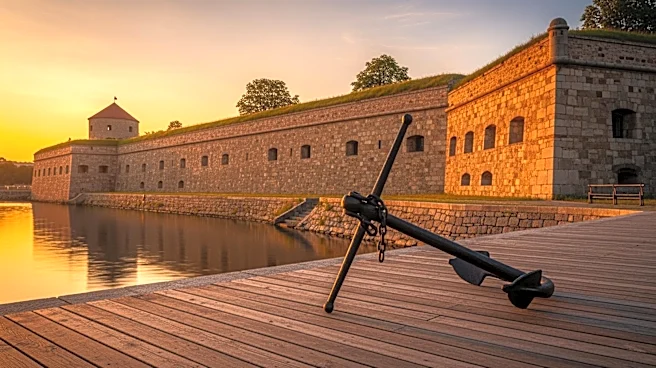






Fort Christina, established in 1638, was not only the first Swedish settlement in North America but also a symbol of the enduring relationship between Sweden and the United States. Named after Christina, Queen of Sweden, the fort was a testament to Sweden's ambitions in the New World and its efforts to establish a colony that would foster trade and cultural exchange.
Swedish Ambitions and Cultural Exchange
The establishment of Fort Christina was part of Sweden's broader strategy to expand
its influence in the Americas during the Thirty Years' War. The Swedish South Company, founded in 1626, aimed to establish colonies for trade, particularly in tobacco and fur. The colony of New Sweden, with Fort Christina as its principal settlement, was a multicultural endeavor, with settlers from Sweden, Finland, the Netherlands, and Germany.
The fort's location at the confluence of the Brandywine and Christina Rivers was chosen for its strategic advantages in trade and defense. Peter Minuit, the former director of New Netherland, led the expedition and negotiated with local Lenape sachems to secure the land. This interaction marked the beginning of cultural exchanges between the Swedish settlers and Native American tribes.
Diplomatic Struggles and Legacy
Despite its promising start, Fort Christina faced diplomatic challenges, particularly with the Dutch, who claimed the area. The Dutch established Fort Casimir in 1651 to threaten the Swedish settlement, leading to tensions and eventual conflict. In 1655, the Dutch, under Peter Stuyvesant, captured Fort Christina, ending Swedish rule in North America.
However, the legacy of Fort Christina persisted. The Swedish settlers were allowed to remain and continue their cultural practices, contributing to the area's diverse heritage. The fort's history became a symbol of the diplomatic struggles and cultural exchanges that shaped early American history.
Commemoration and Modern Significance
In 1938, Delaware celebrated the 300th anniversary of Swedish colonization by creating a park at the site of Fort Christina. The dedication ceremony was attended by U.S. President Franklin D. Roosevelt and Swedish royalty, highlighting the fort's significance in Swedish-American relations.
The park features a monument topped by a replica of the Kalmar Nyckel, designed by Swedish sculptor Carl Milles, symbolizing the enduring friendship between the two nations. Fort Christina's history is a reminder of the cultural and diplomatic ties that continue to influence Swedish-American relations today.