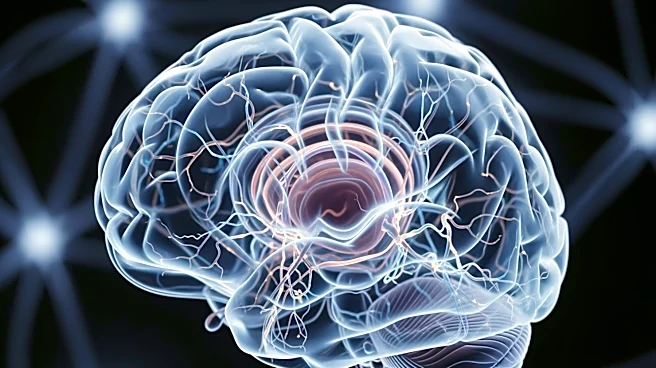




Procedural memory plays a crucial role in the development and refinement of skills, enabling individuals to perform tasks automatically without conscious thought. This type of implicit memory is essential for both motor and cognitive activities, guiding processes that range from tying shoes to flying an airplane. Through repetition and practice, procedural memory allows for the seamless execution of complex tasks, making it a fundamental component
of skill acquisition.
The Process of Skill Acquisition
Skill acquisition through procedural memory involves several stages, each contributing to the development of automatic task performance. The cognitive phase is the initial stage, where individuals understand the components of a skill and organize them into schemas. Attention is significant at this point, as it helps break down the desired skill into parts and understand how they come together for correct task performance.
The associative phase follows, where repeated practice leads to learned patterns of responding. During this stage, actions become automated as ineffective actions are dropped, and the sensory system acquires the accurate spatial and symbolic data required for skill completion. The ability to differentiate important from unimportant stimuli is crucial, as it influences the speed and effectiveness of skill acquisition.
Perfecting Skills Through Procedural Memory
The final stage of skill acquisition is the autonomous phase, where individuals perfect their skills and perform tasks with minimal thought process. Experience and factual knowledge play a significant role in this phase, allowing for quick discrimination between important and unimportant stimuli. As skills become automated, individuals can focus on other aspects of performance, such as decision-making and fine motor skills.
Alternative models, such as the predictive cycle, suggest that skill acquisition does not require conscious understanding of a skill's components. Instead, learners focus on the desired result, making repeated attempts until the neural network guides the activity accurately without conscious thought. This approach has been applied successfully in areas like reading remediation, demonstrating the adaptability and power of procedural memory in skill development.
The Impact of Practice on Procedural Memory
Practice is a key factor in enhancing procedural memory and skill acquisition. The power law of learning predicts that learning occurs at the fastest rate in the beginning and tapers off over time. However, practice can overcome this limitation by introducing more effective ways to accomplish tasks, such as observational learning.
By refining and improving experimental measures, research has shown that procedural memory can be enhanced through practice, leading to better skill performance. This understanding of procedural memory has practical applications in various fields, including sports, music, and education, where skill development is essential for success.