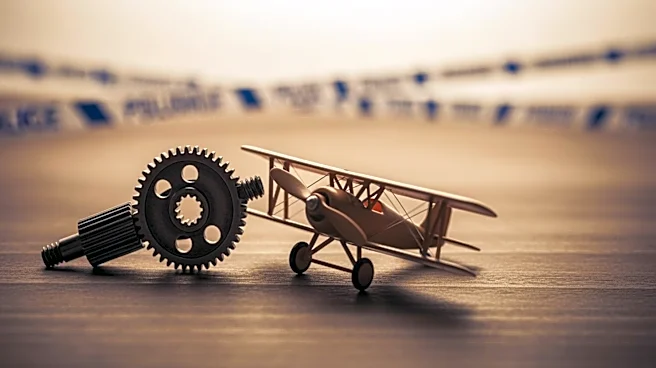







The Wright brothers' patent war is a significant chapter in aviation history, reflecting the challenges of protecting innovation in a rapidly evolving industry. This article provides a historical perspective on the patent war, examining its origins, key events, and lasting consequences.
Origins of the Patent War
The Wright brothers' patent war began with their 1906 patent for airplane flight control, which covered their method of controlling an aircraft in all three axes: pitch,
roll, and yaw. This patent was crucial in establishing their rights over various flight control systems, including wing-warping and ailerons. The Wrights' innovation was a result of their extensive experiments with gliders, where they discovered the importance of simultaneous control across all axes.
The patent war was fueled by the Wright brothers' desire to protect their invention from competitors. In 1909, they sold the patent to the Wright Company, which pursued legal action against other aviators and companies, including Glenn Curtiss. The Wright Company aimed to secure a monopoly on U.S. aircraft manufacturing, leading to a series of intense legal battles.
Key Events in the Patent War
The patent war saw numerous lawsuits, with the Wright brothers winning their initial case against Curtiss in 1910. Despite their victories in U.S. courts, the legal disputes continued, expanding as other manufacturers launched lawsuits of their own. This created a growing crisis in the U.S. aviation industry, stalling development and innovation.
The patent war had international implications, with European companies also involved in legal battles over the Wrights' patents. While the Wright brothers won a pro-Wright ruling in France, legal maneuvering dragged on until the patent expired in 1917. The U.S. government eventually pressured the aviation industry to form a patent pool to share patents, alleviating the crisis.
Consequences and Legacy
The Wright brothers' patent war had lasting consequences for the aviation industry. Many historians believe that the legal disputes hindered the growth of the U.S. aviation industry, causing American airplane development to lag behind Europe. When World War I began, American pilots were forced to fly European combat aircraft due to the lack of suitable U.S.-designed planes.
Despite the damage to their public image, the Wright brothers' actions were pivotal in shaping the legal landscape of aviation patents. Their patent war serves as a reminder of the complex interplay between innovation and legal protection in the early days of flight. The establishment of patent pools and cross-licensing agreements facilitated collaboration and progress in aviation technology, highlighting the enduring impact of the Wright brothers' pioneering work.