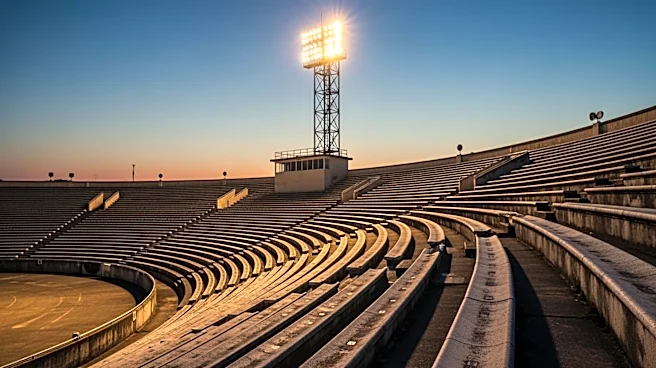







Robert F. Kennedy Memorial Stadium, commonly known as RFK Stadium, has been a significant landmark in Washington, D.C., since its opening in 1961. Originally named the District of Columbia Stadium, it was one of the first large stadiums designed to host both baseball and football. Over the years, RFK Stadium has witnessed numerous historical events and has been home to various sports teams, making it a central part of the city's sports culture.
Early Years and Construction
The
idea for a stadium in Washington, D.C., dates back to the early 20th century, with various proposals and plans emerging over the decades. However, it wasn't until the late 1950s that the project gained momentum. The District of Columbia Stadium Act of 1957 authorized the construction of a 50,000-seat stadium, which was signed into law by President Eisenhower in 1958. Groundbreaking for the stadium occurred in July 1960, and it officially opened in October 1961.
Initially named the District of Columbia Stadium, it quickly became known as D.C. Stadium. The stadium's design was innovative for its time, featuring a circular layout to accommodate both baseball and football games. This design, known as the cookie-cutter style, became a model for future multi-purpose stadiums across the country.
Renaming and Notable Events
In January 1969, the stadium was renamed Robert F. Kennedy Memorial Stadium in honor of the late U.S. Senator and presidential candidate. The renaming was announced by Secretary of the Interior Stewart Udall, and the official ceremony took place in June of that year. RFK Stadium became a hub for various sports and entertainment events, hosting NFL games, MLB games, soccer matches, concerts, and more.
Throughout its history, RFK Stadium was home to a National Football League team, two Major League Baseball teams, and several professional soccer teams. It hosted significant events such as five NFC Championship Games, two MLB All-Star Games, and several FIFA World Cup matches. The stadium also played a role in the civil rights movement, with protests occurring during its early years.
Closure and Future Plans
RFK Stadium operated until 2019, with plans for its deconstruction beginning in 2025. The site is set to be replaced by a new stadium, the New Commanders Stadium, which is expected to open in 2030. This new development aims to continue the legacy of RFK Stadium as a central sports and entertainment venue in Washington, D.C.
The history of RFK Stadium reflects the evolution of sports venues in the United States and its role in the cultural and social fabric of the nation's capital. As the city looks forward to the future, the memories and events that took place at RFK Stadium will remain an integral part of Washington, D.C.'s history.