/images/ppid_a911dc6a-image-177997402977342468.webp)

/images/ppid_a911dc6a-image-177989708987770499.webp)



A massive asteroid roughly the size of a building is set to make a close approach to Earth tomorrow, and yes, space agencies are already tracking it carefully. The asteroid, named 2026 HW2, is expected to fly past Earth on May 29 at around 4:30 PM IST. According to NASA’s asteroid tracking data, the space rock measures nearly 370 feet wide, making it roughly comparable in size to a large building. It is also travelling at a staggering speed of around 44,901 kilometres per hour. And honestly, anything moving through space at that speed deserves attention. But before panic kicks in, there is some good news.Is Asteroid 2026 HW2 Dangerous?As of now, scientists do not believe asteroid 2026 HW2 poses any direct threat to Earth. NASA says the asteroid will
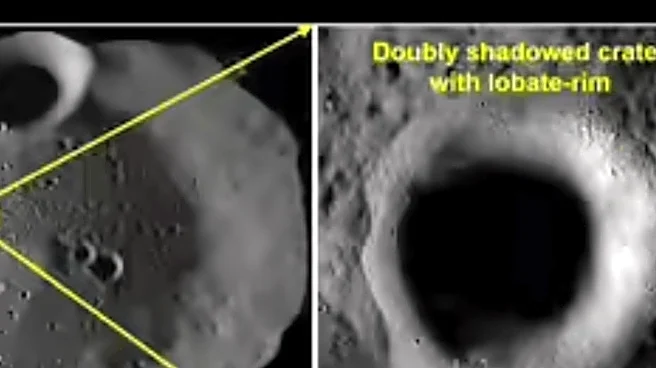
pass our planet from a distance of around 6.77 million kilometres. In cosmic terms, that is considered a relatively close flyby, which is why the asteroid has attracted attention online. However, the distance is still far enough that there is no risk of impact based on current calculations. NASA and other global space agencies continuously monitor near-Earth objects, especially larger asteroids that come within a certain range of the planet.ISRO Detects Possible Underground Ice In Lunar South Pole Craters Using Chandrayaan 2 DataWhy NASA Tracks These AsteroidsObjects like 2026 HW2 are classified as Near-Earth Objects, or NEOs. These are asteroids or comets whose orbits bring them relatively close to Earth during their journey around the Sun. Most pass harmlessly through space. Still, monitoring them matters because even small changes in orbit over long periods can become important. NASA’s planetary defence systems are designed to detect such objects early, calculate future trajectories and assess any possible collision risk years in advance.Every week, multiple asteroids pass Earth at distances that astronomers consider “close approaches.” Most go unnoticed by the public unless they are particularly large, unusually fast or flying by at relatively shorter distances. This one checks all three boxes.A 370-foot-wide asteroid racing through space at nearly 45,000 km/h sounds like something straight out of a sci-fi disaster film. Thankfully, in reality, tomorrow’s flyby is expected to remain exactly that: a distant celestial event safely passing by Earth without incident.
/images/ppid_a911dc6a-image-178006158435628752.webp)

/images/ppid_59c68470-image-17800775370997770.webp)

/images/ppid_59c68470-image-178007253290174193.webp)

/images/ppid_a911dc6a-image-177990402153992728.webp)