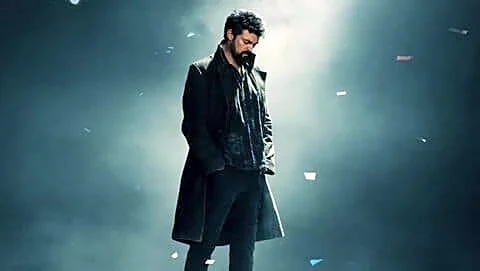
For years, The Boys built its reputation on tearing apart the superhero genre. It openly mocked the self-righteousness of the so-called saviours, exposed corporate greed hiding behind cinematic universes and turned the idea of moral heroism into something grotesque, violent and very cynical. So, naturally, the series finale was supposed to be one final brutal rejection of convention was what millions of viewers expected. Instead, creator Eric Kripke gleefully gave us an ending filled with surprisingly familiar genre tropes: redemption arcs, emotional sacrifices, symbolic deaths, hopeful epilogues and even a pregnancy reveal.Did The Boys betray its own anti-superhero identity, or did it intentionally use those cliches to complete its message?
The answer is neither straight, nor universally acceptable. It lies somewhere in between.
Was The Boys ever just a parody?
From the very beginning,
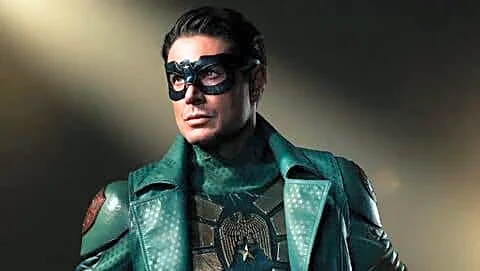
The Boys was never simply parody. Beneath the blood splatter, vulgar jokes and political satire, the series always functioned as a traditional superhero narrative wearing the skin of an anti-superhero drama. Hughie Campbell was essentially the classic audience surrogate hero. Annie January, aka Starlight, represented idealism surviving corruption. Billy Butcher was the rage-driven antihero slowly consumed by vengeance.
Homelander was Superman stripped of morality and accountability.The show mocked comic book mythology while simultaneously depending on it and the makers never, ever hid that. That contradiction became especially visible in the final season. The deaths of Homelander and Butcher followed structures audiences have seen countless times before. Homelander was arguably one of television’s greatest modern villains. But he loses his powers before dying helplessly at the hands of the man who hates him most. How often have we seen that trope play out? Since the beginning of time, obviously.
But that does not mean this ending was not justified or satisfying. Not everything has to be a surprise - some plots are culmination of what the show has already hinted at multiple times - the crazy dictator is no one without his power (something that was reiterated in the very first episode of the final season too!) He is a bully, who has never really lost anything before and does not know what to do in the face of defeat. He begs, which has divided the internet, but after having seen him gloat for 5 seasons straight, it just seems fitting.Butcher, meanwhile, sacrifices himself indirectly after realising his own obsession has made him dangerous. Hughie becomes the moral conscience forced to stop his former mentor. None of this is revolutionary storytelling.Yet there is a reason it still works.
Butcher and Homelander's deaths land despite the cliches - here's why
Kripke has openly admitted that some of these endings were planned from the beginning and even closely resemble
The Boys comics. Butcher killing Homelander with a crowbar feels absurdly primitive for a show filled with laser eyes and exploding bodies, but that simplicity is exactly the point. Homelander spent years presenting himself as a god above humanity. His death strips away every ounce of that mythology. Once Kimiko removes his powers, he becomes exactly what the show always argued he was underneath the costume: a frightened bully addicted to superiority. Antony Starr and series creator Eric Kripke mutually agreed that Homelander is not heroic. Instead, Starr himself pushed for his ending to be 'pathetic.'In that sense, the cliche serves the theme.
The same applies to Butcher’s death. Television antiheroes from
Breaking Bad to
Sons of Anarchy often end their journeys through self-destruction because modern prestige television loves the idea that violence eventually consumes violent men. But
The Boys frames Butcher’s downfall less as punishment and more as tragic inevitability. Hughie killing him is a little predictable but no one can say it is not emotionally earned. Across five seasons, Hughie repeatedly resisted becoming like Butcher. The finale ultimately rewards that humanity.Homelander dying powerless is effective because the spectacle disappears. Hughie refusing power is compelling because it rejects the cycle of vengeance. Those moments stay true to the show’s core themes.
Was The Boys finale too optimistic, too Marvel-like?
Where the finale becomes more divisive is in its optimism. For a series built on institutional corruption and cynical humour, the ending suddenly becomes remarkably sincere. MM rebuilds his family. Hughie and Starlight are happy together. Kimiko finds peace even after Frenchie's death. Ryan receives another chance at normality with Hughie. Even the visual language of the finale changes. The last scenes feel warmer, calmer and almost sentimental. Its a goodbye, a bittersweet one - straight out of the MCU!That tonal shift understandably frustrated some fans who expected The Boys to completely reject conventional happy endings. After all, this is a show where superheroes accidentally exploded civilians, corporations marketed fascism through merchandise, and political commentary was delivered through exploding anatomy jokes. A soft, emotional conclusion is kind of contradictory.
But the optimism is not entirely unearned either. Kripke has repeatedly described the show as 'hopeful beneath the darkness.' Even during its bleakest moments, The Boys consistently argued that ordinary human connection mattered more than power. Hughie’s compassion, Annie’s morality, Butcher's passion and even Frenchie’s guilt - all represented the emotional core of the series. The finale bought it all out at once, making it obvious. The issue is not that the show used tropes. It is that it occasionally rushed through them to tie all ends.There is the broader irony that the series ends by partially embracing the same emotional formulas it spent years mocking in franchises like Marvel Studios and DC Studios. The difference is that
The Boys uses those tropes with self-awareness. It knows these endings are familiar. In many ways, that familiarity becomes part of the commentary.
Ever story needs a (super) hero
Superhero stories are evergreen, mostly because audiences emotionally respond to redemption, sacrifice and hope. Even a show designed to dismantle the genre eventually gravitates back toward those structures because of a simple reason - they work and work well!
The Boys spent five seasons exposing how dangerous hero worship can become when mixed with politics, celebrity culture and capitalism.
But by the finale, it also showed why people crave heroes in the first place. Without the heroic Butcher sacrificing himself, the ending would just not fit. That balance is why the ending feels satisfying and frustrating both. In fact, it is one of those finales that will get better when rewatched.Still, perhaps the greatest irony is that after years of satirising superhero storytelling,
The Boys ultimately proved it understood the genre better than many of the franchises it mocked. Now, that may not be the ending every fan wanted. But it is probably the only ending this show could have had.
/images/ppid_a911dc6a-image-177958911779045006.webp)

/images/ppid_a911dc6a-image-177942102370274937.webp)

/images/ppid_a911dc6a-image-177947363467977576.webp)

/images/ppid_a911dc6a-image-177945955478656730.webp)
/images/ppid_a911dc6a-image-177947009197673875.webp)

/images/ppid_a911dc6a-image-177944905260124883.webp)
/images/ppid_a911dc6a-image-177944916074375143.webp)
/images/ppid_a911dc6a-image-177937211020632929.webp)