Before Hamza Ali Mazari aka Jaskirat Singh Rangi there was Hamlet. Before Rehman Dakait/Baloch there was Julius Caesar. Before Major Iqbal, Claudius. Before Yalina, Ophelia. Before Jameel, the Fool. “Dhurandhar” is a crime saga set across Pakistan’s Karachi and Lyari, streets where gang rivalry bleeds into politics, where violence is both currency and career, and where the path to power runs directly through everything elite society pretends does not exist. It is also, quietly and structurally, one of the most ‘Shakespearean things’ Indian cinema has made in years. The Bard didn't write it. But you'd be forgiven for thinking he left “notes”.Four hundred years ago, a playwright in London wrote about ambition, betrayal, madness, and the slow rot of power.
He set his stories in Denmark, Scotland, and ancient Britain. He was writing about the England he lived in. Dhurandhar is set in Karachi and some bit of Punjab. The geography is different. The humans, however, are seemingly identical.Hamza Ali Mazari as Jaskirat Singh Rangi — Hamlet to Brutus.
Four hundred years ago, William Shakespeare wrote a prince called Hamlet. Hamlet is on a revenge mission (that wasn’t entirely his own) who discovers, somewhere in the middle of executing it, that the mission has changed him into someone the revenge was supposed to be against. The mission was clean. The pursuit of it was not. And there is no way back to who he was before the “ghost” spoke to him.
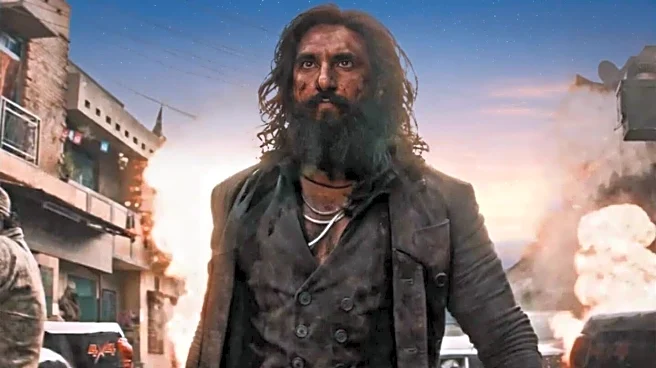
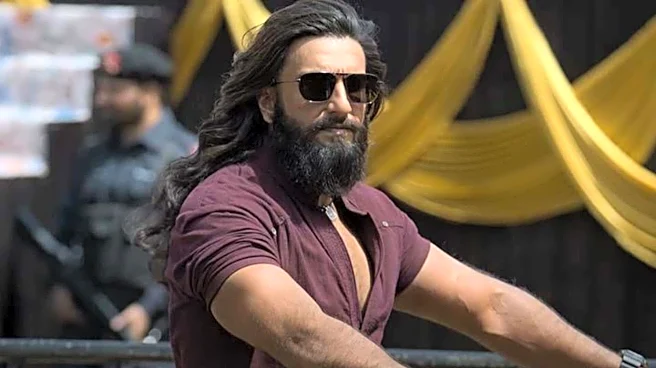
Jaskirat Singh Rangi aka Hamza Ali Mazari, played by Ranveer Singh, is in the same place — shaped by an ambition that arrived as a calling, carried forward by a momentum that started before his own choices did, moving toward an ending he can see clearly and cannot stop.Watch Jaskirat-turned-Hamza, and you will see something different. It is not confusion. It is not fear. It is the particular stillness of a man who sees too clearly, who has looked at every institution around him and understood, without being told, exactly how each one works and exactly what it costs to move through it. The police. The politicians. The criminal networks that blur, on close inspection, into both. Jaskirat Singh Rangi, aka Hamza Ali Mazari, was assigned a mission that wasn’t entirely his own but was entirely owned by him, and that mission that started with a confusion (lots of whys, whos and whoms) is what changed the course of his life, just like Hamlet's.Interestingly, there’s a shade of Brutus too in Aditya Dhar’s Hamza: When made to believe that Rehman Dakait was “evil”, just like Brutus was by the Senate against Julius Caesar, he planned and executed the killing of the man who trusted him the most. “Et tu, Brute?” The killing of a dictator, however, is certain – but who takes the lead becomes history!
Rehman Dakait — Julius Caesar
Julius Caesar’s throne was built in blood, in battle for power and dominance. By the time he reached the height of his authority, he was not just a man anymore. He became a myth. And myths, Shakespeare understood, are the most vulnerable things in the world — because myths cannot see what is coming. They have stopped believing anyone would dare.
Rehman Dakait, played by Akshay Khanna, is that myth in Dhurandhar. Just like Caesar, his end did not come from his enemies. It came from Brutus, the man who sat closest, who was trusted most, whose loyalty Caesar had simply stopped thinking to question.Hamza Ali Mazari is Rehman's Brutus. Not an enemy. Never an enemy. Something far more precise — a man who understood Rehman completely and someone who decided the ending long before the final scene arrived. Brutus’s stab was the final one for Caesar, and for Rehman Baloch – the final blow was from the man he trusted most in the moment he least expected it. In Shakespeare's world, that is not just tragedy. It is the only ending this kind of power ever gets.
Major Iqbal — Claudius
Claudius is Shakespeare's most unnerving villain because he is not just monstrous but also one anti-hero who is controlled, intelligent, and entirely aware of what he has done and is doing. In his one moment of attempted prayer — alone, kneeling, unable to actually repent because he is unwilling to give back what he gained — ISI's Major Iqbal, played by Arjun Rampal, carries that same quality of lucid, unrepentant self-knowledge. He knows the game. He wrote parts of it. The surface is military polish and institutional authority. Underneath is a man continuously claiming what was never his — what was never supposed to be his — spending every day making sure he gets it whichever way possible. And through all of it, he tells himself he walks the path of righteousness.Just like Claudius, this character of Dhurandhar dies with his kingdom — built on lies — in flames around him. And in the end, his ending is the only thing he ever truly earned.
SSP Chaudhary Aslam — King Lear
King Lear never doubted that the room was his. Not because he was arrogant — because he genuinely could not imagine it any other way. Decades of absolute authority had made presence and power feel like the same thing. They were not. They never were. He discovered this in a storm, stripped of everything, finally seeing clearly what he had spent a lifetime refusing to examine.
Sanjay Dutt plays Chaudhary Aslam with exactly this quality — the unshakeable certainty of a man whose world is already shifting beneath him. He just cannot feel it yet. Lear could not either. Until the storm arrived. For Aslam, it came as a blast.
Ajay Sanyal — Macduff
Macduff is the most dangerous kind of man in any corrupt system — not because he is powerful, but because he is honest and he knows it and he refuses to stop. Everyone around him has done the calculation, made the peace, decided that survival requires a certain amount of looking away. Macduff will not look away. It costs him. It keeps costing him. He does it anyway.
Ajay Sanyal is Macduff of Dhurandhar. Not the loudest or the politically powerful character one - simply the one who refuses to look the other way. R Madhavan plays a quiet, certain, immovable man, who decided that some things are non-negotiable and never found a reason to change his mind. Macduff is the only major character in Macbeth who never compromises. He is also the one who finishes it. Sanyal fits in best.
Sara Arjun as Yalina Jamali — Ophelia
Ophelia is one character in Shakespeare’s Hamlet who lives in her own world full of love and dreams – far from reality, to the edge of madness. But she did see through Hamlet, her prince charming’s feigned madness. She saw Hamlet's contradictions before anyone else; she did confront and then eventually give in. She was systematically failed by every man in her life who claimed to be protecting her — her father, her brother, the man she loved.
Sara Arjun's Yalina Jamali arrives from the same place. She is not a fragile character. She is a woman who reads her world clearly, who understands exactly what is being done to her and by whom, and who is undone anyway. Not because she cannot see. Because seeing, in the world Dhurandhar builds around her, changes nothing.Ophelia's tragedy was never that she broke. It was that she was given no other option. Yalina understood that and submitted herself to reality, a rather tragic one.
Ulfat, Rehman Dakait's wife — Gertrude
Gertrude is the most contested character in Shakespeare's Hamlet. She made choices whose full implications she may not have understood (possibly) and preferred to live with the consequences of her choices. Ulfat, played by Saumya Tandon, is built the same way. She stood by Rehman Baloch long enough to know what his world is. What she did with that knowledge and why she chose to stay silent even as it consumed her son — is exactly what Dhurandhar refuses to tell you straight.
Uzair Baloch — Laertes
Laertes, brother of Ophelia and son of Polunius in Shakespeare’s Hamlet, does not lack courage or loyalty. He lacks judgement. His devotion to family is total, genuine, and completely unguarded — which makes him the easiest man in the room to manipulate. His grief and love for his sister were what led to his end.
If not totally, Uzair Baloch, played by Danish Pandor, is this man. He followed his brother Rehman into everything — the good, the bad, the irreversible. It was never going to be enough. Hamza Ali Mazari knew that before Uzair did.
Jameel Jamali — The Fool
Shakespeare's fools are never foolish. That is the oldest trick in the plays — the man everyone laughs at is the man who understands everything. The fool's cap is not a costume. It is a licence to say it all without saying too much. And the wisest person in every room Shakespeare ever wrote wore one.Rakesh Bedi's Jameel Jamali works exactly this way. The jokes land. The timing is perfect. The room laughs. And somewhere inside the laugh, quietly, without anyone quite catching it, the truth has been delivered and the moment has moved on. Watch him carefully and you will notice: every comic beat has a sentence attached to it that explains the entire scene.
/images/ppid_a911dc6a-image-177503917632997956.webp)



/images/ppid_59c68470-image-177520003200211165.webp)

/images/ppid_a911dc6a-image-177502152592615354.webp)




/images/ppid_a911dc6a-image-177501102301062137.webp)
/images/ppid_a911dc6a-image-177503215157950553.webp)
/images/ppid_a911dc6a-image-177497602960229123.webp)