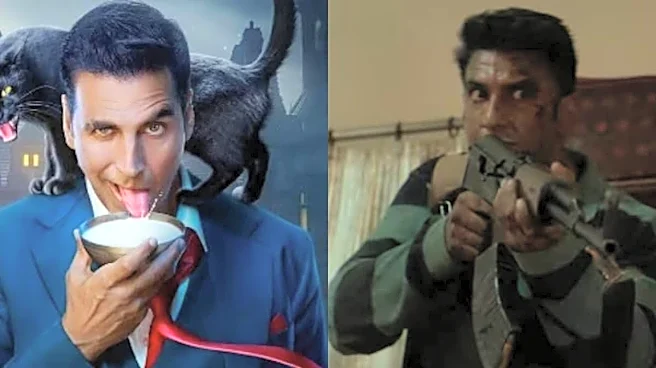
Taal
se taal milaa... Tera yakeen kyun maine kiya nahi... Nayak nahi, khalnayak hu main... Do these lines ring a bell? Of course, they do. For non-Bollywood readers, these are lyrics from some of the most iconic songs from super-hit films. All three of these films, along with many others, are currently lined up for sequels. For years, second instalments have been a major part of the Hindi film industry's business model. While some celebrate them as a chance to revisit beloved stories and characters, others dismiss them as lazy attempts to cash in on old success. With new follow-ups like Khalnayak Returns, Taal 2 and more making headlines, the debate has returned once again: does Bollywood really need sequels?
To answer the question, yes, it does, but only when made with effort, vision and strong content. Unpopular as that opinion may seem, our track record proves that sequels can actually work well. Every time a filmmaker has tried to make the franchise bigger and better, they have managed to expand the world of the original film while also attracting fresh audiences. But of course, there isn't a simple formula that works every time.As one may recall,
Aashiqui 2, which recently completed 13 years, is one of Bollywood’s most successful sequels. It was not a direct continuation of the first film’s story, but it revived the brand beautifully with new actors for the younger generation, who might not even have been aware of the original stars. The emotional storytelling and blockbuster music took the nation by storm and the romantic drama became a major success. Before that, Salman Khan's
Dabangg 2 also performed strongly. The larger-than-life Chulbul Pandey returned with more action, a double dose of comedy and mass entertainment. Most importantly, it kept the core charm of the original alive. It is worth pointing out that action sequels have perhaps been the strongest category.
Singham 2 gave audiences a bigger version of Rohit Shetty's cop universe, while
Tiger Zinda Hai successfully expanded the Yash Raj spy universe with grand action and international stakes. These films understood that sequels need to feel larger than the first chapter.
The second parts of thriller films have also been able to find success at the box office.
Drishyam 2 was widely appreciated because it did not rely only on nostalgia. Instead, it delivered a smart, gripping story that justified a second part.
Don 2, similarly, built on the sleek style of the first film and gave Shah Rukh Khan’s anti-hero a fresh challenge.But what truly changed the game was
Dhurandhar 2, aka
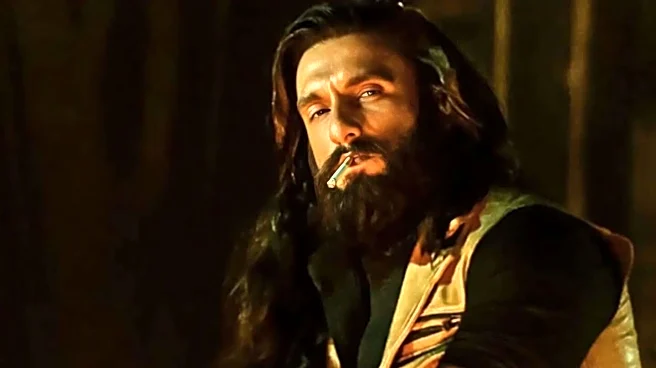
Dhurandhar: The Revenge. In a never-seen-before release strategy, the sequel to Aditya Dhar and Ranveer Singh's spy action thriller hit screens just three months after its predecessor. It had already created curiosity because the original film and the brand still had strong recall value. Add to the mix Dhar's "peak detailing," Singh's brilliant performance, the plot twists, and the product was bound to be a hit.
But sequels do not always work. Bollywood has also seen many second parts fail because they were made with the obvious intention of cashing in on the popularity of the predecessor. Audiences, even when underestimated, quickly sense the lack of effort.
Double Dhamaal and
Great Grand Masti were criticised for
relying on loudness rather than fresh humour. They used brand names but failed to recreate the entertainment value that made the earlier films popular.
Yamla Pagla Deewana 2 could not match the novelty and warmth of the first film.
Once Upon Ay Time in
Mumbaai Dobaara! also struggled because viewers felt it lacked the impact and style of the original gangster drama.
Heropanti 2 failed to connect despite carrying a popular title
. Ragini MMS 2 gained attention but received mixed reactions for its content.
Welcome Back, despite being a sequel to one of Bollywood’s most loved comedies, could not fully recreate the madness and freshness of
Welcome. Even big-ticket projects like
War 2 faced huge pressure.
These films proved that a sequel can have stars, scale and hype, but if the script does not deliver, audiences are quick to reject it. That is the key lesson here: everything boils down to effort. A sequel is not successful simply because it carries a familiar title. It works when filmmakers understand why the first film connected with people and then build on that foundation with something new. Audiences do not want the same product with fake updates. They want something of value.Will you laugh at the same joke again? Just like that, if a comedy sequel repeats the punchlines, it fails. If an action sequel offers no new stakes, it fails. If a thriller sequel becomes predictable, it fails. But if the film grows the world, deepens characters and gives stronger entertainment, viewers welcome it... like they did with
Border 2 and
Dhurandhar 2.
Does Bollywood Need Sequels?
At a time when audiences have endless options on OTT platforms, Bollywood has had to pull its socks up and bring something of value and excitement. Sequels naturally provide both. Remember that dish you had at a restaurant and then went back for again? A known title can have the same effect. This helps create curiosity and stronger opening numbers than an unknown original film.Classics like
Awarapan, Khalnayak and
Taal do not just hold value, they enjoy a massive fan following even today. Their music, characters and memories remain alive in popular culture. This obviously means the industry has a higher chance of attracting audiences if such titles return in a smart way.But some may argue that Bollywood should focus only on fresh ideas. Ideally, yes. But the reality is that Hindi cinema has recently struggled to consistently deliver strong original mainstream content. Think of the last fresh story you liked... In that situation, sequels seem relatively harmless, especially when compared to
endless remakes of hit South, Korean or Thai films. In my humble opinion, it is better to make a second instalment of your own successful film than to copy someone else’s.That said, sequels are not magic solutions. A famous name may bring audiences on day one, but only content can sustain a film after that. Word of mouth remains king. So, does Bollywood need sequels? In today’s market, yes. They help bring audiences to theatres, revive nostalgia and reduce business risk. But it is also important to make them with sincerity, imagination and quality writing. Because in the end, a sequel is only as good as the effort behind it.
/images/ppid_a911dc6a-image-177727557275911045.webp)


/images/ppid_a911dc6a-image-177699902566160212.webp)


/images/ppid_a911dc6a-image-177723004241519788.webp)




/images/ppid_a911dc6a-image-177726856107175556.webp)
/images/ppid_a911dc6a-image-17772370294658889.webp)
/images/ppid_a911dc6a-image-177725455546464995.webp)
/images/ppid_a911dc6a-image-177726862508968318.webp)