"Namaskar,
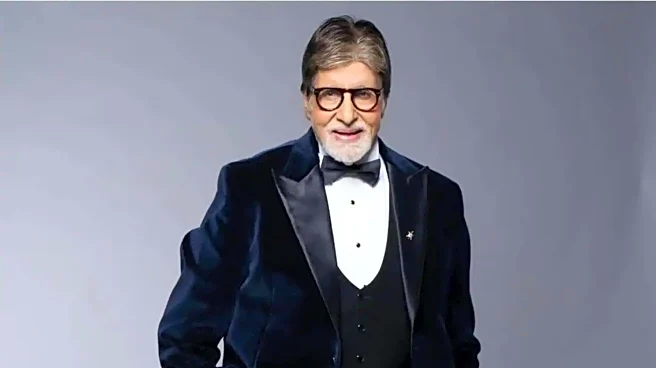
deviyon aur sajjano. Swagat hai aapka iss adbhut khel mein, jiska naam hai…" These are not just words. They are a call to assemble in front of the television every evening.Amitabh Bachchan, India’s most-loved megastar, is known for many things: his towering screen presence, iconic roles and unmatched longevity. But one of his most recognisable features is his voice. Today, he is among the most identifiable voices in the country. However, not many know that this very baritone was once rejected by All India Radio.
A young Amitabh had just graduated from
college when someone suggested he try for a job at the state-owned radio channel. Armed with confidence and a love for language, he auditioned. The response was blunt. Undeterred, he tried again for Hindi broadcasting after being turned down by the English section. But fate repeated itself. Yes, the same deep, commanding voice that now narrates films, hosts television shows and delivers unforgettable dialogues was deemed "unsuitable" for news broadcasting. At a time when radio voices were expected to be smooth, pleasant and instantly likeable, Bachchan’s tone was considered too heavy, too rough and too different. For many, such rejection could have ended the journey before it began. For Big B, it became a turning point.Born into a literary household, Amitabh grew up surrounded by the power of words. His father, Harivansh Rai Bachchan, was one of Hindi poetry’s most respected names. Perhaps that is why, even when radio shut its doors on him, he refused to give up on storytelling. He moved to Mumbai with hopes of becoming an actor. As fans would know, his early years in Bollywood were far from easy. He faced repeated rejections, struggled to find work and didn’t have what it took to fit the conventional hero mould. What he did have, however, was
jazbaa.
Labelled a "failed newcomer," Bachchan had only two hits by the age of 30. Yet he refused to quit. As Indian cinema began to change, audiences were ready for a new kind of hero - the
Angry Young Man. That is when Amitabh Bachchan emerged as a force who connected with the masses through his eyes, body language and, most importantly, his voice.Ironically, the very quality radio rejected became his greatest strength. His deep voice carried pain, rage and rebellion like no other. Films like
Zanjeer, Deewar and
Sholay didn’t just make him a superstar, they made his voice legendary. His dialogues were not merely lines, they were declarations.
Decades later, that same voice returned to the radio world and beyond. Bachchan became the preferred narrator for films, documentaries and public campaigns. Then came
Kaun Banega Crorepati, the show that turned his voice into a national phenomenon. Authoritative yet warm and serious yet empathetic, he redefined television hosting. Even today, before he finishes saying,
"Main Amitabh Bachchan bol raha hoon…", the voice is instantly recognised.Calling his journey inspiring would be an understatement. It stands for resilience, individuality and staying true to oneself. He didn’t change his voice to fit expectations, he owned it. Today, Amitabh Bachchan’s voice is not just remembered, it is revered.Radio once rejected it. Bollywood embraced it. And the world is still listening.
/images/ppid_a911dc6a-image-177095459124798392.webp)

/images/ppid_a911dc6a-image-177074817751365859.webp)


/images/ppid_a911dc6a-image-177089857481720650.webp)

/images/ppid_a911dc6a-image-177079842407186179.webp)