The
backlash has been swift and brutal. Ananya Panday’s Bharatnatyam performance in Vivek Soni’s Chand Mera Dil (the same man who gave us Aap Jaisa Koi) has ignited quite the online discussion, turning into a larger debate about artistic authenticity, puritan classical traditions, celebrity culture and social media outrage. At the centre, is Ananya Panday and her Bharatnatyam performance in the film, which is being widely criticised online. Even as X and Insta warriors have started describing the performance as a poor representation of one of India’s most revered classical dance form, one wonders if beneath the memes, trolling and angry posts there lies a far more interesting question - Is the outrage really justified?
Why People Are Angry Over Ananya Panday’s Performance
The growing
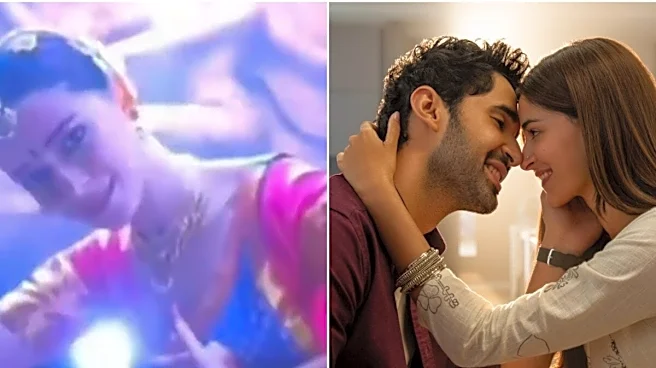
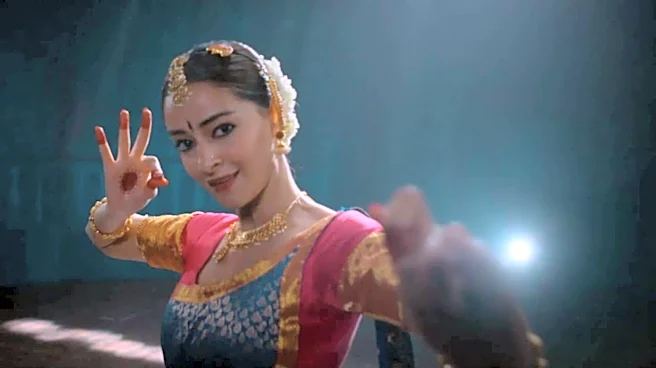
criticism has mushroomed after clips from the film started circulating online, one of which showcases a sequence where
Ananya’s character Chandni can be seen performing what appears to be a Bharatnatyam-inspired routine. The viral clip saw netizens crying hoarse over the lack of precision, grace and discipline associated with classical dance forms, even drawing
comparisons with performers like the late Sridevi and Ramayana’s Sai Pallavi.
Classical dancers weighed in as well with
Anita R Ratnam criticising the sequence for lacking essential Bharatnatyam elements, while other practitioners argued that mainstream cinema often treats classical arts superficially. And to a certain level, their angst seems justified.
Bharatnatyam is not simply a collection of hand gestures and poses. It is a highly codified classical tradition requiring years of rigorous training. And when viewed from that perspective, while the criticism is not entirely unreasonable,
the problem stems from social media judgements.
Social Media Judgments
Even as a large part of netizens are
railroading a judgement on Ananya Panday, another part of the conversation seems to have been largely ignored. Many of the harshest reactions emerged after viewers watched a
short clip (just one single clip)
divorced from the film's context. However, subsequent reports (including one by
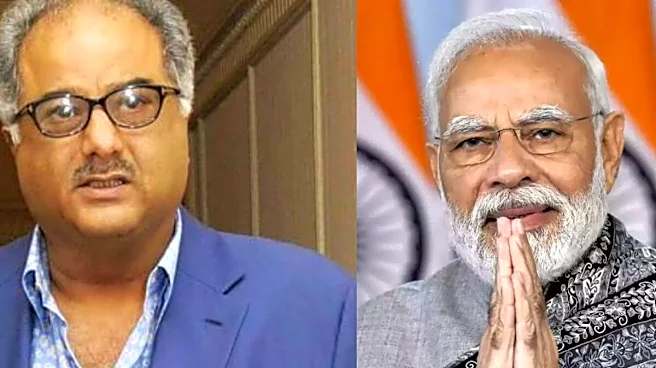
Chunky Panday who defended his daughter) since then have clarified that the sequence was conceived as a fusion performance rather than a pure Bharatnatyam recital.
And the distinction matters.
The film never explicitly claims to be a presentation of traditional Bharatnatyam in its purest sense. If it would have done so then audience outrage was justified, as they evaluated it against the set standards of the dance form. But if the intention was a fusion, then passing a judgement on it becomes more complicated. Bollywood has, by large, a long history of blending classical dance with popular entertainment.
From the era of Vyjayanthimala to contemporary performers, filmmakers have often borrowed classical aesthetics while adapting them for mass audiences. And not every cinematic dance sequence is meant to function as a formal recital.
Ananya Panday the Target and Women in Cinema
One of the most revealing aspect in this entire hullabaloo is how quickly the conversation became l
ess about dance and more about Ananya Panday herself. Criticism of the sequence merged with familiar debates surrounding nepotism, privilege and perceived lack of talent. Many
posts were less concerned with Bharatnatyam than with expressing long-standing
frustrations about Ananya's career. It genuinely seemed that the online chatter was more invested in veering the conversation towards smearing Ananya than critiquing her. And all this amid
Ananya Kurup, who worked as assistant choreographer under choreographer Tejaswi Shetty, defended Ananya and highlighted the effort the actress put into learning the dance form within a limited period.
And why is there a collective outrage against Panday all of a sudden? Ananya is not the first non-dancer to be a choreographed sequence in cinema.
Tabu –despite being an amazing actor – cannot claim to have exemplary dancing prowess. And why is criticism for dance pointed towards women in cinema alone? There has been an entire generation of actors who have survived on mismatched hip thrusts (
Sanjay Dutt, Nana Patekar, Sunny Deol to name a few) and two left feet in cinema while serenading actresses. Even Kartik Aaryan's honest attempts at classical dance in the 2022 Bhool Bhulaiyaa 2 was not really a top-notch performance. The t
endency to focus exclusively on Ananya reflects a larger reality of modern celebrity culture where actors often become symbols and punching bags onto which audiences project wider grievances and collective frustration.
Burden of Representing Classical Art
However, having said that,
Bollywood, perhaps, cannot completely escape responsibility. Indian cinema has historically introduced millions of viewers to classical dance traditions. For many, films provide their first exposure to Bharatnatyam, Kathak or Odissi. Who can forget
Vidya Balan’s dance routine in the 2007 Bhool Bhulaiyaa? Or the dance acumen of the legendary Vyjayanthimala. And it is precisely because of these people and the influence cinema has, filmmakers carry a certain obligation to present these forms thoughtfully.
Perhaps, one can argue that the
strongest criticism of the Chand Mera Dil sequence does not come from trolls but from practitioners who worry about cultural dilution. In parts, criticism of the dance itself is fair. Viewers are entitled to argue that the performance lacked the technical refinement associated with Bharatnatyam. And
classical dancers are entirely justified in defending standards within an art form that requires years of dedication.
However, what becomes harder to justify is the intensity of the backlash.Online reactions that have moved beyond artistic criticism into personal attacks, mockery and familiar nepotism-fuelled hostility, is uncalled for. The discussion often seemed less interested in dance and more interested in finding a new target for internet outrage. A dance sequence can be criticised without turning the performer into a national punching bag.
Finally, The Bigger Picture
The Chand Mera Dil controversy ultimately says as much about audiences as it does about Ananya Panday. The
social media chatter, in reality, reflects a growing influence where short clips are instantaneously judged, sans context, highlighting, among other things, how certain actors arrive on screen carrying reputations that shape public reactions long before a film is even seen.And even as that one episode has sparked a conversation about how India represents its cultural heritage on screen, the outrage, in itself may have overshadowed a simpler truth -
a flawed dance performance is not the end of Bharatnatyam. The personal digs, however, are a reality that could do with a little less virility.
/images/ppid_a911dc6a-image-177986905762037402.webp)

/images/ppid_a911dc6a-image-177963453185646344.webp)

/images/ppid_59c68470-image-177986502818242679.webp)


/images/ppid_a911dc6a-image-177980616852298191.webp)
/images/ppid_a911dc6a-image-17796800255292905.webp)