/images/ppid_a911dc6a-image-177510202279982822.webp)

/images/ppid_a911dc6a-image-177491302505397618.webp)
/images/ppid_59c68470-image-177505753259035416.webp)
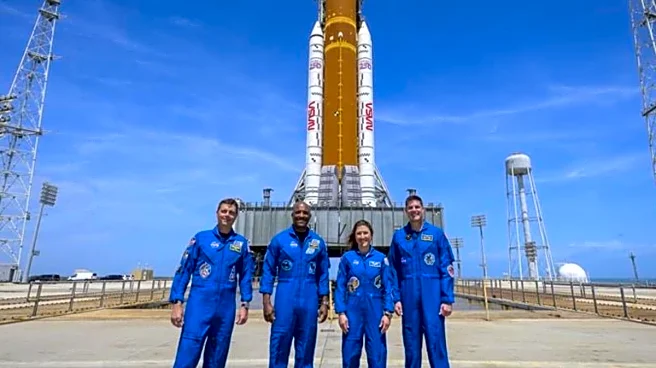

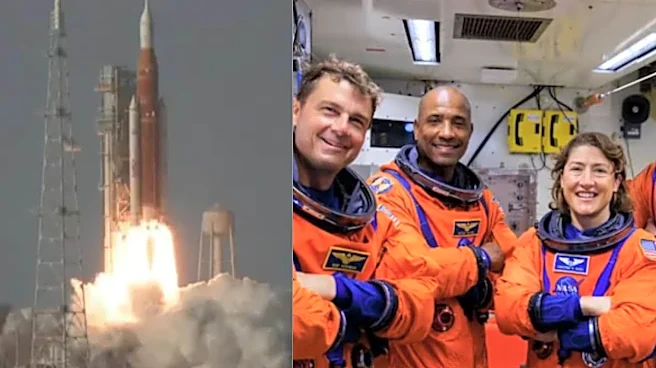
Space agency NASA has successfully launched its Artemis II mission, sending four astronauts on a voyage that will mark the first crewed moon mission in over 50 years. The Space Launch System (SLS) rocked the lift-off from Launch Pad 39B at the Kennedy Space Centre in Florida at 6:35 PM EDT (04:05 AM IST) on Wednesday, sending the Orion spacecraft into orbit. This mission is a key milestone in the Artemis programme, as it aims to return astronauts to the Moon once again and support future missions to Mars, explained NASA. This mission is likely to last around 10 days and will test critical systems that are needed for further deep-space travel missions. What Happens NextAfter reaching space, the Orion spacecraft deployed its solar arrays and started
transitioning into flight operations. Engineers began assessing the onboard systems. This included the life support. Later, the rocket’s upper stage carried the spacecraft into an elliptical Earth orbit. According to NASA, a second burn is anticipated to push the Orion into a higher Earth orbit before it detaches and continues on its own. If these system checks prove to be stable, the spacecraft will perform the translunar injection burn, sending the Orion towards the Moon, stated NASA. Further, the astronauts will conduct a flyby, traveling around the moon’s surface, and they will observe regions of the side that are not directly visible. This flyby is scheduled for early next week, taking the mission closer to experiments on human health and spaceflight conditions near the moon. After the moon flyby, Orion is expected to return to Earth, with a planned splashdown in the Pacific Ocean.



/images/ppid_59c68470-image-177508752486814628.webp)

/images/ppid_59c68470-image-177508252889714840.webp)

/images/ppid_a911dc6a-image-177503203794876190.webp)