The Plane That Touched the Future and Returned Too Soon!
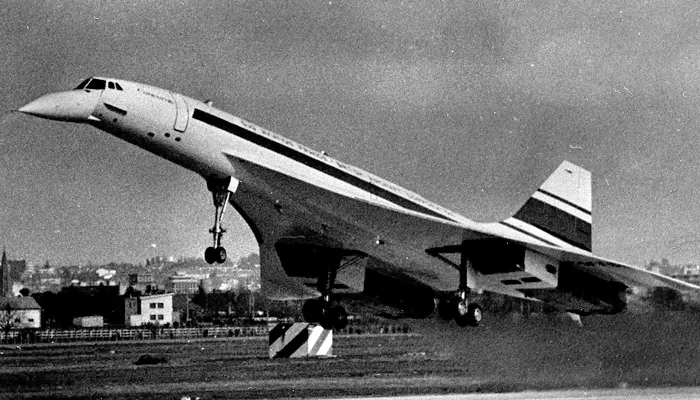
When the Concorde took its historic first flight, it did more than break the sound barrier, it shattered
expectations. For the first and only time in commercial aviation history, passengers could travel faster than sound, shrinking oceans into hours.
Yet, despite being one of the greatest aeronautical engineering marvels ever created, Concorde’s journey was surprisingly short. The aircraft that symbolised speed, luxury, and human ambition was eventually grounded.
Why did a machine so advanced have to be retired?
The answer lies not in a single failure, but in a combination of economics, environment, and evolving priorities.
Concorde: A Technological Wonder Ahead of Its Time
From its needle-shaped nose to its powerful Olympus engines, Concorde was designed for one purpose supersonic passenger travel.
It cruised comfortably at Mach 2, carried passengers across the Atlantic in just over three hours, and operated at altitudes higher than most commercial jets. Even decades later, its technology continues to impress aerospace engineers.
But brilliance alone wasn’t enough to ensure survival.
Five Key Reasons Why Concorde Had to Be Retired
- Extremely High Operating Costs
Concorde was expensive to fly and even more expensive to maintain.
- Fuel consumption was significantly higher than subsonic jets
- Specialised maintenance and parts increased costs
- Only a limited number of technicians were trained to service it
Even with premium ticket prices, profitability remained fragile.
- Limited Passenger Capacity
Unlike modern wide-body aircraft, Concorde carried fewer than 100 passengers.
This exclusivity made it glamorous but economically challenging. Airlines couldn’t scale operations or offer competitive pricing, restricting Concorde to a niche audience of business leaders and celebrities.
Luxury alone couldn’t sustain long-term viability.
- Sonic Boom Restrictions
One of Concorde’s biggest challenges came from its greatest feature; speed.
Flying faster than sound creates sonic booms, loud shockwaves that limited supersonic travel over land. This meant Concorde was largely restricted to oceanic routes, drastically reducing route flexibility.
Global expansion was never truly possible.
- Environmental and Fuel Concerns
As environmental awareness grew, Concorde faced increasing scrutiny.
- Higher fuel burn meant greater emissions
- Noise pollution was a major concern
- Rising fuel prices made operations even less sustainable
In an era shifting towards efficiency and sustainability, Concorde stood on the opposite end of the spectrum.
- Changing Aviation Economics and Priorities
By the late 1990s and early 2000s, aviation priorities had shifted.
Passengers began valuing affordability, connectivity, and efficiency over speed. Airlines focused on wide-body aircraft that could carry more passengers at lower costs.
Concorde, designed for a different era, struggled to adapt to these new realities.
The End of Concorde: A Difficult but Inevitable Decision
Concorde’s retirement marked the end of supersonic passenger travel but not because it failed technically. It succeeded spectacularly in what it was designed to do.
The decision to retire it reflected economic and environmental realities, not a lack of innovation.
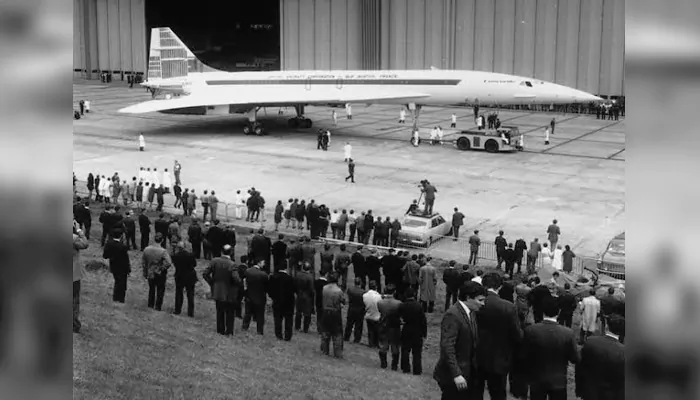
Even on its final flights, Concorde attracted global attention, emotional farewells, and packed cabins proof of its enduring appeal.
Why Concorde Still Matters Today
Concorde’s first flight wasn’t just a moment in history it was a lesson in ambition.
Today, as companies once again explore supersonic travel with quieter engines and sustainable fuels, Concorde’s legacy serves as both inspiration and caution.
For Indian students, engineers, and aviation enthusiasts, Concorde represents what happens when engineering excellence meets real-world limitations.
Concorde was never just an aircraft. It was a statement that humans could push boundaries, even if the world wasn’t ready to follow.
Its first flight changed aviation forever. Its retirement reminded us that innovation must evolve with time.
And that is why Concorde will always remain supersonic in spirit, even while grounded.