







Here are today’s most important updates from the realm of Science and Space.
This Dying Star Looks Like a Giant Brain in Space
NASA has released stunning 'brain-new' images of a dying star, revealing a glowing
nebula forming around it in deep space. The latest photo, captured by the James Webb Space Telescope, shows a vast cloud of gas and dust. This forms when a star reaches the end of its life and throws its outer layers into space. Over time, this process creates glowing clouds of gas and dust that form a beautiful and colourful shape. Scientists have nicknamed the nebula, officially PMR 1, as "Exposed Cranium" because it looks like a brain inside a transparent skull, according to the NY Post. "The nebula appears to have distinct regions that capture different phases of its evolution — an outer shell of gas that was blown off first and consists mostly of hydrogen, and an inner cloud with more structure that contains a mix of different gases," NASA said in a statement.
NASA Rover Zeroes In on Mars’ Unusual ‘Spiderwebs’

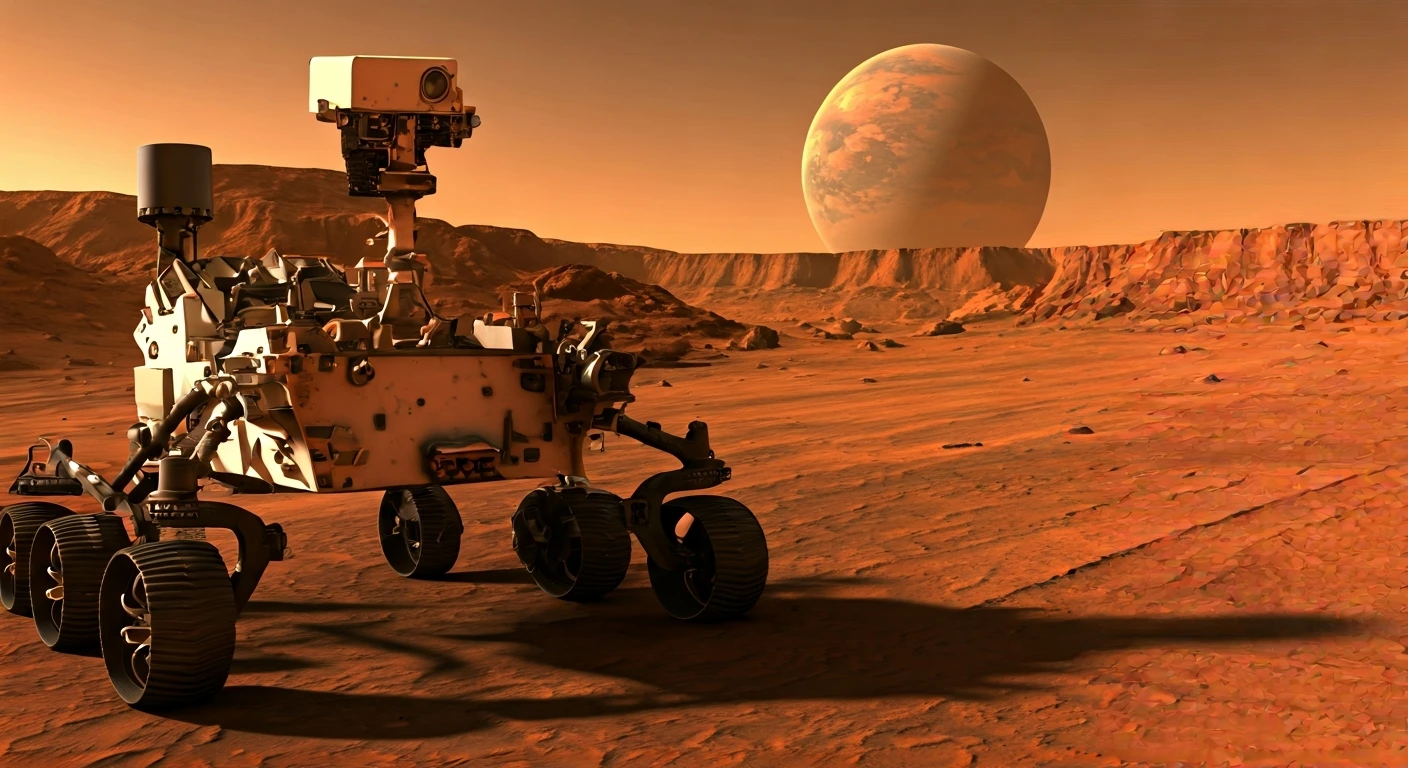
NASA's Curiosity rover has stumbled upon spiderweb-like formations on Mars, which could be a crucial clue to the planet's past. The bizarre patterns, resembling giant spiderwebs from above, are actually low ridges standing 3 to 6 feet tall that crisscross the Martian surface for miles. According to NASA, the formations suggest ancient groundwater flowed on this part of the Red Planet quite later than scientists expected. The boxwork formations are believed to have formed when groundwater flowed through fractures in the bedrock. It left behind minerals that strengthened the areas that became ridges. Over time, wind eroded the softer surrounding rock, creating the distinctive patterns. The Curiosity rover has been exploring the region for about six months.
Sharper Mind, Longer Output: Study Reveals 40-Minute Gain

A new study by researchers at the University of Toronto Scarborough suggests that being mentally sharp can help people complete the equivalent of 40 extra minutes of work in a day. The research, published in Science Advances, tracked 184 students over 12 weeks. Each day, participants completed cognitive tests to measure mental sharpness and later reported whether they had achieved their daily goals. Instead of comparing students with one another, researchers looked at how each person's performance changed from day to day. The findings showed that when people were mentally alert, they were more likely to complete their tasks and even set themselves more ambitious goals. On less focused days, productivity dropped. In fact, the difference between a good day and a bad day could amount to as much as 80 minutes of work.
Love in the Ice Age: Study Explains Neanderthal DNA in Us

Scientists have discovered that the prehistoric romance between Neanderthals and modern humans was a heavily lopsided affair, with pairings occurring almost exclusively between Neanderthal men and modern human women. By analysing the genetic blueprints of both species, a team from the University of Pennsylvania led by Sarah Tishkoff and Alexander Platt has revealed that ancient attraction and social choices, rather than biological failure, are the reasons why Neanderthal DNA is missing from key parts of our genome today. Because our genes lived on healthily in their bodies, it proves that the two species were biologically compatible after all, debunking the myth of prehistoric genetic warfare.