







Here are today’s most important updates from the realm of Science and Space.
Bizarre ‘Liquid Planet’ Discovered With Rotten Egg Odor
Scientists have identified an entirely new category of "liquid planet" that
exists in a permanent, molten state. Traditionally, small exoplanets were categorized as either rocky "gas-dwarfs" with hydrogen atmospheres or "water worlds" with deep oceans and ice. This new discovery, detailed in Nature Astronomy, suggests a third class: planets that are essentially global oceans of magma. The primary example of this new type is L 98-59 d, a planet located approximately 35 light-years away from Earth, Guardian reported. The planet was detected by the James Webb telescope, the most powerful telescope ever put into space. Researchers described the planet as being in a "mushy, molten state" similar to molasses, with a mantle made of molten silicate and a likely molten core. Surface temperatures reach a staggering 1,900°C (3,500°F). Nearby planets exert gravitational pulls that cause massive waves to roll across its global magma ocean.
Beneath the Ice: NASA Reveals Life in Antarctica’s Harshest Waters
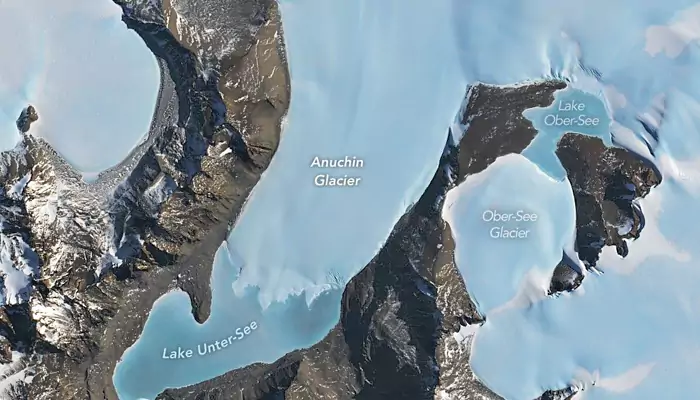
Scientists estimate that Earth has more than 100 million lakes, but some stand out because of their unusual features. One such example is Lake Unter-See in Antarctica, which is known for its unique water chemistry and rare microbial life. The lake is one of the largest and deepest surface lakes in Antarctica and has water that contains extremely high levels of dissolved oxygen, very low dissolved carbon dioxide, and a strongly alkaline pH, reported NASA. On February 16, 2026, during the Antarctic summer, the Operational Land Imager on Landsat-9 captured an image of Lake Unter-See. Most of the lake's water comes from seasonal meltwater from the nearby Anuchin Glacier, which flows southward from the Gruber Mountains of Queen Maud Land.
Sejjil Strike: Inside Iran’s ‘Dancing Missile’ Technology

Iran has reportedly deployed one of its most advanced ballistic weapons, the Sejjil missile, drawing global attention to the capabilities of Tehran’s missile program. The weapon, which analysts say can strike targets up to 2,000 kilometres away, has been nicknamed the “dancing missile” because of the way it manoeuvres during flight, making it difficult for air-defence systems to intercept. The Sejjil is a two-stage, solid-fuel medium-range ballistic missile (MRBM) developed domestically by Iran as a successor to older liquid-fuel missiles such as the Shahab series. According to defence analysts, the missile can carry a payload of around 500-1,000 kilograms, which may include conventional high-explosive warheads and potentially other types depending on configuration.
Unexpected Snowfall Threatens Ladakh’s Fragile Water Supply
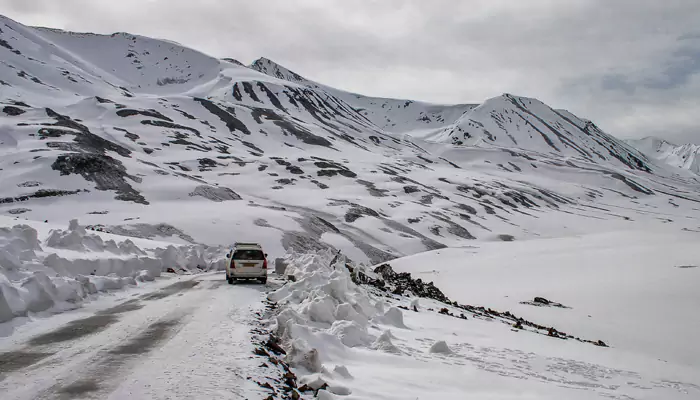
It is snowing in Ladakh this March, when the season should already be shifting to spring. Fresh white snowflakes are covering the towering peaks, turning the cold desert landscape into a stunning winter scene once more. Dr Lobzang Chorol, an environmental researcher, shared photos of the snow-draped mountains against cloudy skies, with villages nestled in the valley below. She also expressed concern for the untimely spectacle. The snow on which many in the region count on is arriving late and vanishing fast. In the past, heavy snow arrived between December and February and stayed long enough to recharge underground water and keep springs flowing through summer. Now the pattern has changed. Rising temperatures make it melt right away, leaving the ground dry when farmers and families need water most.