







Here are today’s most important updates from the realm of Science and Space.
Back to the Moon: NASA Sets Artemis II Launch Window After 53-Year Gap
NASA is officially moving its massive Moon rocket to the launch pad, signaling
the final countdown for a historic mission. For the first time in over 50 years, humans are preparing to return to the lunar neighborhood. The agency is preparing to move the Space Launch System (SLS) rocket and the Orion spacecraft out of the hangar on Saturday, January 17. The giant rocket will travel very slowly, about one mile per hour, on a four-mile journey to Launch Pad 39B. This "rollout" is a major step toward a planned launch as early as February 6, 2026. The Artemis II mission will carry four astronauts on a 10-day trip around the Moon: Reid Wiseman (Commander), Victor Glover (Pilot), Christina Koch (Mission Specialist), Jeremy Hansen (Mission Specialist, CSA). This mission is a "test drive" to make sure the spacecraft's life-support systems can keep humans safe in deep space.
2025 Joins the Heat Club: Third-Hottest Year Ever Recorded, Scientists Confirm

Last year was the third hottest on record, according to an analysis of temperature data released Wednesday by three independent agencies. That puts 2025 just behind the second-hottest year, 2023, and the hottest, 2024. What makes this result extraordinary, scientists say, is that 2025 saw a cooling phase in the equatorial Pacific Ocean, or La Niña, that suppresses global temperatures. In other words: Heat from greenhouse gases countered that cooling influence enough that the year still landed among the very warmest. It's more evidence that “human-caused warming is now really overwhelming inter-annual natural variability” in weather, said Daniel Swain, a climate scientist in the University of California's Agriculture and Natural Resources division.
Researchers Stunned by Discovery of 300-Year-Old Giant Lifeform

Marine scientists exploring the deep ocean have made an exciting discovery that is helping people better understand life beneath the sea. During a dive in the waters of Fiordland, researchers came across something far bigger and older than they expected, according to reports. Marine scientists have discovered the largest black coral ever found in the sea off New Zealand. The coral was discovered during a deep-water dive off Fiordland led by a scientific team from Te Herenga Waka-Victoria University of Wellington. This huge coral is more than 13 feet high and about 15 feet wide, and is believed to be around 300 to 400 years old.
Ancient Boat Found in US Lake Reveals Secrets of Prehistoric Humans
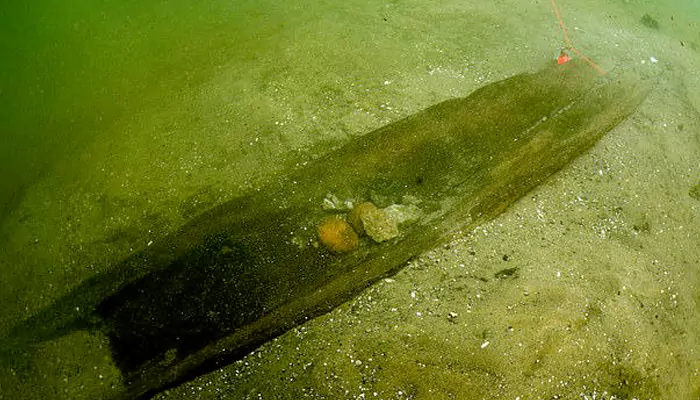
Discoveries under Lake Mendota are helping scientists better understand early human life in North America. Researchers have found ancient wooden canoes resting at the bottom of the lake, showing that people lived, travelled, and used advanced skills in the Great Lakes region thousands of years ago, according to reports. Researchers with the Wisconsin Historical Society have discovered a total of 16 ancient hollow wooden boats in Lake Mendota. Researchers say the oldest of these boats dates back to a time before the Great Pyramid of Giza in Egypt even existed. The first boat, approximately 1,200 years old, was discovered in 2021. Another boat, approximately 3,000 years old, was discovered in 2022. Further discoveries identified 14 other boats, six of which were discovered in the spring of 2025.