







In an election season where even a pocketful of cash can raise eyebrows, paperwork quietly becomes your safest companion.
It usually starts with a small
errand. You step out to make a payment - maybe for a vendor, maybe for a family obligation - and suddenly someone mentions, almost casually, “Carry your documents.” That’s when it hits. During the Vidhan Sabha Elections 2026, cash isn’t just cash. It’s… scrutinised.
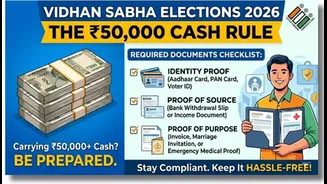
So what exactly is this ₹50,000 rule?
In plain terms, if you’re carrying cash exceeding ₹50,000 during the election period, you should be able to explain where it came from and where it’s headed. Not in a philosophical sense. In a paperwork sense.
Why This Rule Exists (and Why It Matters Today)
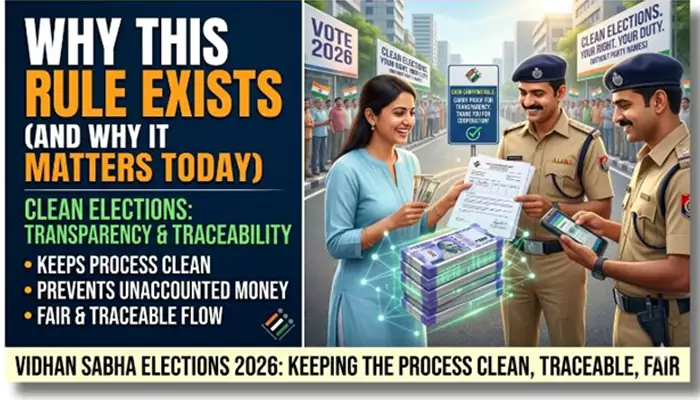
Election periods in India come with a tighter compliance net. The Election Commission of India activates surveillance teams to monitor the movement of unaccounted money. The idea is straightforward: keep the process clean, traceable, and fair.
Now, here’s the catch. Enforcement teams - flying squads, static surveillance units - are actively checking vehicles and individuals. If you’re found carrying cash beyond the informal ₹50,000 threshold without valid proof, it may be temporarily seized for verification.
Not ideal. Not fun either.
The Documents You Should Carry
Let’s keep this practical. If you’re moving around with significant cash, here’s what you’ll want in your bag (or at least on your phone):
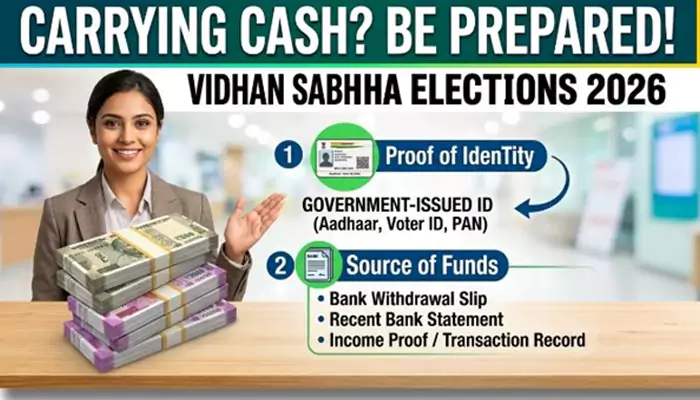
1. Proof of Identity
A government-issued ID - Aadhaar, PAN, voter ID. Basic, but essential.
2. Source of Funds
This is where people slip. You need something that explains where the money came from.
- Bank withdrawal slip
- Recent bank statement
- Income proof or transaction record.
No document, no context. And that’s when questions begin.
3. Purpose of Transaction
Why are you carrying the cash? A fair question.
- Invoice or bill (if it’s a business payment)
- Agreement papers (property, rent, etc.)
- Wedding or event-related expense proof (yes, that counts)
4. PAN Card (in certain cases)
For larger sums or business-linked transactions, PAN details help establish legitimacy.
A Small Scenario (Because This Happens)
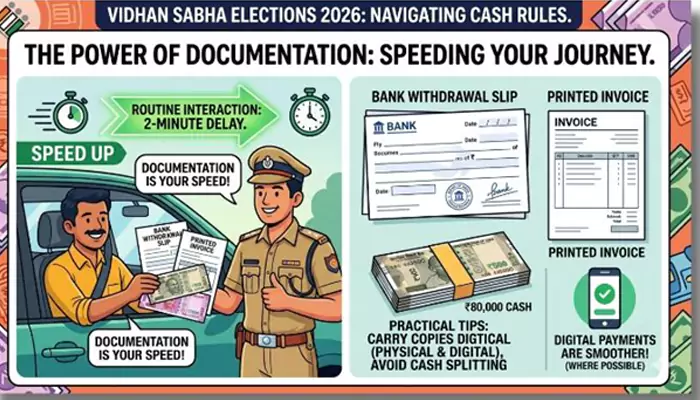
Picture this: You’re driving across districts with ₹80,000 to pay a contractor. You’ve got the cash, neatly packed. But no receipt. No withdrawal slip. Just a vague explanation.
That’s where things stall.
Now flip it. Same situation, but you carry a bank withdrawal slip and a printed invoice. The interaction becomes… routine. Maybe a two-minute delay, then you’re on your way.
Documentation doesn’t just protect you - it speeds things up.
A Few Practical Notes
Digital payments? Still smoother, if you ask most people quietly.
Carry copies - physical or digital, both work.
Avoid splitting cash across people to “stay under the radar.” It rarely works the way people think it does.