







Here are today’s most important updates from the realm of Science and Space.
Hidden Giants Below: What Lies Beneath Africa and the Pacific Protects Earth From Space Threats
Two gigantic hot rock blobs deep inside Earth have been shaping our planet's
magnetic field for ages, according to a new study. The study was published in Nature Geoscience, and combines ancient magnetic records from rocks (palaeomagnetism) with supercomputer simulations. Earth's surface is made up of three layers. The crust, which is the planet's outermost layer; the mantle, which is a thick, semi-solid layer in the middle; and then there is the core, which is Earth's innermost layer divided into a liquid outer core and solid inner core. Deep below the surface, about 2,900 kilometres down, at the boundary between the rocky mantle and the liquid outer core, sit two enormous structures.
NASA vs Hydrogen: Why a Tiny Molecule Just Delayed Artemis II
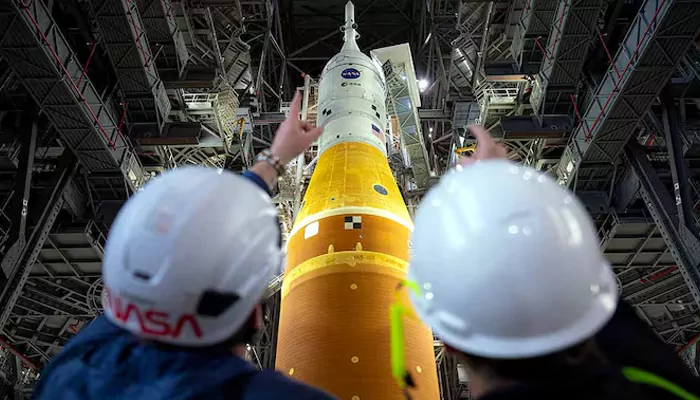
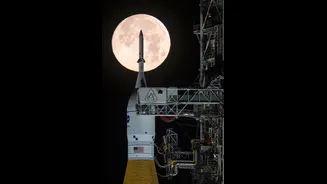
Hydrogen, a molecule so small it can slip through microscopic gaps, is now posing one of the biggest challenges to Nasa’s return to the Moon. The US space agency pushed its Artemis II mission to March after a full-scale launch rehearsal exposed fresh problems with the fueling process of the Space Launch System (SLS) rocket, once again linked to liquid hydrogen leaks. NASA has delayed its Artemis II mission to at least March 2026 after a liquid hydrogen leak disrupted a critical 49-hour launch countdown rehearsal at Kennedy Space Center. The issue, echoing problems from the 2022 Artemis I launch, underscores hydrogen's dual role as a powerful fuel and persistent challenge for the Space Launch System (SLS) rocket.
From Test to Takeoff: How DRDO’s Ramjet Tech Could Transform Indian Fighter Jets
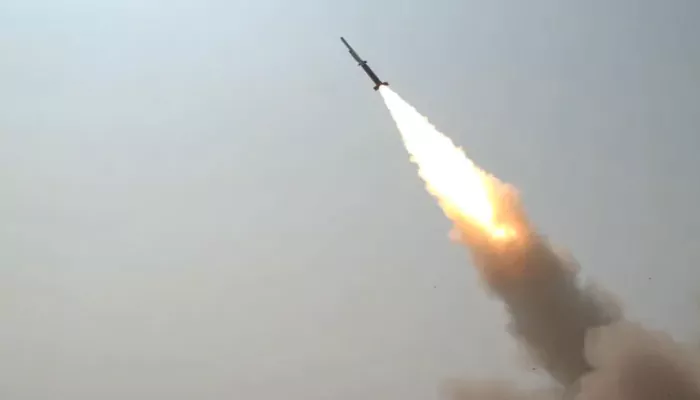
India has taken a major leap in advanced missile technology as the Defence Research & Development Organisation (DRDO) successfully tests Solid Fuel Ducted Ramjet (SFDR) technology, a capability mastered by only a handful of countries worldwide. The demonstration was carried out at the Integrated Test Range, Chandipur, off the coast of Odisha, at around 10.45 am on February 3, 2026. With this success, India enters an elite league of nations that possess ramjet-powered missile technology, a critical enabler for developing next-generation, long-range air-to-air missiles. A ramjet is a type of air-breathing jet engine that uses the missile’s forward speed to compress incoming air, rather than relying on complex rotating parts like conventional jet engines.
Destroying to Powering: How a Harmful Weed Is Fueling Jobs in the Nilgiris

The Tamil Nadu Forest Department has launched a pioneering 2025 pilot project in Masinagudi, where the invasive shrub Lantana camara is being cleared and transformed into clean, binder-free fuel briquettes. This innovative effort restores vital wildlife habitats, reduces pressure on natural forests, and provides steady livelihood opportunities for local tribal communities. Lantana camara, originally introduced to India as an ornamental plant, has become one of the country’s most aggressive invasive species. It now blankets more than 40 per cent of tiger habitats across India, choking native grasses, shrubs, and trees.