
Introduction
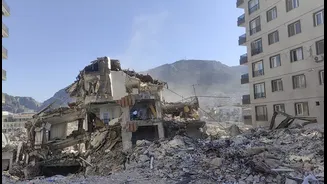
Earthquakes are one of the most powerful and destructive natural events on Earth, capable of causing widespread damage in just seconds. While earthquakes
can happen almost anywhere, some areas experience them much more frequently and with greater intensity than others. The science behind why certain places have more earthquakes involves understanding the movement of tectonic plates, the structure of Earth's crust, and how geological forces build up over time. This article explores why some places are more prone to earthquakes, focusing on the role of plate tectonics, fault lines, and other geological factors.
The Role of Tectonic Plates
Earth's outer shell, known as the lithosphere, is divided into several large, rigid pieces called tectonic plates. These plates float atop a more fluid layer called the asthenosphere, which allows the plates to move. The interactions between these plates are the primary cause of earthquakes. There are three types of plate boundaries where most earthquakes occur:
- Convergent Boundaries: These are regions where two plates move toward each other. When a denser oceanic plate collides with a lighter continental plate, one plate is forced beneath the other in a process called subduction. This can create massive earthquakes, often accompanied by volcanic activity. The Ring of Fire, which surrounds the Pacific Ocean, is a prime example of an area with frequent subduction zone earthquakes.
- Divergent Boundaries: At divergent boundaries, two plates move away from each other. As the plates separate, magma from the mantle rises to form new crust, leading to the formation of mid-ocean ridges. While earthquakeszat divergent boundaries tend to be smaller, they are still common, especially along the Mid-Atlantic Ridge, which runs through the center of the Atlantic Ocean.
- Transform Boundaries: At transform boundaries, two plates slide past each other horizontally. The friction between the plates causes them to get stuck, building up stress over time. When this stress is released, it results in earthquakes. The San Andreas Fault in California is one of the most famous transform boundaries and is known for frequent and powerful earthquakes.
Fault Lines: The Earth’s Cracks
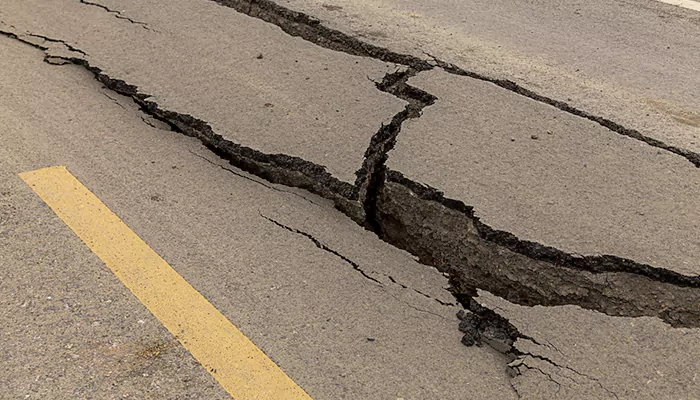
Fault lines are fractures in the Earth's crust where two tectonic plates meet or move relative to each other. These fault lines are often the locations of the strongest and most frequent earthquakes. The movement along fault lines can be vertical, horizontal, or a combination of both, depending on the type of boundary and the stress acting on the plates.
Some fault lines are active, meaning they are still experiencing regular movement and seismic activity. In contrast, others may be dormant or inactive for long periods. Regions near active fault lines, such as those along the Himalayan Belt or in the Pacific Northwest, are more likely to experience earthquakes than regions farther from these fault zones.
The Pacific Ring of Fire: A Hotspot for Earthquakes
The Ring of Fire is a horseshoe-shaped zone of active volcanoes and fault lines that encircles the Pacific Ocean. It is one of the most seismically active regions in the world, responsible for about 80% of the world’s earthquakes. Countries along the Ring of Fire, including Japan, Indonesia, the Philippines, New Zealand, and the west coast of North and South America, experience frequent seismic activity due to the constant movement of tectonic plates.
The Ring of Fire is largely shaped by subduction zones, where oceanic plates are forced under continental plates. This tectonic activity leads to the formation of deep ocean trenches, volcanic arcs, and frequent earthquakes. Major earthquakes like the 2011 Tohoku earthquake in Japan and the 2010 Chile earthquake occurred along the boundaries of this zone, demonstrating the powerful seismic forces at work.
Human Activity and Earthquakes
While most earthquakes are driven by natural tectonic processes, human activities can also contribute to seismic activity. One such activity is hydraulic fracturing (fracking), which is used to extract oil and natural gas from deep underground. Fracking involves injecting high-pressure fluids into the Earth’s crust, which can cause small earthquakes, particularly in regions that are already experiencing geological instability.
Additionally, the extraction of groundwater or the construction of large dams can lead to induced seismicity, where the stress on Earth’s crust is altered enough to trigger an earthquake. One notable example is the 2011 Wenzhou earthquake in China, which was linked to the construction of a large reservoir.
Geographical Factors and Earthquake Frequency
Some regions are more seismically active due to their proximity to major tectonic plate boundaries, while others experience far fewer earthquakes. Areas like the Alpide Belt, which stretches from the Mediterranean region through the Middle East, and the Hindu Kush in Central Asia, are prone to earthquakes due to the complex interactions between tectonic plates in these areas.
In contrast, regions far from active plate boundaries, such as the central United States and parts of Africa, tend to experience fewer earthquakes. However, some of these areas may still experience occasional tremors due to other geological processes, such as intraplate stress or the reactivation of ancient fault lines.
The Earth’s Crust and Seismic Risk
The composition and thickness of the Earth’s crust also influence the likelihood and intensity of earthquakes. For example, regions with a thinner crust, such as the East African Rift, are more likely to experience seismic activity. In contrast, areas with thicker crusts, like parts of Canada and Australia, tend to be more stable and less prone to large earthquakes.
Additionally, the nature of the rock along fault lines plays a crucial role in determining how much stress can accumulate before an earthquake occurs. Softer, more flexible rocks may allow for more gradual stress release, while harder, brittle rocks may result in sudden, violent shaking when the stress is released.
Conclusion
Earthquakes are a product of the dynamic processes occurring within Earth’s crust, primarily driven by the movement of tectonic plates. Regions along active plate boundaries, particularly those involved in subduction, transform, or divergent zones, are more likely to experience frequent and powerful earthquakes. While the science behind why some places have more earthquakes than others is rooted in tectonic activity, the human-induced factors and geographical characteristics also contribute to seismic risk. As our understanding of these forces improves, we can better predict, prepare for, and mitigate the impact of earthquakes on vulnerable regions.