






Have you ever wondered why the Mandap is the centrepiece of every Indian wedding? From its sacred symbolism to stunning modern designs, uncover the fascinating
story behind this timeless tradition.
Mandaps hold great significance in Indian weddings. For somebody who is not from this culture and country, the use of Mandap in every wedding song can be a bit confusing as they just see mandaps as a decorative structure. But the mandaps hold a place of deep cultural and spiritual significance where vows are exchanged and sacred rituals are performed. The Mandap is a timeless emblem of love, unity, and blessings, with its design and symbolism varying across India's diverse regions. So, let us know more about mandaps' significance and role in uniting tradition with modern celebrations.
What is a Mandap?
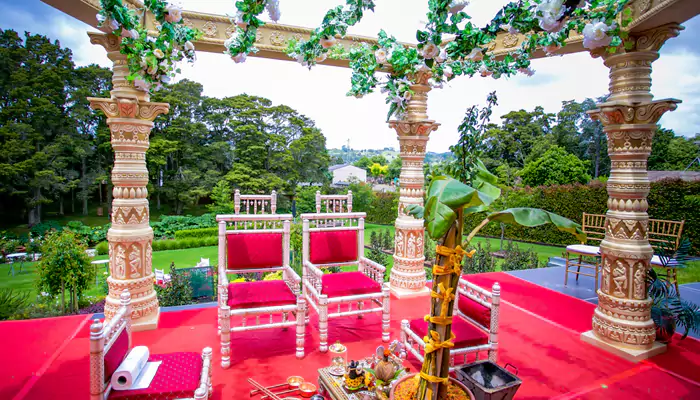
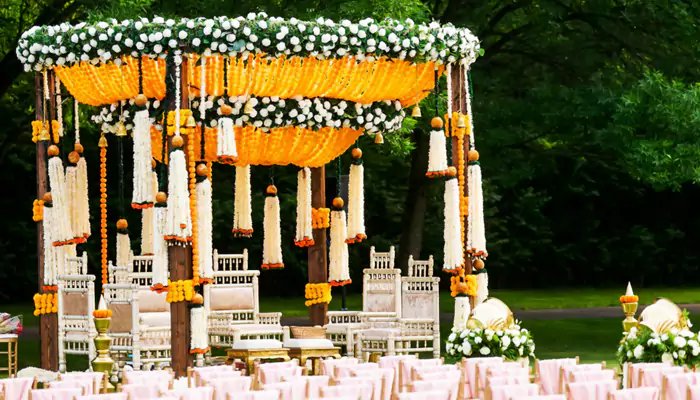
The Mandap is a canopy-like structure, typically supported by four pillars, representing the four Vedas (Rig, Sama, Yajur, and Atharva) that form the foundation of Hindu philosophy. It serves as the sacred space where the bride, groom, and their families come together to witness and bless the union.
Traditionally, mandaps were constructed from natural elements like wood, bamboo, or banana leaves, symbolising harmony with nature. Modern mandaps have evolved into grand structures adorned with flowers, crystals, and intricate fabric drapes, merging contemporary aesthetics with cultural traditions.
Symbolism associated with the Mandap
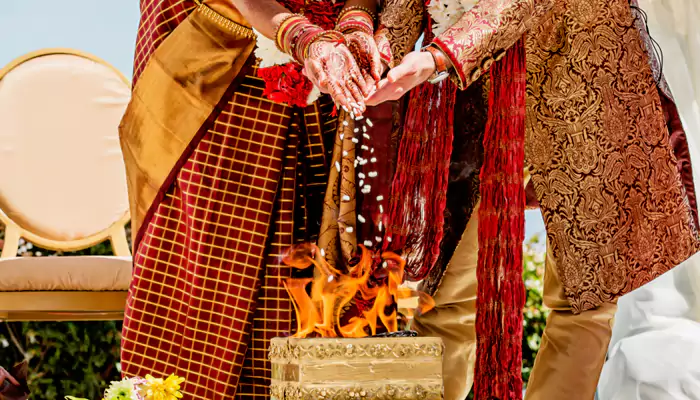
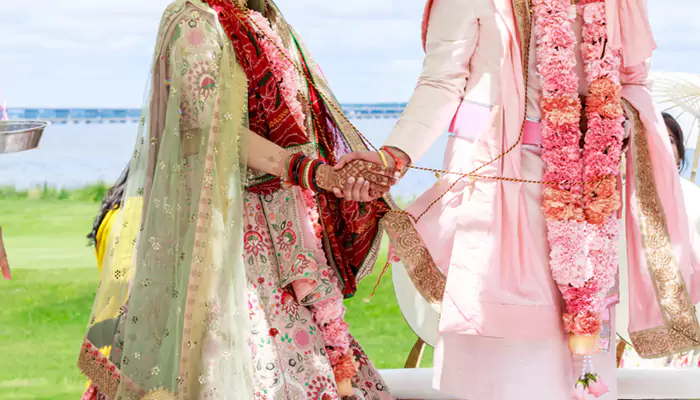
There is a lot of symbolism associated with the Mandap, which is considered akin to a temple, where divine blessings are invoked to sanctify the marriage. The holy fire (Agni), placed at the centre, is the eternal witness to the vows taken by the couple. The pillars of the Mandap represent the foundation of a strong marriage: parents, family, and the couple's mutual trust and respect. Moreover, the Mandap is not just about the couple; it signifies the merging of two families, cultures, and traditions.
Regional Variations of Mandaps
India's diversity is beautifully reflected in the design and décor of mandaps, each infused with local traditions and elements. Let's dive into some of them.
Southern India: In Tamil and Kerala weddings, the Mandap, often called the Kalyana Mandapam, is adorned with banana stalks, mango leaves, and jasmine flowers, which symbolise prosperity and fertility.
Western India: Gujarati and Rajasthani mandaps are vibrant and colourful, featuring intricate mirror work and marigold garlands.
Northern India: North Indian mandaps are typically lavish, using red and gold hues heavily.
Eastern India: Bengali and Oriya mandaps are simpler but carry deep symbolic elements, such as the chandala (decorative platform) and the use of white and red fabrics.
Modern Mandaps
While tradition remains at the core, modern weddings infuse personal touches and preferences into mandap designs. From eco-friendly mandaps made of recycled materials to minimalistic chic structures adorned with fairy lights, the Mandap has become a canvas for creativity.
The wedding mandap is more than a ceremonial structure; it's a sacred space where two souls unite and families come together. It bridges centuries-old traditions with contemporary aesthetics, making it a beautiful embodiment of love, culture, and spirituality.