




Here are today’s most important updates from the realm of Science and Space.
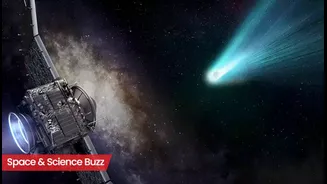
Why Is This Interstellar Comet Getting Brighter? NASA Investigates
NASA's SPHEREx
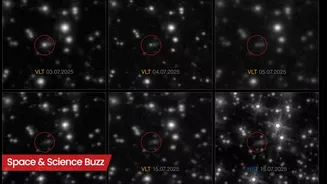
mission has been tracking the comet, saying that it detected organic molecules, such as methanol, cyanide, and methane. They also noted that the comet's brightness increased significantly two months after its closest approach to the Sun, suggesting delayed sublimation of subsurface ices. According to the estimates suggest the nucleus is less than 1 km (0.62 miles) in diameter. "Comet 3I/ATLAS was full-on erupting into space in December 2025, after its close flyby of the Sun, causing it to significantly brighten. Even water ice was quickly sublimating into gas in interplanetary space," study lead Carey Lisse of Johns Hopkins Applied Physics Laboratory in Laurel, Maryland, said as quoted by NASA.
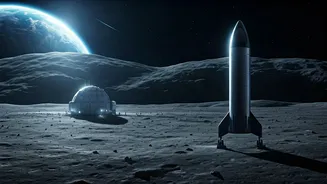
Lost in 1966, Found by AI: Historic Soviet Lander Rediscovered
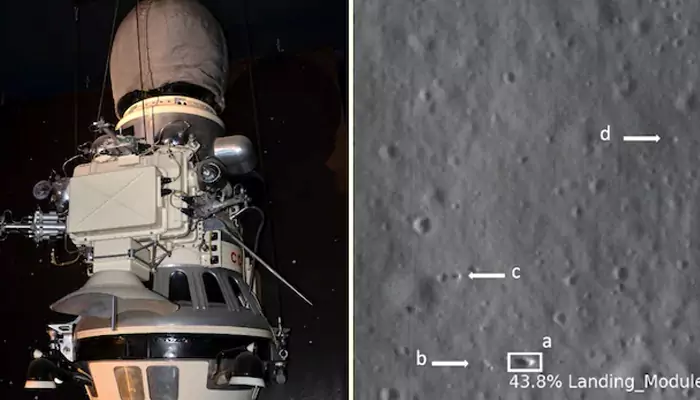
Scientists may have spotted the long-lost Luna 9 spacecraft, an uncrewed Soviet space mission that achieved a historic soft landing on the Moon in 1966 and returned images of its surface. It operated for just three days, but provided humanity with valuable data about the lunar surface. Despite its historic significance, the exact location of Luna 9 remained a mystery for decades. The spacecraft's landing site was estimated to be in the Oceanus Procellarum region, but the uncertainty was too large to pinpoint its location. They used an advanced machine-learning algorithm called YOLO-ETA (You-Only-Look-Once-Extraterrestrial Artifact) to scan images of the lunar surface by NASA's Lunar Reconnaissance Orbiter (LRO).
Cracking the Cosmos: Hubble Spots Mysterious ‘Space Egg’
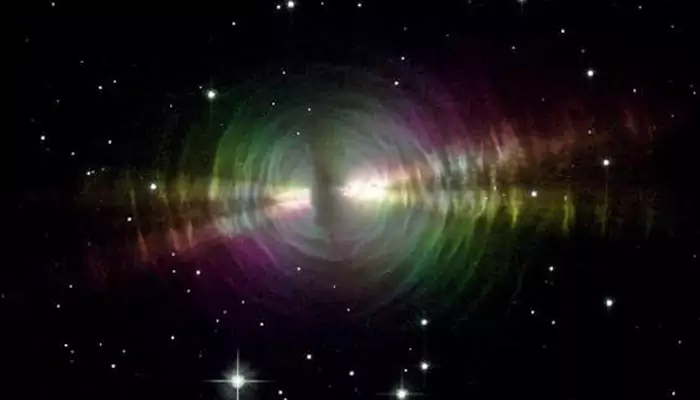
The Hubble Space Telescope has taken a breathtaking image of the Egg Nebula, which is a pre-planetary nebula located approximately 1,000 light-years away in the constellation Cygnus. As explained by NASA, a pre-planetary nebula is the preliminary phase of a planetary nebula. Notably, a nebula is a vast, interstellar cloud of dust, hydrogen, helium and other ionised gases located in outer space. "Only Hubble's sharpness can unveil the intricate details that hint at the processes shaping this enigmatic structure," said NASA. NASA said that it is the first, youngest, and closest pre-planetary nebula ever discovered, giving the scientists a perfect and rare opportunity to study it further.
Scientists Discover Genetic Traces Older Than Life on Earth
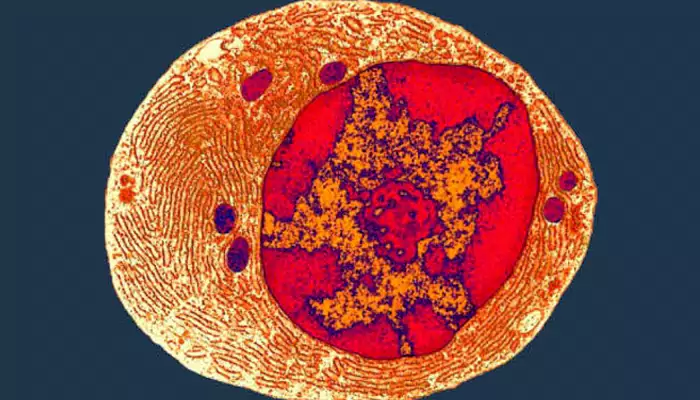
Scientists have discovered that the ancestor of all living things was not the "start" of life, but rather the survivor of an even older, mysterious era.For years, biology has centered on LUCA-the Last Universal Common Ancestor. This single-celled organism, which lived roughly 4.2 billion years ago, is the "trunk" of the evolutionary tree from which all bacteria, plants, and humans grew. However, a new study published in Cell Genomics reveals that LUCA inherited its most vital tools from "pre-LUCA" ancestors that have long been lost to history. The study highlights that these "super-old" genes weren't just backups; they handled the fundamental "tech" of life.