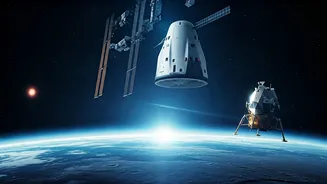

Here are today’s most important updates from the realm of Science and Space.
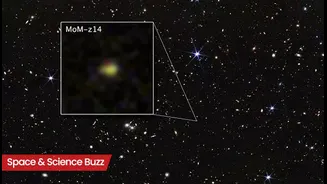
JWST Spots Most Distant Galaxy That Existed 280 Million Years After Big Bang
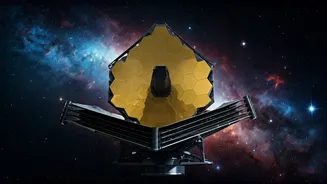
The James Webb Space Telescope (JWST) has stunned astronomers once again as it
has found the most distant galaxy ever observed, named MoM-z14. According to NASA, the newly discovered galaxy existed just 280 million years after the Big Bang. Scientists say that MoM-z14 is brighter, denser, and more chemically rich than expected. The discovery offers new clues to the early universe's evolution. "With Webb, we are able to see farther than humans ever have before, and it looks nothing like what we predicted, which is both challenging and exciting," Rohan Naidu of the Massachusetts Institute of Technology's (MIT) Kavli Institute for Astrophysics and Space Research, said as quoted by NASA.
Powerful Solar Storm Paints Ladakh Sky in Rare Blood-Red Aurora
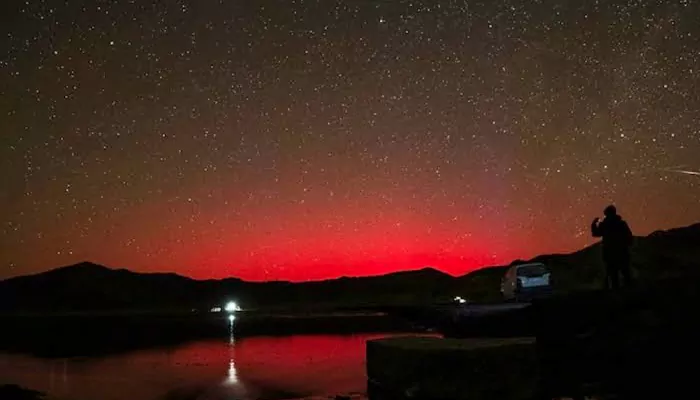
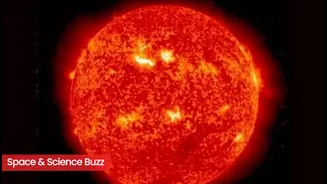
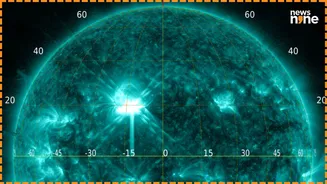
A striking blood-red aurora illuminated the high-altitude skies over the Indian Astronomical Observatory (IAO) in Hanle, Ladakh, on the nights of 19 and 20 January, in a rare display caused by powerful space weather activity. The all-sky camera at the observatory, operated by the Indian Institute of Astrophysics (IIA), captured the intense glow as charged solar particles collided with Earth's magnetic field at high altitudes. Scientists said this was the sixth time during the current solar cycle that such an intense red aurora has been seen at Hanle, a region famed for its dark skies and clear atmospheric conditions. The unusual spectacle resulted from a strong geomagnetic storm that began in the early hours of 20 January following the arrival of a coronal mass ejection (CME) launched from the Sun on 18 January.
Ancient Fossils Reveal Secrets Of Earth's First Mass Extinction
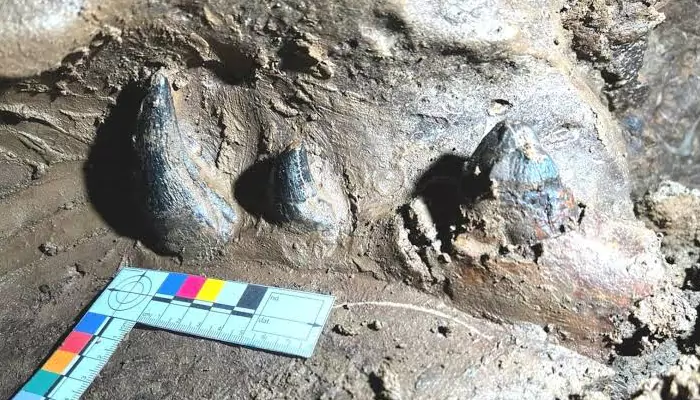
Scientists have uncovered an extraordinary collection of ancient fossils in China that is helping to explain a little-known chapter in the history of life on Earth. The fossils, which date back 512 million years, include many species never seen before and offer new insight into how life survived after one of the planet's earliest mass extinctions. Scientists have unearthed ancient fossils known as the Huayuan Biota from a quarry in Hunan Province, South China. These remains were uncovered during several field studies conducted between 2021 and 2024.
Ancient Basilica Unearthed, Tied to the Father of Architecture
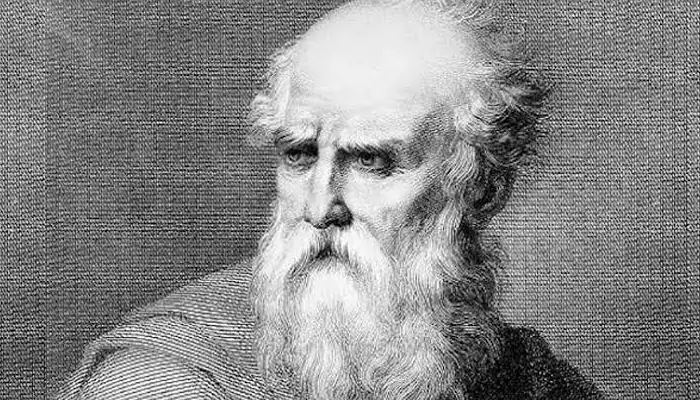
Archaeologists in Italy have uncovered a 2,000-year-old basilica connected to Vitruvius, the famous engineer often called the father of architecture. The discovery was made in Fano, a city about 150 miles northeast of Rome. Italian officials announced the find at a press conference on January 19, according to Reuters. Officials identified the building as a basilica, a type of public structure. Before Christianity was adopted in Rome, basilicas were primarily used for civic purposes rather than religious activities. According to officials, this basilica was rectangular in shape, with 10 columns on the long sides and 4 on the short sides. This is the basilica that experts can most closely associate with Vitruvius,