






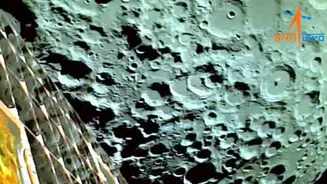

Cryogenic engines that use liquid hydrogen as fuel are one of the most complex rocket technologies in the world and are only mastered by a handful of countries,
including India
1947 is the year when India gained its freedom from the British regime, and in merely 16 years working as a sovereign country, i.e., in 1963, the country launched its first-ever rocket from the Thumba Equatorial Rocket Launching Station (TERLS), near Thiruvananthapuram, Kerala.
There is not an iota of doubt that over the decades, India has made great progress in rocket technologies and space travel, completing several critical missions, including mastering the building of a cryogenic engine for rockets.
For the unversed souls, cryogenic engines are one of the most complex rocket technologies in the world and are only mastered by a handful of countries, including India. And on this day in 2014, India launched its first-ever rocket powered by a cryogenic engine.
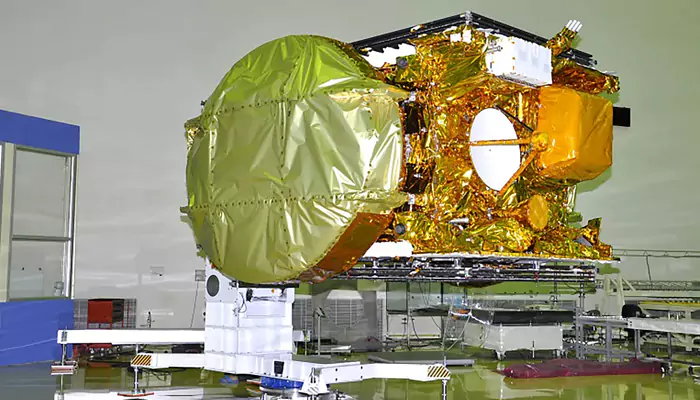
GSAT-14 satellite
(Credit- The Quint)
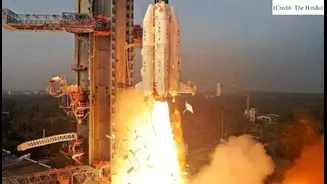
January 5, 2014, witnessed India launching the GSAT-14 satellite from Sriharikota’s launch pad. The satellite was meant to expand India’s regional connectivity and high-capacity data and broadcast services because it carried 6 Extended C-band transponders, 6 Ku-band transponders, and 2 Ka-band beacons. Not to forget, the satellite also comprised test technologies such as fibre-optic gyroscopes, active pixel sun sensors, and thermal control coatings to help improve satellite performance and future mission designs.
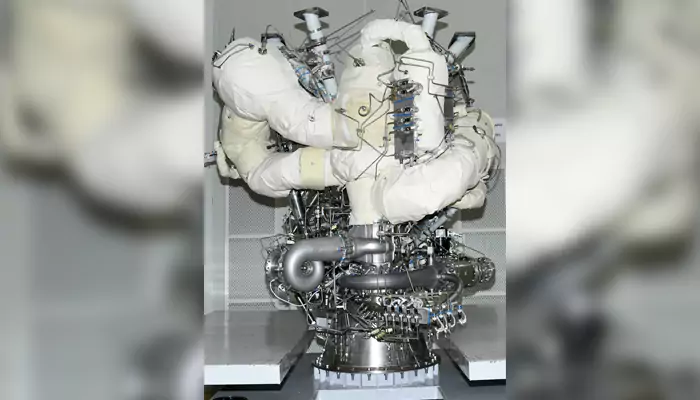
Cryogenic engine, the mass puller
(Credit- ISRO)
However, more than the satellite, the mass puller of that particular mission was India’s first-ever cryogenic engine that was designed to push the GSLV Mk.II–D5 rocket. For the record, before this mission, India had to use cryogenic missions from the state of Moscow. The country, on several occasions, had tried to build and launch cryogenic-engined rockets but failed. However, on January 5, 2014, the Indian Space Research Organisation finally had its share of success, lowering dependencies on other countries for future missions.
ISRO’s official statement
(Credit- The Economic Times)
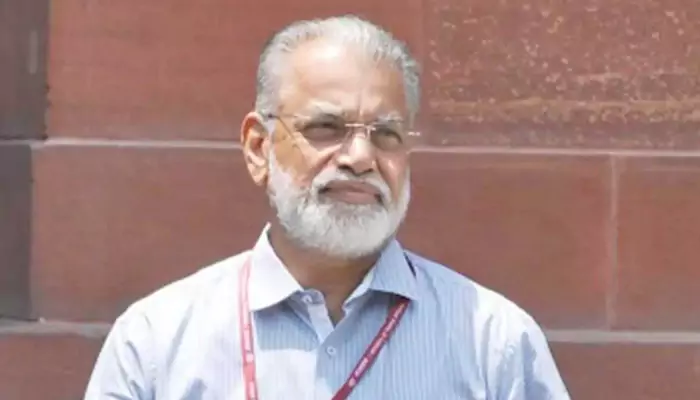
Following the launch success, ISRO chairman K. Radhakrishnan had said, “This shows the maturity of the team. We dedicate the proud moment to the country. The launch has been so precise that the satellite was put just 40 metres within the 179km perigee and only 50km of the 36,000km apogee,” as quoted by the TOI.
On January 5, 2014, with the launch of the GSLV Mk.II–D5 rocket, ISRO and India joined a league of elites that included the US, Russia, Japan, France, and the PRC. In fact, India recently rated its cryogenic engines capable of human-rated flights, which is another milestone achieved by ISRO.
As we have entered a new year, we hope ISRO keeps achieving more milestones in the realm of space research and technologies, not only for the betterment of India but for all of humankind.