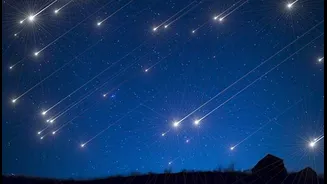









A meteor shower is a number of meteors or shooting stars flashing across the night sky seemingly from the same point.
The fireworks happening far in the
cosmos are exemplary, and astronomers are always fine-tuning their telescopes to discover new planetary activity. A meteoroid is a small rocky or metallic body in outer space. Most of them are fragments from asteroids and comets, while the others are debris from other celestial objects like Mars and the Moon. A meteor shower is hence several meteors or shooting stars flashing across the night sky seemingly from the same point.
When does a meteor shower happen the most?
Annual meteor showers can happen over several days, weeks, or months, and it is possible you can witness several meteors on any day the shower is active. Stargazers recommend trying your luck at the night sky during the peak time.
The visibility of meteor showers depends on a variety of factors, which include: peak time, position of the radiant, the point in the sky where the shower seems to originate, moonrise and sunset times, and the moon phase. If the moon is at a quarter phase or greater, you're going to miss meteors, even if your skies are otherwise dark.
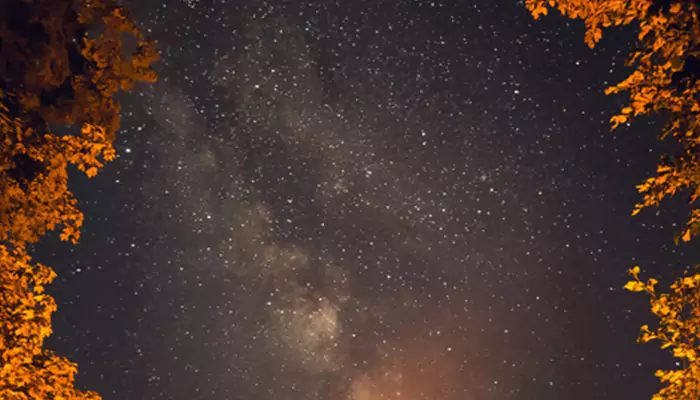
Check NASA's meteor calendar to be sure of the dates
- Quadrantids happen during December/January
- Lyrids happen during April
- Perseids happen during August
- Orionids happen during October
- Leonids happen during November
- Geminids happen during December
Find out the shower's expected rate
Make sure you know the zenithal hourly rate (ZHR) for each shower. The ZHR represents the number of meteors you might see per hour, given the very best observing conditions during the shower's maximum.
If most of the meteors are predominantly faint, if the peak occurs when it's still daylight at your location, if the bright moon is out, or if you're located in a light-polluted area, the total number of meteors you see will be considerably reduced.
How to watch a meteor shower?
Find out a secluded viewing spot that is away from the city lights so that you don't confuse a man-made firework with a meteor shower.
Fire up the Interactive Meteor Shower Sky Map on your mobile device to find out where to look in the sky for the radiant point. A meteor shower's radiant point is that point in the sky from which the meteors will appear to radiate.
Meteor gazing, spotting a shooting star, can be a test of patience. So bring anything that will make your wait comfortable with reclining chairs, blankets, pillows, and warm beverages.