








Explore the fascinating principles of lift and thrust that allow airplanes to soar through the skies.
The concept of flight has fascinated humans for centuries,
and the ability to soar through the sky was once a dream that only nature could accomplish. However, with the advancement of science and technology, we now understand the principles that make flight possible. Lift and thrust are the two key forces that enable an aircraft to leave the ground and stay in the air. These forces, governed by the laws of aerodynamics, work together to overcome gravity and drag, allowing planes to travel vast distances across the globe. In this article, we’ll explore the science behind lift and thrust, uncovering the physical principles that make flight possible.
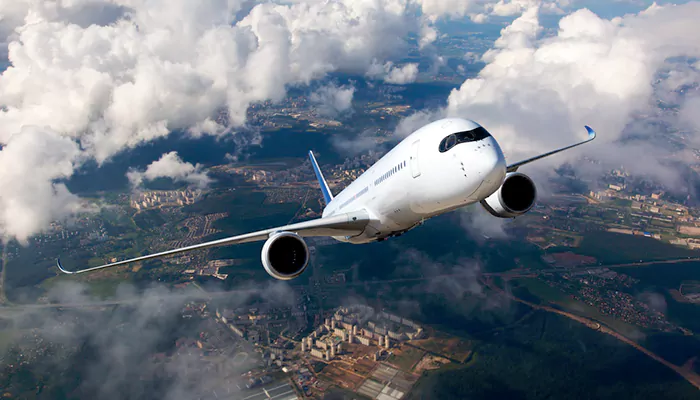
The Principle of Lift: How Airplanes Stay in the Air
The first force that must be understood when discussing flight is lift, the upward force that opposes gravity. For an aircraft to become airborne, it needs to generate enough lift to overcome the force of gravity pulling it down. This process is primarily achieved by the aircraft's wings.
The shape of an airplane's wings is specifically designed to generate lift. This is due to the airfoil shape, which is curved on the top and relatively flat on the bottom. As air flows over the wing, the air moving over the top travels faster than the air flowing underneath. According to Bernoulli's principle, the faster the air moves over the wing, the lower the pressure above the wing becomes. Meanwhile, the slower-moving air under the wing creates a higher pressure. This difference in pressure creates an upward force, or lift, pushing the aircraft off the ground.
In addition to Bernoulli’s principle, Newton’s third law—which states that for every action, there is an equal and opposite reaction—also plays a role in lift. As the wing pushes air downward, the equal and opposite reaction is that the wing is pushed upward, further contributing to the aircraft’s ability to remain airborne.
The amount of lift generated depends on several factors: the aircraft's speed, the angle of attack (the angle at which the wing meets the airflow), and the surface area of the wing. Pilots control the angle of attack by adjusting the elevator of the aircraft, and engineers design wings to maximize the efficiency of lift generation.
Thrust: The Power That Moves Airplanes Forward
While lift is crucial for getting an aircraft into the air, it is thrust that provides the forward motion necessary to sustain flight. Thrust is the force that propels the plane forward, overcoming the resistance created by drag. In simpler terms, thrust is what makes the airplane go forward, allowing it to maintain speed and stay in the air.
Thrust is typically generated by engines, which come in two main types: jet engines and propellers. Jet engines work by expelling hot gases at high speeds out of the back of the engine, creating a forward push due to the principle of action and reaction. In a jet engine, air is drawn in, compressed, mixed with fuel, and then ignited, creating high-speed exhaust gases that are expelled, providing the necessary thrust to move the aircraft forward.
Propellers, on the other hand, generate thrust by using rotating blades to push air backward. This action also generates an equal and opposite reaction, moving the airplane forward. The choice between jet engines and propellers depends on the design of the aircraft and the type of flight required. For high-speed, long-distance travel, jet engines are often preferred, while propeller-driven planes are typically used for shorter, slower flights.
The Relationship Between Lift and Thrust
For an airplane to maintain stable flight, lift and thrust must work together in harmony. While lift keeps the airplane in the air, thrust ensures that the aircraft moves forward fast enough to maintain that lift. As the plane moves forward, the airflow over the wings continues to generate lift. However, without sufficient thrust, the airplane would lose speed and, in turn, lose lift.
The speed at which an aircraft must travel to generate enough lift is known as the takeoff speed. This is the speed the aircraft must reach to create enough lift to overcome gravity and take off from the runway. Once airborne, the aircraft must maintain enough speed to keep generating lift while balancing the forces of drag, which resists motion, and weight, which pulls the plane down due to gravity.
The Role of Aerodynamics in Flight
Aerodynamics—the study of the motion of air and how it interacts with solid objects—plays a critical role in both lift and thrust. Understanding the flow of air around an aircraft allows engineers to design more efficient wings, engines, and fuselages. A key concept in aerodynamics is drag, the resistance experienced by an aircraft as it moves through the air. The smoother the design of the aircraft, the less drag it experiences, allowing the engines to work more efficiently and helping the aircraft maintain speed.
To reduce drag, modern aircraft are designed with sleek, smooth surfaces and wings that are carefully shaped to reduce air resistance. Additionally, engineers optimize engine placement and other components to ensure the plane can achieve maximum efficiency. Reducing drag directly improves the relationship between lift and thrust, making flight more efficient.
Controlling Flight: The Role of the Pilot
While lift and thrust are the fundamental forces that make flight possible, pilots play a crucial role in managing these forces during a flight. Pilots adjust the throttle to control the amount of thrust, and they use the elevator, aileron, and rudder to control the plane’s altitude, roll, and yaw. By carefully managing the balance between lift, thrust, drag, and weight, pilots can maintain steady, controlled flight under varying conditions.
In addition to standard controls, pilots must adjust for changes in weather conditions, including wind, turbulence, and air pressure. The dynamic nature of flight requires constant monitoring and adjustments, ensuring that the aircraft remains in a stable and safe position throughout the journey.
The Science of Flight Continues to Evolve
The understanding of lift and thrust has evolved significantly since the early days of aviation. As technology advances, new materials, more efficient engines, and cutting-edge aerodynamic designs continue to improve flight efficiency and safety. Whether for commercial air travel, military applications, or future missions to explore space, the principles of lift and thrust remain the cornerstone of modern aviation.
As scientists and engineers continue to innovate, the study of flight will lead to even more remarkable breakthroughs, allowing humanity to travel faster, farther, and more efficiently through the skies.