

Here are today’s most important updates from the realm of Science and Space.
The Sun Is on a Rampage: Four Solar Flares Ignite, One an X8.3 Giant
The Sun has unleashed four powerful solar flares, including an X8.1-class flare,
the strongest of 2026, NASA confirmed on Monday (Feb 2). These powerful solar flares have sparked concerns about potential disruptions to communication systems, power grids and satellite operations. All these events were captured by NASA's Solar Dynamics Observatory, which watches our star. "The Sun emitted three strong solar flares on Feb. 1, peaking at 7:33 a.m. ET, 6:37 p.m. ET, and 7:36 p.m. ET. The Sun emitted a fourth strong solar flare on Feb. 2, peaking at 3:14 a.m. ET," NASA revealed the timings.
Elon Musk Makes His Biggest Move Yet With SpaceX–xAI Mega Deal

SpaceX has acquired Elon Musk's artificial intelligence startup xAI, creating what is now the world's most valuable private company, the spaceflight firm said on Monday. In a note published on SpaceX's website, Musk said the merger is mainly aimed at building data centres in space. He argued that current AI systems depend on large data centres on Earth, which need huge amounts of electricity and cooling. Musk said global power demand for AI cannot be met by land-based data centres in the near future without harming communities and the environment.
Waves on Mars? Ancient Beach Discovery Hints at a Water-Rich, Life-Friendly Past
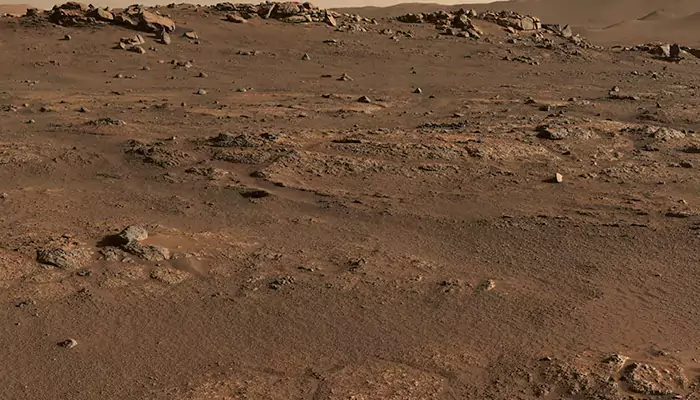
NASA's Perseverance rover has uncovered evidence of an ancient beach that once hosted a vast lake around 3.5 billion years ago. As scientists continue their probe to find possible clues of past life on the Red Planet, these findings suggest that Mars may have had a more hospitable environment, with water playing a significant role in shaping the planet's surface. The discovery was made in the "Margin unit" of Jezero crater, with researchers identifying wave-formed beaches and rocks altered by subsurface water. As per the study, the rounded sand-sized grains of olivine and carbonate indicate that the area was once a shoreline. The local bedrock appears eroded, said to be by waves.
Strands of Evidence: Preserved Hair Uncovers a Century of Lead Poisoning

Humans have found lead useful for thousands of years, but the metal's toxic effects didn't become well known until the 20th century. Now, using historical hair samples, researchers have shown that regulations targeting heavy-metal pollution were extremely effective at reducing the public's exposure to lead once its dangers were known. The researchers analyzed the hair for lead using mass spectrometry, a technique that identifies chemical compounds in a sample. Lead exposure is detrimental to human health, causing damage to the nervous system that can lead to developmental delays, seizures and learning problems, while also raising the risk of fertility issues and high blood pressure. There is no known safe level of lead exposure, the researchers wrote in the study.