




Here are today’s most important updates from the realm of Science and Space.
India on Solar Storm Watch as ISRO Warns of Severe Radio Blackouts
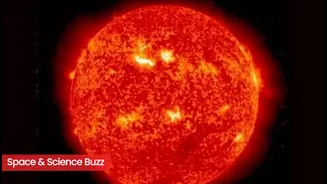
ISRO officials confirmed that more than 50 operational Indian satellites are
being kept under constant watch as heightened solar activity threatens to disrupt communication, navigation, and satellite payloads. “There is a strong possibility of radio blackouts. All ISRO satellites are being monitored very closely," Anil Kumar, Director of the Indian Space Research Organisation's Telemetry, Tracking and Command Network (ISTRAC), told NDTV. He added, "Any communication loss will be attended to immediately.” The current solar unrest began with the sudden intensification of a magnetically complex sunspot cluster known as Active Region 14366. Over the past few days, this region erupted repeatedly, producing four extremely strong solar flares, including an X8.1-class flare -- the most powerful of 2026 so far.
1.5 Million Space Objects Found And a US Student Made the Discovery
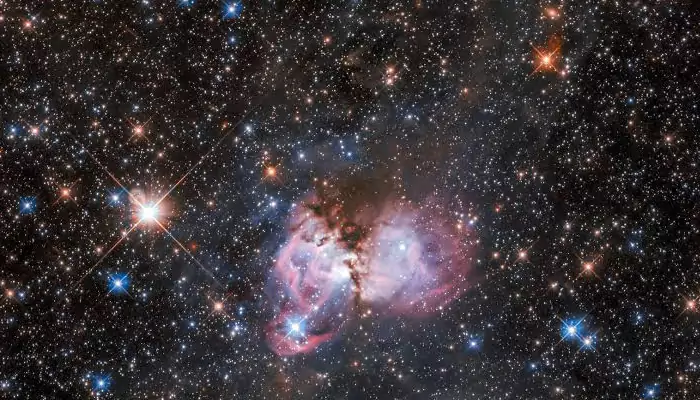
What began as a summer learning project has turned into a scientific discovery. An American high school student has identified nearly 1.5 million previously unknown objects in space. He made this discovery by studying old data collected by NASA. Matteo Paz, a student at Pasadena High School, worked with scientists at the California Institute of Technology's Infrared Processing and Analysis Center as part of the Planet Finder Academy. Under Caltech scientist Davy Kirkpatrick's guidance, he analysed archived data from NASA's NEOWISE telescope, which was launched in 2009 to look for asteroids coming closer to Earth. The telescope had collected over 200 billion rows of measurements, including countless objects in space, over the next decade.
From Zero Gravity to New Life: Can Humans Have Babies in Space?
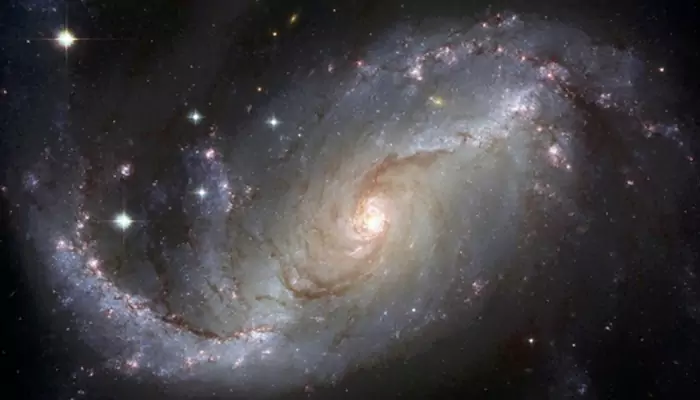
Scientists have been constantly making efforts to colonise the Moon and Mars, but the rapid advancement comes with a crucial question: can humans safely reproduce in space? A new study attempted to find answers, but unfortunately, there is still no clarity. Experts have warned that space environments pose significant risks to reproductive health, including radiation, microgravity and stress. The researchers revealed that space radiation can damage DNA, harm sperm and eggs, and increase cancer risk. This is particularly concerning for developing fetuses, as radiation can cause cellular damage. Microgravity can alter hormones, reduce sperm and egg quality, and affect embryo development. Several studies have been conducted on animals, which have shown mixed results, with some indicating normal development and others showing adverse effects.
Science Shock: Jupiter Isn’t as Big or Round as We Thought
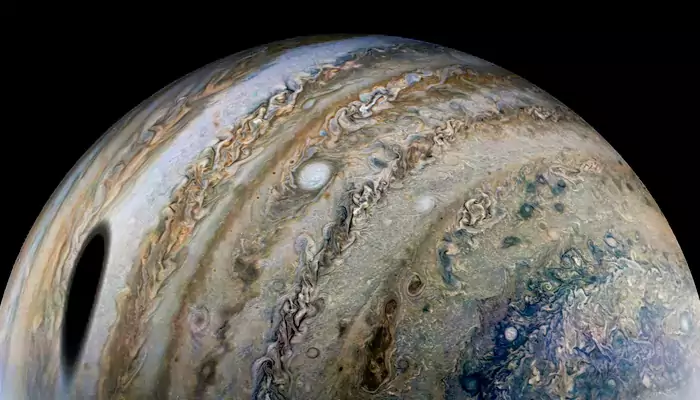
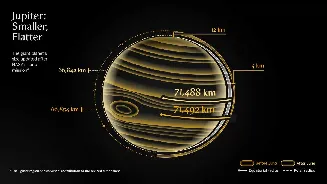
Jupiter is slightly smaller and flatter than scientists thought for decades, a new study finds. Researchers used radio data from the Juno spacecraft to refine measurements of the solar system's largest planet. Although the differences between the current and previous measurements are small, they are improving models of Jupiter's interior and of other gas giants like it outside the solar system, the team reported Feb. 2 in the journal Nature Astronomy. Until now, scientists' understanding of Jupiter's size and shape have been based on six measurements performed by the Voyager 1 and 2 and Pioneer 10 and 11 missions. Those measurements, which have since been adopted as standard, were performed around 50 years ago using radio beams, according to the statement.