





Here are today’s most important updates from the realm of Science and Space.
Artemis II Captures Rare Glimpse of the Moon’s Dark Side
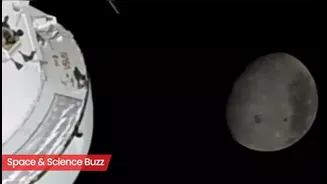
NASA's Artemis II mission reached a significant milestone on April 6, as the
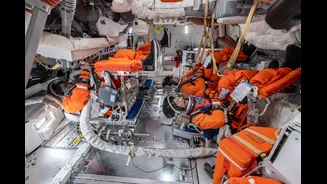
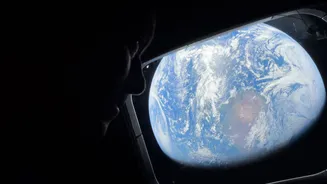
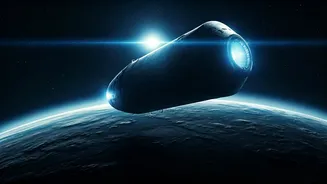
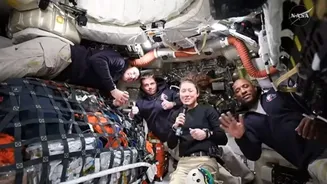
Orion spacecraft approached the Moon, marking the start of its Lunar Observation Program with its historic flyby. A screenshot from a NASA livestream shows Orion close to the Moon's surface, where all four astronauts, who have travelled farther than any human ever, set to record their observations. During this time, the spacecraft reached a maximum distance of 252,756 miles (406,771 km) from Earth, a new record for human spaceflight.
Neuroscience Reveals Why Teens Struggle With Social Media

Neuroscience shows that heavy social media use can overstimulate the teen brain still-developing reward pathways in ways similar to addictive behaviours like gambling. This immature system also makes teenagers more sensitive to social feedback and less able to cope with rejection. This leaves them vulnerable to highs and lows of online interaction, including the rapid, repeated negative comments that can intensify emotional stress. The emotional expressway - the limbic system - is wide open for speeding. The pre-frontal cortex - the brain's traffic-control centre responsible for judgment and impulse control - is still being built. This imbalance means that the fast emotional traffic often outruns the signals from the control centre, creating traffic jams in judgment and rational thinking and making it harder for teens to pause, reflect and assess consequences.
Artemis 2 concludes historic flyby around Moon
As Nasa’s Artemis 2 mission executed its historic lunar flyby on April 7, 2026, the real-world implications have become impossible to ignore. Sending humans to the vicinity of the Moon for the first time in 53 years, this mission has now officially broken the deep-space distance record for a crewed spacecraft. The Orion spacecraft reached a maximum distance of 4,06,780 kilometres from Earth, surpassing the legendary record set by Apollo 13. This historic 10-day flight is carrying four astronauts, Commander Reid Wiseman, Pilot Victor Glover, and Mission Specialists Christina Koch and Jeremy Hansen.
Gambling Began in the Ice Age? Ancient Dice Suggest So
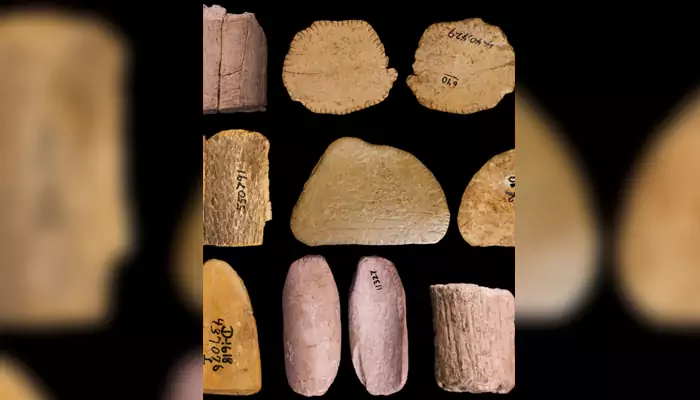
A new study has suggested that humans may have been gambling much earlier than previously thought. Researchers have found evidence in 12,000-year-old Native American dice that could represent the earliest known use of games of chance, reported NYPost. The study, published in the journal American Antiquity, highlights how ancient communities may have understood and used randomness long before similar developments appeared in other parts of the world. This suggests that North American indigenous communities were creating multifaceted objects and using them in games of chance as early as the last Ice Age. To understand the true purpose of these objects, Madden analysed more than 600 sets of Native American dice. These remains were found at various prehistoric sites in the western United States, including areas on both sides of the Rocky Mountains.