









If 2023 was about “playing with AI”, 2025 was the year it quietly moved into everyone’s job description -sometimes helpful, sometimes unnerving, but definitely
not optional anymore.
So, what just changed at work? By late 2025, AI hasn't just become a moonshot experiment; it’s now buried in applicant‑tracking systems, email tools, CRM dashboards, design suites, even how your rota gets made. Employers are already re‑wiring roles around automation, with nearly 40% of on‑the‑job skills expected to change by 2030, according to the World Economic Forum’s latest Future of Jobs report.
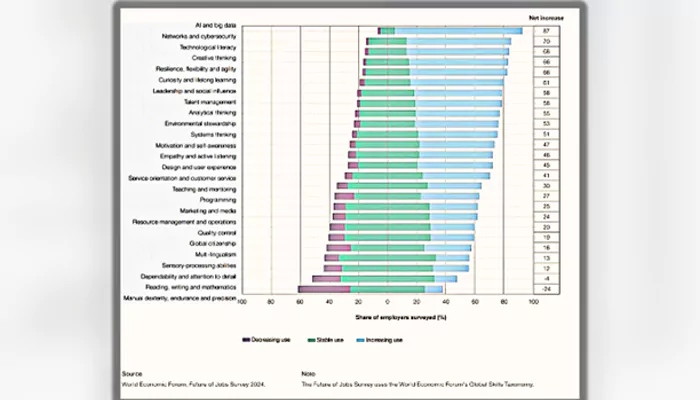
Skills on the Rise 2025-2030
(Source: World Economic Forum)
PwC’s 2025 Global AI Jobs Barometer goes further in occupations heavily exposed to AI. The required skills are shifting 66% faster than before, and postings that explicitly ask for AI skills carry an average wage premium of about 56%.
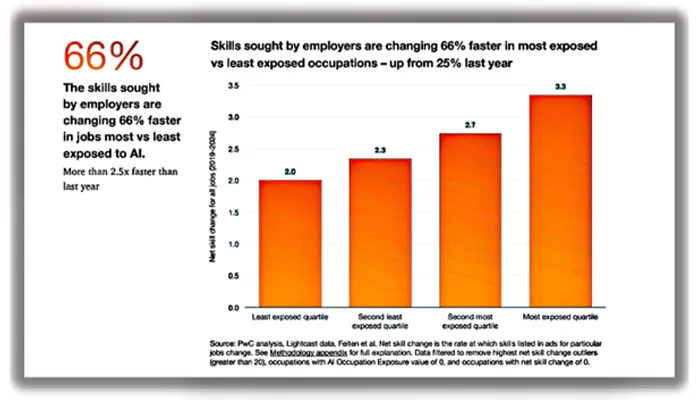
(Source: PwC Analysis, Lightcast Data)
The non-negotiable “hard” skills for 2026
Under the hood, three clusters are racing up every priority list.
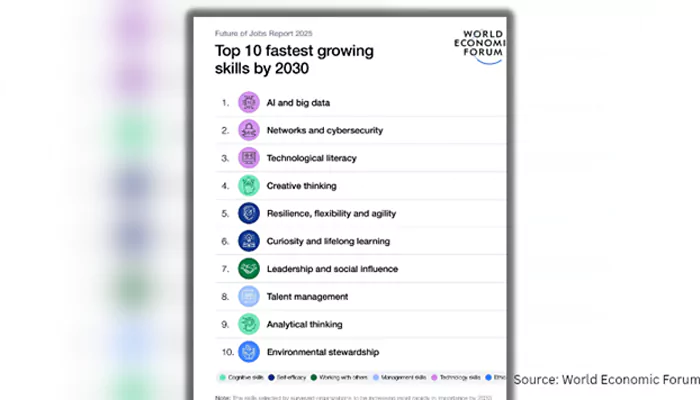
- First, AI and data fluency: being able to frame prompts, interrogate dashboards, sanity-check outputs and understand basic data structures is no longer just for engineers, as WEF ranks “AI and big data” as the single fastest‑growing skill set.
- Second, technological literacy in a broader sense: networks, cybersecurity basics, and comfort with rapidly changing digital tools are viewed as critical by a large majority of employers, especially as more workflows sit in the cloud.
- Third, adjacent analytical abilities: structured problem‑solving, experimentation, and quality control are what separates growing roles from declining ones, because someone still needs to decide what the model should optimize for.
In practical terms, that might look like a marketer who can design A/B tests in a gen‑AI campaign tool, or a project manager who can read a predictive risk dashboard without glazing over.
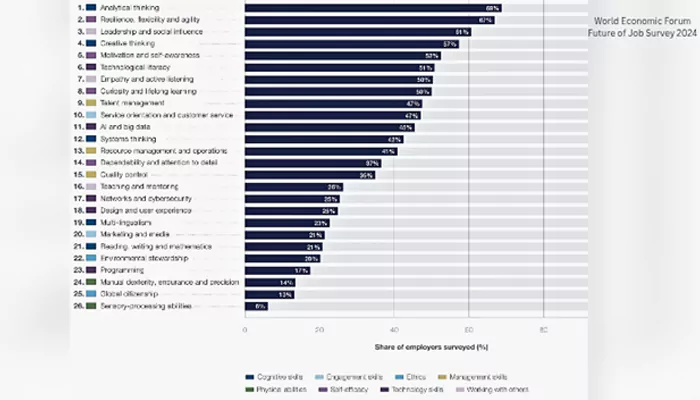
Core Skills for 2025-2030
But, here’s the twist: as the tech bar rises, so does demand for the softer stuff. The same Future of Jobs report highlights creative thinking, resilience, flexibility and agility, curiosity and lifelong learning as some of the fastest‑rising capabilities across industries.
Employers also flag leadership, social influence and talent management as top-10 skills on the rise, precisely because AI can crunch information but still struggles to persuade a nervous client, mediate a team conflict, or sense when a product narrative just doesn’t land.
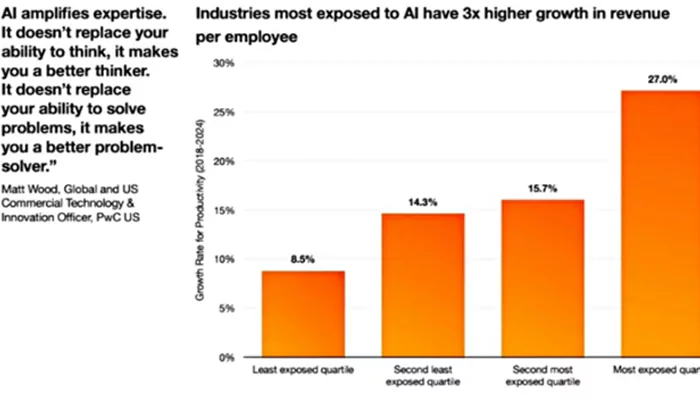
PwC's analysis echoes exactly this
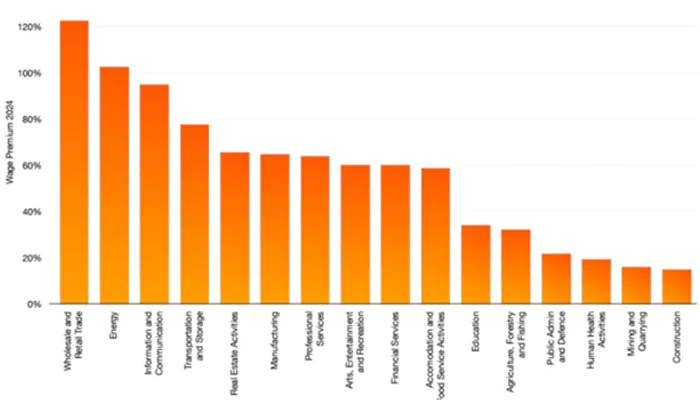
Source: The fearless future: PwC’s Global AI Jobs Barometer
AI-heavy sectors are seeing job growth and higher productivity, but only where organisations invest in people who can adapt, communicate across silos, and pull technology into real-world decisions rather than treating it as a black box.
In other words, being the calm, context-aware person in the room is turning into a technical skill of its own. Studies on skills-first recruitment show large employers dropping formal degree requirements in many AI-exposed roles and focusing instead on demonstrable competencies like portfolios, case studies, assessed projects, even public contributions.
Source: The fearless future: PwC’s Global AI Jobs Barometer
AI-powered recruitment platforms now parse not just titles but “skill clusters”, mapping a candidate’s experience to adjacent roles they might never have considered, which is speeding up skill-based career shifts. This lines up with WEF’s warning that skills gaps are the main barrier to business transformation, cited by over 60% of surveyed companies, and with Coursera’s reading of the same data: tens of millions of new roles are expected by 2030, but they’ll go to people who can show current skills, not just historical credentials.
Note: For workers, that means your GitHub, Notion portfolio, Substack or Kaggle profile may soon matter more than the exact wording on your diploma.
How to future-proof yourself for 2026 (without burning out)
Source: World Economic Forum
Given this chaos, what should a sane person actually focus on over the next 12 months? A realistic strategy is to build a three-layer stack.
- At the base, pick one or two concrete technical skills that show up again and again in job ads in your field - maybe prompt‑driven analytics, basic scripting, or domain‑specific AI tools - and aim for hands-on proficiency rather than endless certificates.
- In the middle, deliberately practise “transferable” abilities like structured writing, facilitation, and stakeholder communication; these are showing up as differentiators in both WEF and PwC datasets, especially in AI-exposed jobs.
- On top, keep a light but steady habit of experimentation: trying new tools, documenting what worked, sharing small learnings - behaviours closely tied to curiosity and lifelong learning, which employers consistently rank as rising in importance.
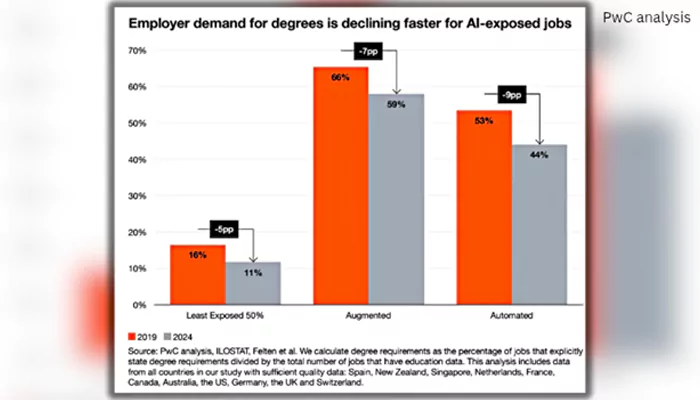
Employer demand for degrees is declining faster for AI-exposed jobs
In a nutshell, work will stay a bit confusing, and no single course can “fix” your career. But in 2026, the people who use AI as a teammate, keep learning new skills, and trust their own common sense will have the strongest careers.
The message is blunt but oddly hopeful -AI is not just cutting tasks, it’s raising the bar (and pay) for people who learn to work with it.