









As we all know, life requires liquid water, and you might be startled to find out that it is fairly common within our solar system.
Fortunately, humans
are very good at finding water. The advancement of modern science has enabled astronomers to search for water across vast distances and under obstacles as varied as miles of ice and opaque clouds. Here are five locales in our solar system with liquid water, and you must know about them.
Enceladus
Enceladus (the sixth-largest moon of Saturn) has a diameter of 1,950 miles, slightly smaller than our moon. But don’t mind its small size: Enceladus is one of the best candidates for a warm, salty, wet ocean. As a result, it has a high probability of supporting life, just as much as Europa.
Europa
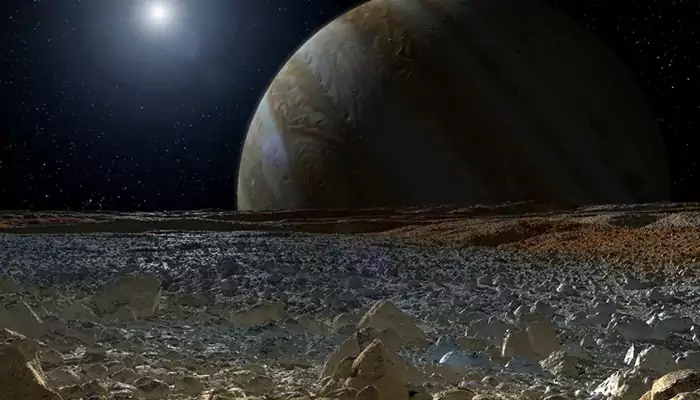
Europa is one of the Galilean moons of Jupiter and is popularly known for its surface, which consists of solid ice, and a subsurface that constitutes moon-spanning oceans. The ocean below is approximately 100 km deep, with some slushy mixture near the top and liquid below that. This further suggests that Europa has more water than the Earth has in its oceans, and probably three times over.
Titan
Titan is the second-largest moon in our solar system and is characterized by an atmosphere of liquid methane and nitrogen. The presence of methane is so abundant that the “methane cycle”, similar to the water cycle on Earth, exists, complete with lakes, rain, rivers, and seas at a chilly temperature of -179 °C. However, the water ice probably lies below the rocky surface, and liquid water mixed with ammonia prevents freezing, and it supposedly lies underneath the surface as well.
Ganymede
Astronomers long suspected this Galilean moon of Jupiter to have an ocean lying beneath the 100-mile-thick ice crust at the surface. A new study suggests that the ocean is somewhat salty and warm. Unlike Europa, Ganymede does not have a cross-hatched icy surface displaying consistent geologic surface activity, and the chances of harboring an ocean are good.
Mars
The notion that Mars has vast canals full of water to sustain lush vegetation has long been debunked, but the Red Planet does have as much water as our Lake Superior. However, the overwhelming majority of it is frozen.
But liquid water can be traced in small lakes below the glaciers at the poles. The lake is about 1.5 km underneath the ice cap, and it probably remains liquid because of the anti-freezing properties of some of the minerals present in the Martian soil.
So now you know that the solar system is not as parched as you might have thought earlier.