



What You're Actually Seeing
First, let's get one thing straight. When astronomers talk about a planetary “alignment,” they don’t mean the planets are forming a perfectly straight line in space, like cosmic billiard balls ready for a break shot. If that were the case, it would be
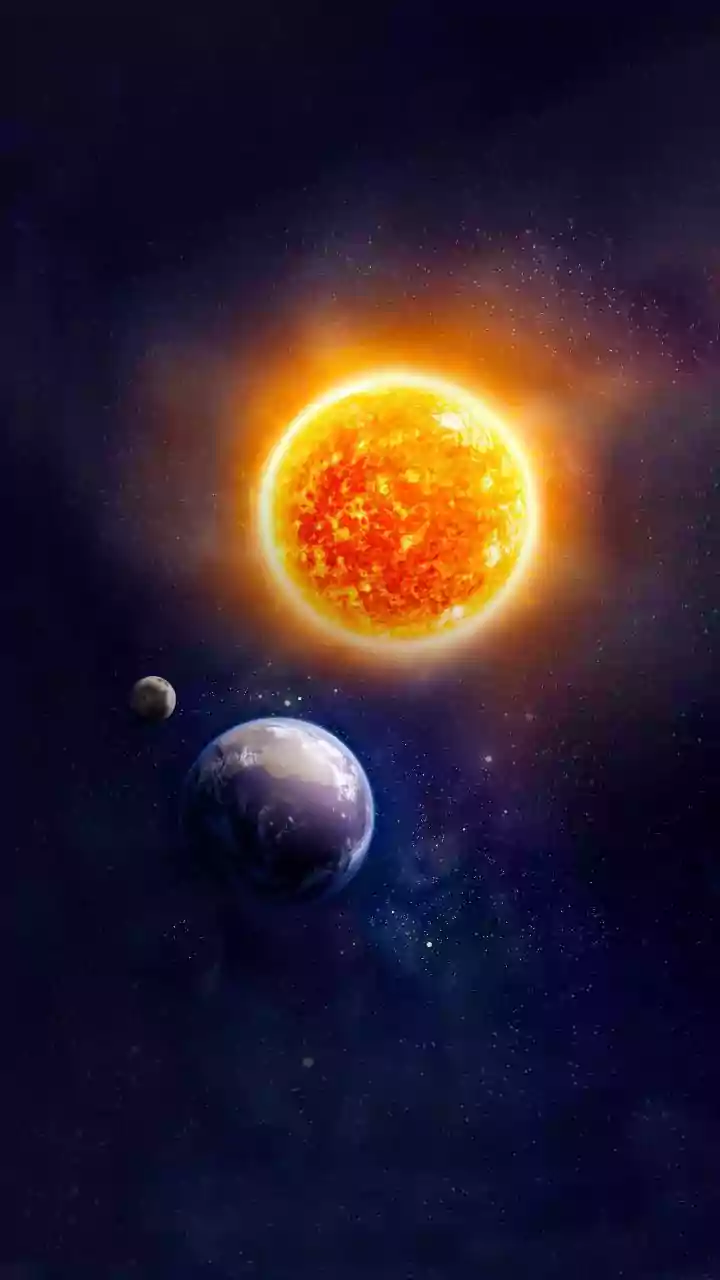
an impossibly rare event. Instead, what we're seeing is a beautiful illusion of perspective. The planets, including Earth, are all orbiting the sun on slightly different planes and at vastly different speeds and distances. From our viewpoint, these orbits occasionally cause several planets to appear close together in a small patch of our sky. Think of it like watching cars on a multi-lane, circular racetrack from the infield. At certain moments, two or three cars might look like they are right next to each other, even though they are in different lanes and at different points on the track. That’s what’s happening up there: a magnificent, fleeting trick of celestial geometry.
Meet the Celestial Trio
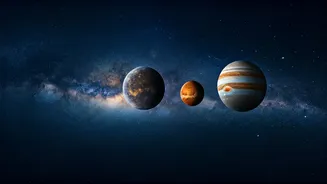
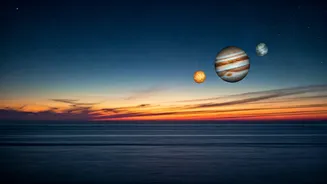
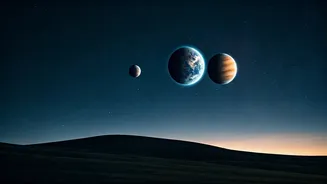
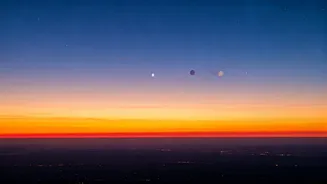
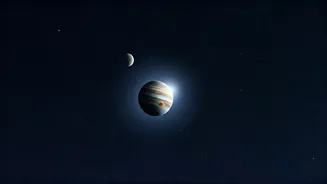
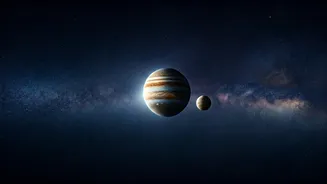
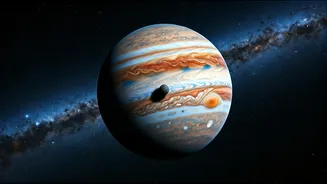
So, who are the players in this twilight drama? You've got a great cast. The brightest of the bunch will be Venus. Often called the “Evening Star” or “Morning Star,” Venus is covered in thick, reflective clouds, making it the most dazzling object in the night sky besides the Moon. It’s impossible to miss—a brilliant, steady beacon. Not far from it, you’ll spot Jupiter. As the largest planet in our solar system, Jupiter is also exceptionally bright, second only to Venus in this lineup. It will look like a very bright, unwavering star. The third member, Mercury, is the trickiest to spot. It’s the smallest of the three and the closest to the sun, meaning it’s always fighting the glare of twilight or dawn. Finding it is a real badge of honor for a casual stargazer. It will look like a faint star tagging along with its two much brighter siblings.
How to See the Show
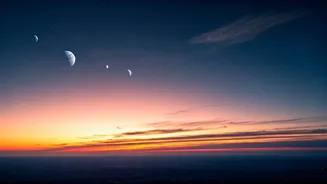
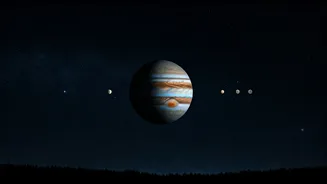
This is the best part: you don't need a fancy telescope, a degree in astrophysics, or a trip to a remote observatory. You just need your eyes, a little patience, and a clear view of the western horizon. Start looking about 30 to 45 minutes after sunset. This is the sweet spot when the sky is dark enough for the planets to pop, but before they dip below the horizon for the night. The direction is key: face the spot where the sun just set. Venus will likely be the first to appear, a blazing point of light in the deepening blue. Once you have Venus, look nearby for the steady, bright light of Jupiter. Mercury will be the faintest and lowest, so give your eyes a few minutes to adjust. If you live in a city, try to get to a park, a rooftop, or any spot that minimizes streetlights and tall buildings blocking your western view. Even a small pair of binoculars can enhance the view, potentially revealing Jupiter’s four largest moons as tiny pinpricks of light right next to the planet itself.
Is This Alignment a Big Deal?
In a word, yes. While planets frequently appear near each other in the sky (these events are called conjunctions), having three bright ones—especially a trio that includes the elusive Mercury—clustered together in the narrow window of twilight is a special treat. These gatherings don’t happen on a predictable schedule; they’re the result of a complex gravitational dance that plays out over years and decades. Seeing them arranged in a neat little line or a tight triangle is a reminder of the dynamic, ever-moving nature of our solar system. It’s a moment of cosmic alignment in both the literal and figurative sense, a chance to see the architecture of our celestial neighborhood laid out in front of you.