


Harnessing the Power of Biophilia
There's a scientific reason why plants feel so good to have around. The concept of 'biophilia' suggests that humans have an innate tendency to seek connections with nature. When you bring plants indoors, you're satisfying a deep-seated psychological need.
This connection can reduce stress, lower blood pressure, and improve your overall mood. In a small home, where the outside world can feel distant, a few potted plants serve as a constant, calming reminder of the natural world, making your space feel less like a box and more like a sanctuary.
Creating Visual Depth and Interest
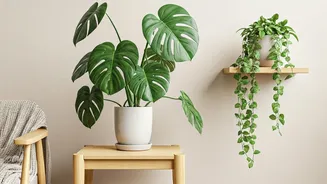
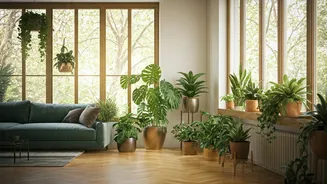
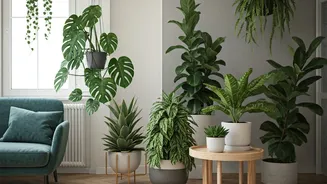
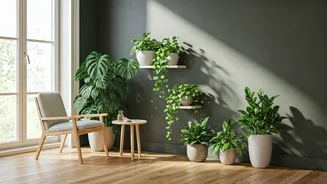
In a compact apartment or studio, the eye can quickly scan the entire room, making it feel even smaller. Plants are masters of illusion, creating layers and focal points that add visual complexity. A large fiddle-leaf fig in a corner can draw the eye upward and create a sense of scale. A trailing Pothos on a bookshelf breaks up the hard, straight lines of a shelf. This layering effect adds depth, fooling the brain into perceiving the space as larger and more dynamic than it actually is. It's not just filling space; it's sculpting it.
The Illusion of Higher Ceilings
Vertical space is often the most underutilized asset in a small home. Tall, slender plants are a designer’s secret weapon for making a room feel more expansive. A Snake Plant, with its upright, sword-like leaves, or a Dracaena marginata guides the gaze vertically, creating the impression of a higher ceiling. Placing these plants in a simple, tall planter further enhances the effect. By emphasizing the height of the room, you distract from its limited square footage, making the entire area feel more open and airy.
Adding Softness and Organic Texture
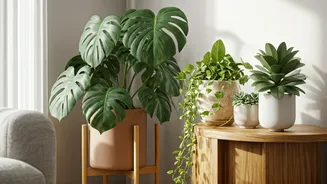
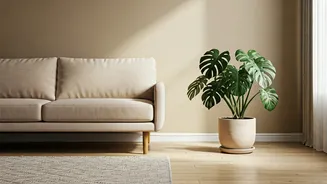
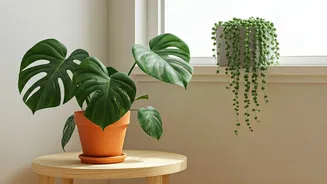
Our homes are filled with hard surfaces and right angles: walls, tables, screens, and floors. Plants introduce a vital element of softness and organic form. The gentle curve of a monstera leaf, the feathery fronds of a fern, or the intricate pattern on a calathea provides a beautiful contrast to the manufactured environment. This textural diversity makes a room feel more curated, comfortable, and lived-in. It’s the difference between a sterile showroom and a warm, personal home.
Best Starter Plants for Small Spaces
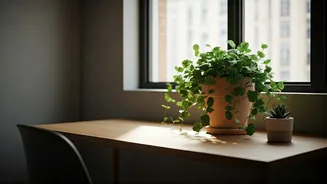
Getting started doesn't have to be intimidating. The key is choosing plants that are resilient and suited to typical apartment conditions, which often means lower light. The Snake Plant (Sansevieria trifasciata) is nearly indestructible and tolerates low light and infrequent watering. The ZZ Plant (Zamioculcas zamiifolia) is another champion of neglect, thriving in dim corners. For a trailing option, the Golden Pothos (Epipremnum aureum) is famously easygoing and will happily cascade from a high shelf even with minimal fuss. All three are excellent, low-risk choices for a first-time plant parent in a small home.
A Realistic Note on Air Quality
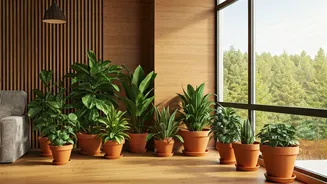
You’ve probably heard that houseplants purify the air. While this is technically true based on a famous 1989 NASA study, the effect is often overstated for a typical home setting. To significantly clean the air in a room, you would need a dense, indoor jungle—far more plants than are practical for most small spaces. So, while your plants are contributing a tiny bit to cleaner air, their primary benefits are aesthetic and psychological. Think of any air-purifying qualities as a small bonus, not the main reason to bring them into your home.