

The Search for a Room of One's Own
The modern apartment was designed for living, not for co-working with a partner, roommate, or family members 24/7. The open-concept layout, once a symbol of airy freedom, has become a liability for concentration. Every phone call is public, every video
meeting is a potential intrusion, and the visual clutter of daily life is a constant distraction. This has created a booming demand for a solution that sits somewhere between building a new wall and simply putting on noise-canceling headphones. People are seeking a physical boundary—a designated space that tells both your brain and your housemates: 'I am focused now.'
What Exactly Is a Foldaway Pod?
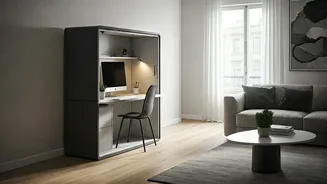
Forget the heavy, glass-doored office booths you might see in a corporate co-working space. A foldaway study pod is a much lighter, more accessible creature. Typically constructed from materials like thick acoustic felt, fabric-covered panels, or lightweight composites, these pods are designed for residential use. Their key feature is portability. Some function like sophisticated pop-up tents, collapsing into a flat-pack or a carry bag. Others are made of interlocking panels that can be easily assembled and disassembled without tools. They are less about creating a perfectly soundproof chamber and more about providing significant acoustic dampening and, crucially, a visual barrier from the surrounding environment. Inside, you’ll usually find just enough space for a small desk and a chair, creating a compact, distraction-free cockpit for work or study.
The Psychology of a Sanctuary
The primary benefit of a study pod isn't just that it muffles your roommate’s podcast. It’s psychological. By stepping into a dedicated enclosure, you are performing a ritual that signals a shift from 'home mode' to 'work mode.' This physical separation helps create a mental one, making it easier to drop into a state of deep focus. For many users, the visual privacy is even more important than the sound reduction. Being shielded from the sight of the laundry pile, the unwashed dishes, or a pet demanding attention eliminates countless micro-distractions that slowly erode productivity throughout the day. This enclosed space becomes a true 'concentration sanctuary,' a predictable environment where the only stimulus is the task at hand.
The Practicality Test: What to Consider
Before you invest in a personal pod, it’s vital to assess the practicalities. First, measure your space carefully. While 'foldaway,' these pods still occupy a significant footprint when assembled—often around 4x4 feet or more. Ensure you have a corner where it can live without completely disrupting the flow of your apartment. Ventilation is another key factor. Most fabric-based pods are breathable, but they can still get stuffy. Look for models with built-in air circulation or plan to take regular breaks. Lighting is also critical; many pods are dark inside, so you will likely need to add your own dedicated lamp. Finally, there's cost. Prices can range from a few hundred dollars for a basic fabric model to over a thousand for more rigid, feature-rich versions. Consider it an investment in your productivity and peace of mind.
Making the Pod Your Own
Simply setting up a pod is only half the battle. To truly turn it into a sanctuary, you need to optimize it for your own workflow. Add a slim, bright LED desk lamp to avoid eye strain. Use small organizers to keep your tabletop clear. If the pod feels too sterile, add a small plant or a couple of personal photos to make it feel welcoming. Most importantly, set boundaries with others in your home. Explain that when the 'pod is occupied,' it’s the equivalent of a closed office door. This combination of a well-equipped space and clear social rules is what transforms a simple enclosure into a powerful tool for concentration.