



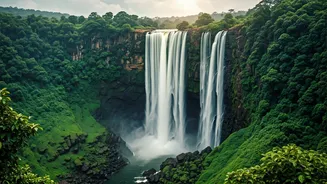
An Introduction to the 'Sea of Milk'
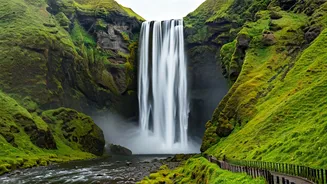
Tucked away on the border of Goa and Karnataka, within the lush confines of the Bhagwan Mahaveer Sanctuary and Mollem National Park, lies Dudhsagar Falls. The name, in the local Konkani language, translates to 'Sea of Milk.' It’s a poetic descriptor that
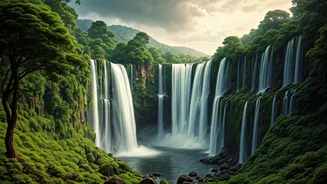
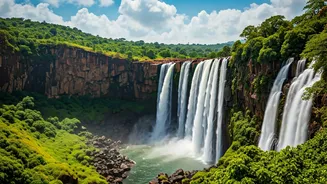
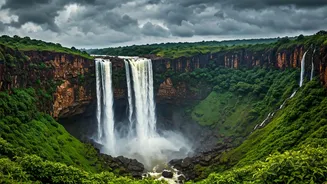
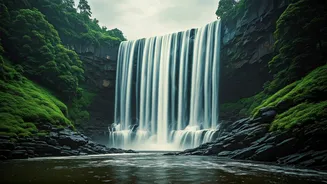
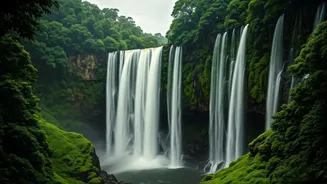
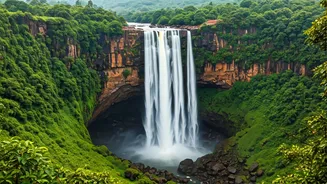
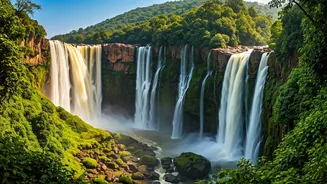
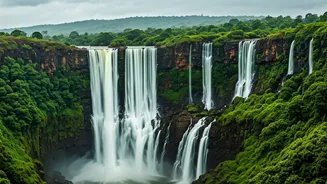
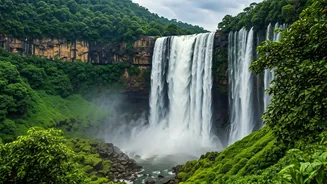
becomes breathtakingly literal during the peak of the rainy season. Standing at a colossal 1,017 feet, this four-tiered cascade is one of India's tallest waterfalls. During the dry winter and scorching summer months, it can be a relatively gentle, segmented stream. But when the monsoon clouds gather from June to September, Dudhsagar undergoes a dramatic transformation. It swells into a single, thunderous entity, a furious torrent of white water that seems to consume the mountainside in a curtain of spray and foam, vividly justifying its milky nickname.
Why the Monsoon Gives It Superpowers
For most travel destinations, the monsoon is the off-season—a time of washed-out roads and canceled plans. For Dudhsagar, it’s prime time. The falls doesn’t just get bigger with the rain; its entire character changes. The surrounding landscape, parched and brown for months, explodes into an impossible spectrum of greens. The air grows thick with the smell of wet earth and blossoming flora. The sound, a gentle burble in the dry season, becomes a deafening roar that you feel in your chest long before you see the source. This is not just a waterfall; it’s a living, breathing event. Visiting during the monsoon is to see the falls as nature intended: untamed, powerful, and utterly awe-inspiring. It’s the difference between seeing a sleeping lion and witnessing it mid-hunt.
The Journey Is Part of the Adventure
Reaching Dudhsagar during the monsoon is not a simple drive-up affair; it’s a mini-expedition that enhances the reward. The most iconic approach is by train. The South Western Railway line passes directly over a bridge in front of the falls. During the monsoon, passengers are treated to a surreal, heart-stopping view as the train crosses the viaduct, enveloped in the waterfall’s immense spray. It’s a fleeting but unforgettable glimpse of nature’s power. The more immersive journey, however, is the jeep safari. From the village of Kulem, local 4x4s navigate a series of muddy tracks and swollen streams to get to the base. This bone-rattling, river-fording ride through the dense jungle is an adventure in itself, building anticipation with every bump and splash. The moment the vehicle finally stops and you hear the thunder of the water ahead, you know you’ve arrived somewhere truly special.
The Grand Finale: A Symphony of Senses
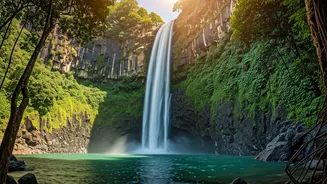
The final approach on foot is a sensory overload. The roar becomes all-encompassing, the air is so saturated with mist that it feels like you're breathing water, and the ground trembles slightly under the force of the cascade. Then, through a break in the trees, you see it. Dudhsagar in full flow is a humbling sight. It’s not just water falling; it’s a force of nature carving its path through the Western Ghats. The sheer volume and velocity create a perpetual cloud of mist that shrouds the base, making it impossible to stay dry and pointless to try. Visitors huddle on a viewing platform, dwarfed by the scale of it all, trying to capture a photo that will inevitably fail to convey the magnitude of the experience. It’s a moment of pure, unadulterated awe, where the best thing to do is put the phone away and simply be present in the face of such raw power.
Planning Your Monsoon Pilgrimage
If you’re tempted to witness this spectacle, timing is everything. The monsoon season (June to September) is the only time to see the falls in its 'main character' glory, but it also brings logistical challenges. The jeep safaris are run by a local association and access can be restricted or closed entirely during periods of extremely heavy rainfall for safety reasons. It’s crucial to check conditions locally before you go. Wear clothes and shoes you don’t mind getting soaked, and protect your electronics in waterproof bags. Most importantly, embrace the chaos. The rain, the mud, and the spray aren’t obstacles to the experience; they *are* the experience. This isn’t a pristine, curated tourist spot—it's a wild, elemental force, and visiting it means playing by its rules.