

The Rooftop of the World Awakens
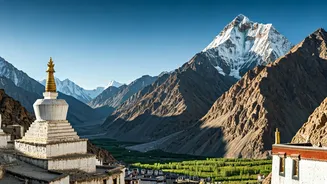
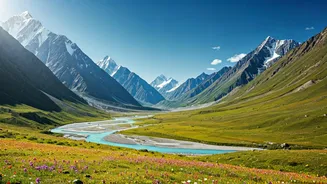
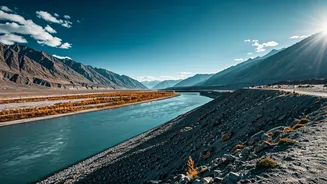
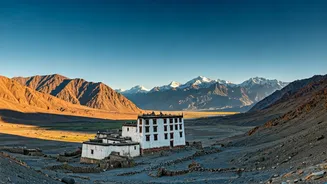
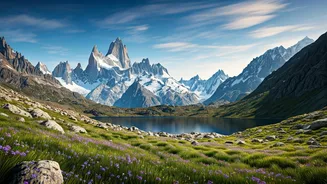
Tucked away in the northernmost reaches of India, Ladakh is a land of extremes. Often called the “Little Tibet” or the “Land of High Passes,” it’s a high-altitude cold desert where jagged, snow-dusted peaks scrape against an impossibly blue sky. For much
of the year, it’s a quiet, contemplative place, its rhythms dictated by the harsh seasons. But when summer arrives, melting the snows that isolate its valleys, Ladakh undergoes a vibrant transformation. The landscape, while still starkly beautiful, becomes the backdrop for one of the world's most unique cultural phenomena: its monastic festivals. It’s this convergence—ancient ritual unfolding in a sublime natural amphitheater—that is drawing ever-larger crowds of travelers seeking an experience that feels both profound and otherworldly.
A Courtyard Becomes a Cosmic Stage
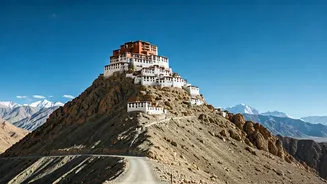
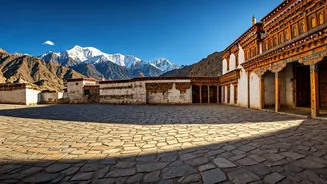
The heart of this summer pilgrimage is the monastery, or gompa. Perched on hillsides and cliffs, these centuries-old Buddhist centers of learning become open-air theaters. The most famous of these events is the Hemis Tsechu, a two-day festival at the Hemis Monastery celebrating the birth of Guru Padmasambhava, the sage who brought Vajrayana Buddhism to Tibet. Here, the central courtyard fills with onlookers as monks, hidden behind elaborate and sometimes fearsome masks, perform the sacred 'Cham' dances. These are not performances in the Western sense; they are meditative rituals. Each slow, deliberate step and turn, set to the percussive clash of cymbals and the drone of long horns, tells a story of the triumph of good over evil and the life of Buddhist deities. The air grows thick with the scent of burning juniper incense and the palpable reverence of the local devotees.
Where Nature Is Part of the Ceremony
What makes these festivals so profoundly magnetic is that the setting is not incidental—it's integral. The raw, immense power of the Himalayan landscape provides a scale that dwarfs human concerns. The brilliant colors of the silk costumes and the intricate details of the masks stand in stark, breathtaking contrast to the muted, monochromatic palette of the surrounding rock and sky. During the Hemis festival, a giant silk tapestry, or thangka, depicting Guru Padmasambhava is sometimes unfurled down the monastery wall, an act of devotion that seems to connect the earthbound ceremony to the heavens. Spectators sit under the intense mountain sun, their view framed not by theater walls but by the Zanskar Range. It’s an immersive sensory experience where the line between cultural spectacle and natural wonder completely dissolves. You aren’t just watching a festival; you’re breathing it in at 11,500 feet.
The Modern Pilgrim's Search for Authenticity
The “big summer crowds” in Ladakh are not the kind you’d find at a music festival. They are a mix of Ladakhi families in their finest traditional dress, Buddhist pilgrims from across the Himalayas, and a growing contingent of international visitors. For these travelers, the journey is often as significant as the destination. They are photographers, spiritual seekers, adventurers, and everyday people weary of a digitally saturated world. They come seeking something real, something with history and weight. Attending a monastic festival in Ladakh offers a rare window into a culture that has remained resiliently itself despite the pressures of the modern world. It’s a chance to witness a living tradition, not one recreated for tourists. This search for authenticity, for a connection to something timeless and elemental, is what fuels the modern-day pilgrimage to this remote corner of the world each summer.