




The Ghost of 2008
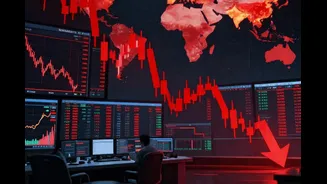
To understand where the financial sector is today, you have to remember where it was in 2008. The global financial crisis wasn't just a recession; it was a near-total meltdown of the banking system. Institutions once considered 'too big to fail' were
on the brink of collapse, brought down by complex, risky bets on the U.S. housing market. The problem was leverage. Banks had made enormous wagers with very little of their own capital at risk. When those bets went sour, the losses wiped out their thin safety cushions, triggering a cascade of failures that froze credit markets and plunged the global economy into the deepest downturn since the Great Depression. The lesson was brutal and clear: the modern financial system, left to its own devices, had created risks it could neither manage nor contain. The ensuing public outrage and political will set the stage for a decade of sweeping reforms aimed at one thing: preventing a repeat performance.
Building 'Fortress Banks'
The primary response to the crisis was the Dodd-Frank Act of 2010, a massive piece of legislation designed to build a safer financial system. The core idea was simple: make banks more like fortresses and less like casinos. This was achieved through a few key mechanisms. First, regulators dramatically increased capital requirements. In simple terms, they forced banks to fund their operations with more of their own money (equity) and less borrowed money (debt). A thicker cushion of capital means a bank can absorb significant losses without becoming insolvent. Second, the Federal Reserve began conducting annual 'stress tests' on the largest banks. These are sophisticated simulations that model how a bank's balance sheet would hold up during a severe hypothetical recession, complete with crashing stock markets and skyrocketing unemployment. Banks that fail these tests are required to bolster their capital or curb payouts to shareholders. Together, these measures have forced the biggest U.S. financial institutions to become fundamentally more conservative and hold vastly more loss-absorbing capital than they did before 2008.
A Real-World Stress Test
For years, the effectiveness of these reforms was purely theoretical. Then came 2020. The COVID-19 pandemic and the ensuing economic shutdown was the first real-world crisis to hit the post-2008 financial system. It was a shock of unprecedented speed and scale. Yet, the banks held up. There was no systemic banking crisis. In fact, fortified with capital, the major banks were stable enough to act as a conduit for government stimulus, facilitate loan forbearance programs, and keep credit flowing to businesses and households. They acted as a shock absorber for the economy, rather than the source of the shock itself. For proponents of the reforms, it was a resounding validation. The system, while stressed, did not break. This demonstrated a newfound resilience that was simply absent a dozen years earlier. The fortress, it seemed, had held its ground.
Resilient, Not Immune
So, does this resilience equal 'complete immunity'? Not quite. While the core banking sector is undeniably safer, the financial world is a bit like a game of whack-a-mole: stamp out risk in one area, and it pops up in another. Experts point to the rise of 'shadow banking'—lending and financial activities that take place outside of traditionally regulated banks, in places like private equity funds, hedge funds, and other non-bank financial institutions. This part of the system is less regulated and less transparent, and it's where new vulnerabilities could be brewing. Furthermore, the nature of risk itself has evolved. Today's threats might not be subprime mortgages but something else entirely, like a large-scale cyberattack on financial infrastructure or a crisis linked to cryptocurrency markets. A severe, prolonged recession would still inflict pain on the financial sector. Loan defaults would rise, investment banking activity would dry up, and profits would shrink. Banks are healthier, but they are still businesses deeply intertwined with the health of the overall economy. They can withstand a storm better than before, but they can't make the sky clear.