






The Simple Science of Cool
It’s not your imagination: the air really is crisper and cooler in the mountains. This phenomenon is thanks to the environmental lapse rate, a core principle of atmospheric science. As you gain elevation, the air becomes less dense and air pressure drops.
This allows the air to expand, which in turn causes it to cool down. The general rule of thumb is a temperature drop of about 3.5 to 5.5 degrees Fahrenheit for every 1,000 feet you ascend. So, if it’s a sweltering 95°F in a city at sea level, a mountain town at 7,000 feet could be enjoying a pleasant 70°F. This isn’t just a minor difference; it’s a game-changer that transforms a summer day from oppressive to perfect.
The Rockies: America’s High-Altitude Playground
When you think of mountain escapes, the Rocky Mountains are often the first to come to mind, and for good reason. Towns like Estes Park, Colorado (7,522 feet), or Jackson, Wyoming (6,237 feet), are built-in refrigerators. Here, summer heat is replaced by sun-drenched days perfect for hiking through fields of wildflowers and cool, clear nights ideal for stargazing. The sheer scale of the Rockies offers endless opportunities, from tackling a challenging “fourteener” (a peak over 14,000 feet) to simply enjoying a local craft beer on a patio without breaking a sweat. The low humidity and pine-scented air are a sensory reset, cleansing you of the thick, soupy atmosphere you left behind.
The Appalachians: A Humid Haven
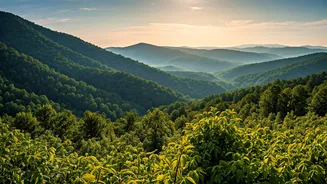
While not as tall as their western counterparts, the Appalachian Mountains provide a vital sanctuary for the eastern half of the country. Places along the Blue Ridge Parkway, like Asheville, North Carolina (2,134 feet), and Boone, North Carolina (3,333 feet), offer significant relief from the region’s notorious humidity. What the Appalachians may lack in jagged peaks, they make up for with lush, green canopies that create their own cooling effect. Driving the winding parkway with the windows down, stopping at scenic overlooks to gaze at the hazy, rolling “blue” hills, is an iconic American experience. These towns are also cultural hubs, boasting vibrant arts scenes, farm-to-table dining, and a laid-back vibe that encourages you to slow down and savor the temperate climate.
The Berkshires: New England's Cultural Respite
For those in the Northeast corridor, the Berkshires in western Massachusetts serve as the perfect antidote to sizzling city summers. While the elevation gains are more modest, towns like Lenox and Great Barrington are nestled in rolling hills that trap cool air and offer a distinct change of pace. The Berkshires blend natural beauty with world-class culture. You can spend your day hiking a portion of the Appalachian Trail or kayaking on a serene lake, then spend your evening enjoying a Boston Symphony Orchestra performance at Tanglewood. The area is dotted with charming inns, antique shops, and farmers' markets, making it an escape that nourishes both the body and the soul.
The High-Desert Surprise: Arizona's Cool Corner
When you hear “Arizona,” you probably think of scorching desert heat. But head two hours north of Phoenix and you’ll find Flagstaff, a city sitting at a cool 7,000 feet amidst the world’s largest contiguous ponderosa pine forest. While Phoenix sizzles at 110°F, Flagstaff often basks in the high 70s. This high-desert oasis completely upends expectations. It serves as the gateway to the Grand Canyon but is a destination in its own right, with a lively downtown, a rich Route 66 history, and access to volcanic craters and ancient cliff dwellings. It’s proof that even in the hottest states, a hill escape is often just a short drive away, offering a completely different world.