




History You Can Inhabit, Not Just Visit
A standard corporate hotel is an exercise in predictable comfort. The lobby in Jaipur looks much like the one in Dallas or Dubai—sleek, modern, and anonymous. A haveli, by contrast, is a living museum. These traditional mansions, once the homes of wealthy
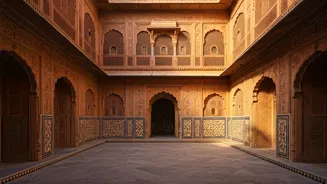
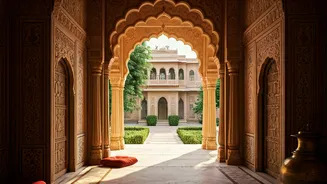
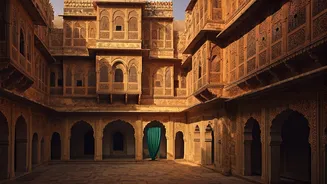
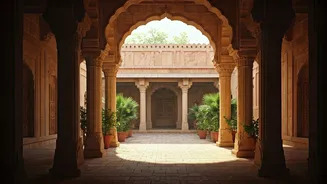
merchants or noble families, are architectural marvels of Rajasthan. Think intricate frescoes hand-painted on arched ceilings, sun-drenched courtyards centered around fountains, and ornate balconies (known as jharokhas) designed for observing street life unseen. Staying in a haveli isn't just booking a room; it's stepping into a story hundreds of years old. You sleep beneath the same roofs that have sheltered generations, surrounded by artistry that tells a story of place and time.
Service That Feels Personal, Not Programmed
In a large hotel, service is often excellent but standardized, delivered according to a corporate manual. Staff are trained to be efficient and polite, addressing you as "sir" or "ma'am." In a family-run or boutique haveli, hospitality is deeply personal. The owners might greet you themselves, sharing stories of their ancestors over a cup of chai. The staff often know you by name, not just your room number. They’ll offer insider tips on the best local tailor or the quietest time to visit the City Palace. This isn't the transactional relationship of a customer and a corporation; it's the warm, genuine connection of a host and a guest, creating a sense of belonging that a chain hotel can rarely replicate.
Cuisine That Tastes Like Home (A Rajasthani Home)
The sprawling breakfast buffet at a five-star hotel is impressive, offering everything from croissants to congee. But it’s often a globalized menu designed to please everyone and offend no one. Havelis, on the other hand, offer a culinary deep-dive into the region. The kitchens often operate more like a family's, preparing traditional Rajasthani dishes based on generations-old recipes. Imagine savoring a home-cooked laal maas (a fiery mutton curry) or a simple yet delicious dal baati churma in an open-air courtyard, lit by lanterns. The ingredients are locally sourced, the flavors are bold and authentic, and the meal itself becomes a cultural experience, not just a refueling stop.
An Unbeatable Sense of Place
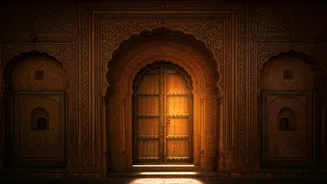
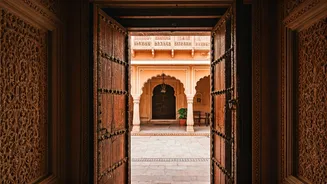
Many large, modern hotels are built on the outskirts of the city for reasons of space and access, requiring a taxi ride to get to the heart of the action. Havelis are the opposite. They are woven into the very fabric of the old city. Stepping out of your haveli’s grand wooden doors often means you’re immediately immersed in the vibrant chaos of Jaipur's historic lanes. You’re just a short walk from bustling bazaars, ancient temples, and the daily life of the city. You don't just visit the Pink City; you live within its walls, waking up to the distant sound of temple bells instead of the hum of a highway.
Character in Every Corner
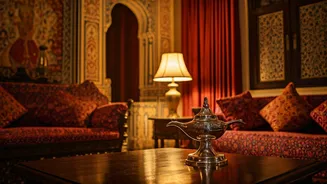
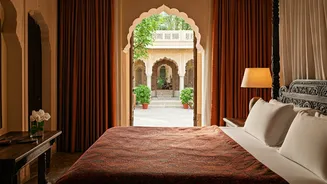
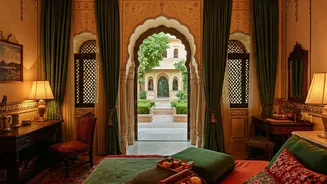
Every room in a corporate hotel is a near-identical pod of beige walls, a king-sized bed, and a flat-screen TV. They are designed for consistency. In a haveli, no two rooms are alike. Because they were originally part of a home, each room has its own unique layout, quirks, and personality. One might have a cozy reading nook tucked into a window seat, another might feature an original stained-glass window, and a third could open onto a private terrace overlooking the city. This delightful lack of uniformity means your space has character and soul. You're not just in room 804; you're in the Peacock Suite, a space with its own distinct identity and charm.