

More Than Just Free Samples
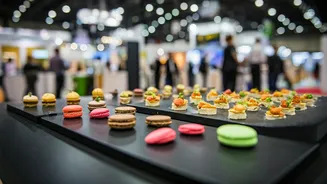
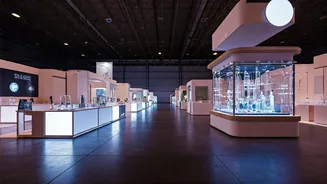
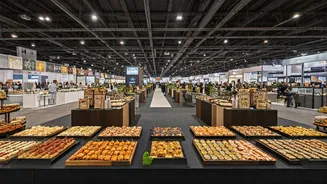
Imagine a space the size of several football fields, packed with thousands of booths representing everyone from tiny artisanal pickle makers to global food giants. This is the scene at major trade events like the Specialty Food Association’s Fancy Food Show
or the National Restaurant Association Show. For days, tens of thousands of attendees—chefs, retail buyers, distributors, and journalists—wander the aisles, tasting, talking, and taking notes. On the surface, it’s a blur of networking and free snacks. But beneath the noise, it functions as the single largest, most influential focus group in the American food industry. The collective palate of the crowd, expressed through buzz, long lines at a particular booth, and, most importantly, actual purchase orders, creates a powerful signal that ripples through the entire supply chain.
The Trend-Spotting Machine
This predictive power isn't magic; it's a self-fulfilling prophecy driven by the industry's most important gatekeepers. The people walking these floors aren't just casual foodies. They are the buyers for Whole Foods, Kroger, and Trader Joe's. They are the menu developers for national restaurant chains and the chefs whose boutique eateries will be featured in Bon Appétit. When a significant number of these decision-makers all gravitate toward the same thing—say, a new plant-based seafood alternative or a specific type of chili crisp—they are essentially casting their financial votes. Their orders determine what gets shelf space, what appears on menus, and what gets the marketing budget to become a household name. A whisper of interest on the expo floor in June can become a nationwide roar by the following spring.
From Expo Floor to Your Fridge
Consider the journey of oat milk. A decade ago, it was a niche product, largely unknown to the American public. But at food expos, small Swedish brand Oatly and its competitors created a frenzy. Buyers tasted its creamy texture, noted its superior performance in coffee, and saw its potential to dethrone soy and almond. They placed orders. Influential coffee shops started using it, creating demand. Soon, it was the darling of the plant-based world, and within a few years, it became a staple in grocery stores and cafes everywhere. This exact path has been followed by countless other trends, from kombucha and cauliflower crust to the sriracha craze. The expo was the launchpad.
On the Horizon: Yuzu Everywhere
So, what are the expo floors buzzing about right now? First up is yuzu. This Japanese citrus, which tastes like a floral hybrid of a grapefruit and a mandarin orange, is exploding in popularity. For years, it was a secret weapon in high-end restaurant kitchens. Now, it's being showcased at expos in everything: sparkling waters, vinaigrettes, cocktail mixers, and even hot sauces. Its bright, complex flavor offers a fresh alternative to the familiar lemon and lime, and its prevalence at recent shows signals it’s about to go mainstream. Expect to see yuzu-flavored everything on shelves and menus soon.
On the Horizon: The Mushroom Glow-Up
Mushrooms are getting a major rebrand. We’re not talking about your standard cremini or portobello. The current stars are “functional” mushrooms like Lion’s Mane, Reishi, and Chaga. Brands are infusing these adaptogenic fungi, long used in traditional medicine, into coffee, tea, chocolate, and wellness shots. They’re marketed not for their flavor (which is often masked) but for their purported benefits, like enhanced focus, stress relief, and immune support. The sheer number of mushroom-infused products at events like Natural Products Expo West indicates that the wellness-savvy consumer is ready to embrace the 'shroom boom well beyond the produce aisle.
On the Horizon: Next-Gen Nonalcoholic
The zero-proof movement is entering its next phase. For years, nonalcoholic options meant sugary “mocktails” or bland beer. Now, expo floors are flooded with sophisticated, adult-focused beverages that mimic the complexity of cocktails without the booze. We're seeing de-alcoholized wines that actually taste like wine, botanical spirits designed for intricate nonalcoholic concoctions, and bitter aperitifs that provide a grown-up sipping experience. This isn't just about 'Dry January' anymore; it's a year-round lifestyle choice, and brands are investing heavily, using the expo circuit to prove there’s a massive market for it.