

So, What Exactly Is Makhana?
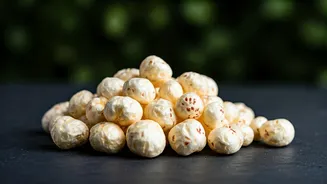
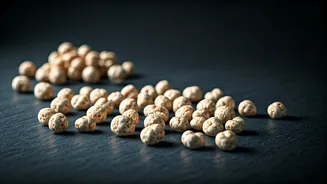
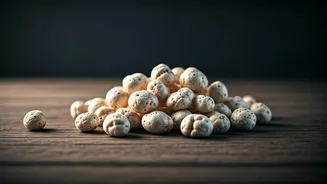
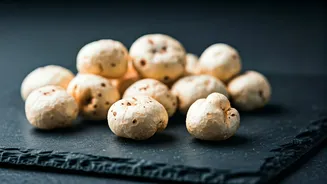
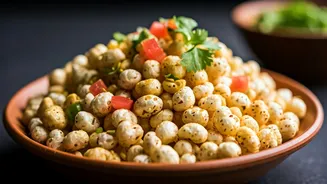
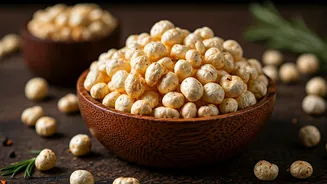
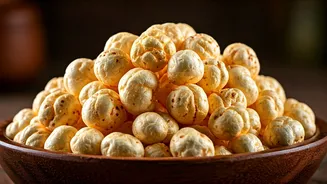
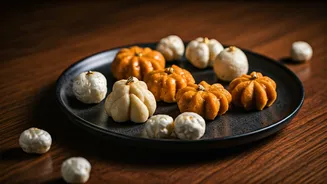
Imagine a snack that’s as light as a cheese puff but as satisfyingly crunchy as a nut. That’s makhana. Also known as fox nuts or gorgon nuts, these white, airy spheres are the puffed seeds of the Euryale ferox, a species of water lily. On their own, they
have a mild, neutral taste, making them a perfect canvas for flavors. Unlike popcorn, they don’t have a pesky kernel to get stuck in your teeth, and unlike many processed snacks, they are a completely natural agricultural product. For centuries, they were a regional secret, but now they are finding their way into snack bowls and recipes far beyond their origin.
The Pride of Bihar’s Wetlands
The heartland of makhana production is the Mithila region of Bihar, an eastern Indian state known for its vast network of ponds and wetlands. This is not a simple crop to farm. Harvesting makhana is an incredibly laborious, multi-step process done almost entirely by hand. Skilled workers wade through murky ponds to collect the prickly seeds from the bottom. The seeds are then washed, dried under the sun, and graded by size. The final, magical step involves roasting the small, black seeds in hot sand-filled pans until they burst, much like popcorn, revealing the white, edible puff inside. This intricate, traditional knowledge earned Mithila Makhana a prestigious Geographical Indication (GI) tag in 2022, legally recognizing its unique origin and quality, similar to how Champagne is tied to its region in France.
The Ultimate Wellness Snack
Makhana’s meteoric rise isn't just about taste; it’s perfectly timed for the global wellness boom. In a world searching for gluten-free, plant-based, and low-calorie options, makhana checks all the boxes. It's rich in protein, fiber, and essential minerals like magnesium and potassium, while being low in fat and sodium. Traditionally, it was valued in Ayurvedic medicine and eaten during religious fasts in India because it was considered a pure, light, and nourishing food. Today, those same qualities make it a hit with health-conscious consumers, keto dieters, and parents looking for healthy snacks for their kids. It’s an ancient superfood that feels like it was designed for the 21st-century diet.
From Humble Food to Trendy Snack
For generations, the most common way to eat makhana was simply roasted in a little ghee (clarified butter) and sprinkled with salt. It was a comforting home snack. Now, a wave of food startups has transformed it into a convenience food, launching it in slick packages with a dizzying array of flavors. Walk down a snack aisle in an Indian supermarket, and you’ll find makhana seasoned with everything from peri-peri and sour cream & onion to spicy cheddar and mint. This modern makeover has catapulted makhana from a niche item to a mainstream competitor against potato chips and other packaged snacks, introducing it to a new generation of consumers who value both health and flavor.
How to Use It at Home
The beauty of makhana lies in its versatility. The easiest way to prepare it is to dry-roast the plain puffs in a pan over low heat for about 5-7 minutes until they become crisp (they are often a little soft straight out of the bag). You can then toss them with a little melted butter, coconut oil, or ghee and your favorite seasonings—a little salt and black pepper, some smoked paprika, or even a sprinkle of cinnamon sugar for a sweet treat. Beyond snacking, roasted makhana adds a wonderful gluten-free crunch to salads, soups, and trail mixes. You can also grind it into a flour for baking or add it to vegetable curries, where it soaks up the gravy while retaining a unique, slightly chewy texture.