






A Ribbon of Unbroken Color
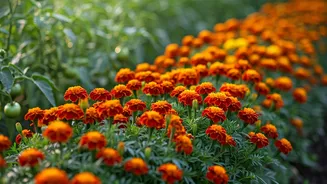
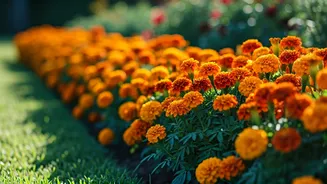
The most immediate impact of a marigold border is visual. It’s a designer’s trick that works in any garden, big or small. Planting a dense line of marigolds creates a vibrant, continuous ribbon of color—typically in shades of gold, orange, and fiery red—that
acts like a frame for a picture. This simple line of warm color draws the eye, defines the shape of your garden beds, and makes everything within them look more intentional and organized. While taller, more varied plants can create a soft, meadow-like feel, a marigold border provides structure and coherence. It’s the clean edge that separates your lawn from your flower beds, your vegetable patch from your pathway. This visual tidiness makes the entire garden feel more complete and 'put together,' transforming a collection of plants into a cohesive landscape.
The Gardener’s Living Guardrail
Beyond their good looks, marigolds are famously hardworking. For generations, gardeners have sworn by their ability to act as a natural pest deterrent. The roots of certain marigold varieties, particularly French marigolds (Tagetes patula), release a substance that is toxic to root-knot nematodes—microscopic worms that can wreak havoc on the root systems of tomatoes, peppers, and other vegetables. While not a silver bullet for every garden pest, their pungent scent is also widely believed to discourage rabbits and other nibbling creatures. Planting them around a vegetable patch isn’t just decorative; it’s a form of beautiful, fragrant security. They serve as a 'living fence,' protecting the more vulnerable plants inside the bed while adding to the overall aesthetic. This functional benefit is a key reason they make a garden feel not just pretty, but healthy and protected.
Effortless Blooms from Spring to Frost
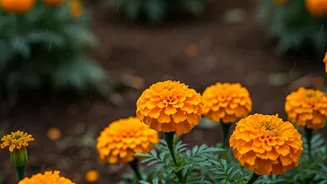
One of the marigold’s greatest virtues is its sheer stamina. These annuals are incredibly easy to grow from seed or starters and are famously low-maintenance. They tolerate a wide range of soil types, thrive in full sun, and are relatively drought-tolerant once established. Most importantly, they have an exceptionally long blooming season. Plant them after the last frost, and they will reliably produce a profusion of cheerful flowers right up until the first hard frost of fall. This means your garden border will look fresh and colorful for months, without requiring constant fuss. While other flowers fade in the mid-summer heat or give up after a few weeks, marigolds just keep going. This reliable, season-long performance provides a constant source of vibrancy that keeps the garden looking 'alive' even when other plants are past their peak.
A Welcoming Stop for Pollinators
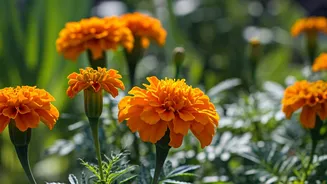
A garden that’s 'properly alive' is buzzing with more than just color; it’s filled with the movement of beneficial insects. Marigolds are a fantastic resource for pollinators. Their open, daisy-like flower structure (especially in single-petal varieties) provides an easy-to-access source of nectar and pollen for bees, butterflies, and hoverflies. A border of marigolds becomes a busy highway for these essential creatures as they move through your yard, helping to pollinate your vegetables and flowers along the way. Watching bees bumble from one golden head to another is one of the simple joys of gardening, and it’s a clear sign of a healthy, functioning ecosystem. By planting a marigold border, you’re not just creating a pretty edge; you’re rolling out the welcome mat for the tiny helpers that bring a garden to life.
Choosing the Right Marigold for the Job
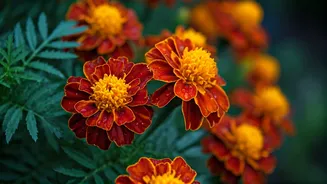
Not all marigolds are created equal, and choosing the right type is key to a successful border. For a low, crisp, and uniform edge, French marigolds are the go-to choice. They typically grow in compact mounds, reaching heights of 6 to 12 inches, making them perfect for the front of a bed. Popular varieties like 'Bonanza' or 'Hero' offer dense foliage and prolific blooms. If you want a slightly taller or bolder statement, African marigolds (Tagetes erecta) can be used. These grow much taller, sometimes up to three feet, with large, globe-like flowers. They work better as a mid-border plant or a backdrop rather than a low edge. For a more delicate, airy look, Signet marigolds (Tagetes tenuifolia) have fine, fern-like foliage and smaller, single-petal flowers. They have a lemony scent and are an excellent, less common choice for a softer border.