


The Rise of Experiential Escapes
The traditional hotel experience—a comfortable room, a lobby, maybe a pool—is no longer enough for a growing number of travelers. In a world saturated with digital noise, the new luxury is disconnection, authenticity, and a deep immersion in nature. This
psychological shift is fueling a boom in experiential stays across India. Travelers aren't just booking a room; they're booking an experience. They want to wake up to the sound of birds in a forest canopy, not the hum of an air conditioner. They crave views that can’t be replicated in a city and a sense of peaceful isolation that standard resorts rarely provide. This has pushed hoteliers and architects to get creative, looking not outwards, but upwards, for the next frontier in hospitality.
Kerala’s Treetop Sanctuaries
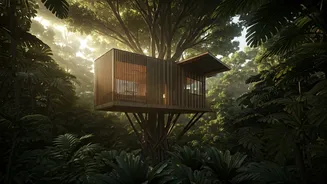
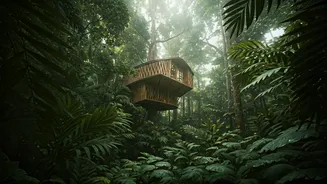
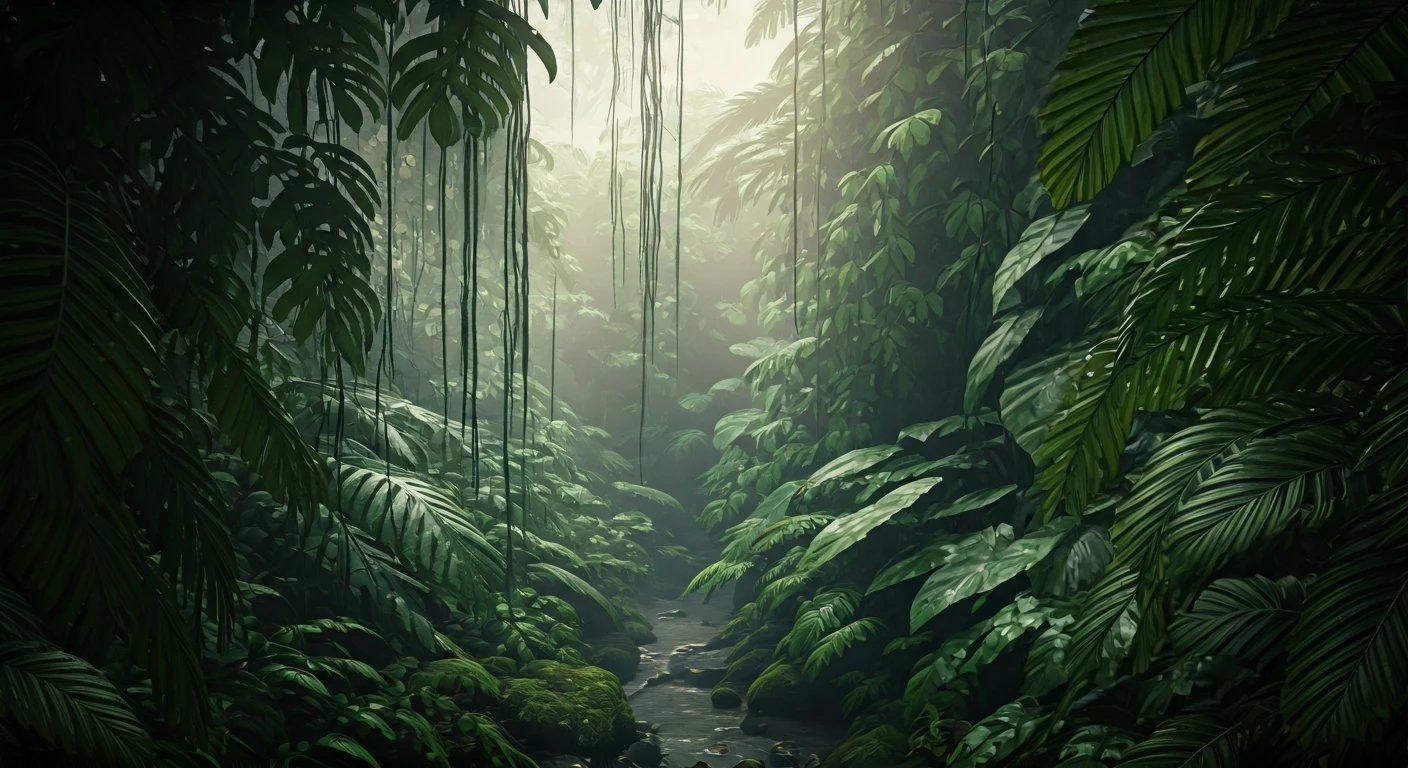
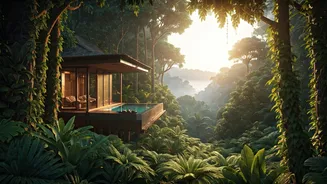
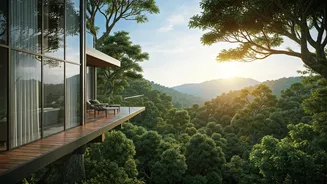
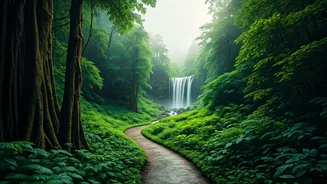
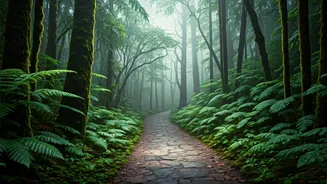
Nowhere is this trend more beautifully realized than in the lush Western Ghats of Kerala. Here, deep in the rainforests of regions like Wayanad, resorts like Vythiri have perfected the art of the luxury treehouse. These aren’t the rustic, splinter-filled forts of childhood imagination. These are elegantly designed wooden chalets built on and around towering trees, often accessible only by rope bridges or winding staircases. Guests can spend their days listening to the symphony of the jungle from a private balcony, spotting monkeys and Malabar giant squirrels from their window, and feeling a primal connection to the ancient forest that surrounds them. It’s an escape that engages all the senses, grounding you in nature by lifting you off the forest floor.
Rajasthan’s Man-Made Nests
If Kerala’s treehouses are about integrating with nature, the elevated stays near Jaipur offer a different kind of wonder: architectural ingenuity. The Tree House Resort, for instance, offers luxurious “nests” built atop robust keekar trees. What’s remarkable here is how modern amenities have been seamlessly integrated into the arboreal setting. You’ll find air conditioning, plush beds, and even plasma TVs inside a structure that respects the living tree growing through its center. It’s a whimsical blend of opulence and ecology. This demonstrates that the “going up” trend isn’t limited to dense forests; it can be a thoughtfully engineered fantasy brought to life even in the arid landscapes of Rajasthan, offering a unique perspective on the surrounding Aravalli hills.
Himalayan Cliffhangers
Moving from trees to terrain, the Himalayas have always been about elevation. But now, accommodations are being designed to maximize that vertical thrill. In states like Himachal Pradesh and Uttarakhand, a new wave of boutique hotels and homestays are being built directly into hillsides or perched precariously on cliff edges. These stays offer jaw-dropping, panoramic views of snow-capped peaks and plunging valleys that are simply unavailable from the valley floor. They cater to travelers seeking solitude and spiritual rejuvenation, where the sheer scale of the landscape puts everyday worries into perspective. The experience is less about adrenaline and more about awe—a quiet, contemplative stay where the main attraction is the majestic, uninterrupted view.
The Sci-Fi Forest Escape
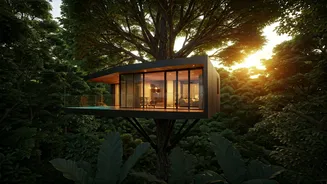
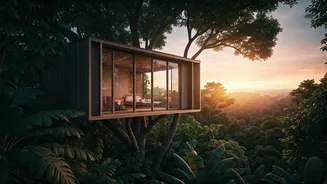
Perhaps the most futuristic interpretation of this trend can be found at The Machan in Lonavala, a few hours from Mumbai. Here, the accommodations aren't just in the trees; they appear to float independently among them. These unique, stilt-supported structures rise 30-45 feet above the forest floor, offering stunning views and complete privacy. Each “machan” (a term for an elevated platform) is a self-contained unit, often with open-air decks and outdoor baths. It’s an eco-conscious escape that feels both rustic and radically modern, like a sci-fi author's vision of a forest dwelling. This type of innovation shows that the vertical trend is not just about nostalgia for treehouses but also about pushing the boundaries of sustainable architecture and design.